

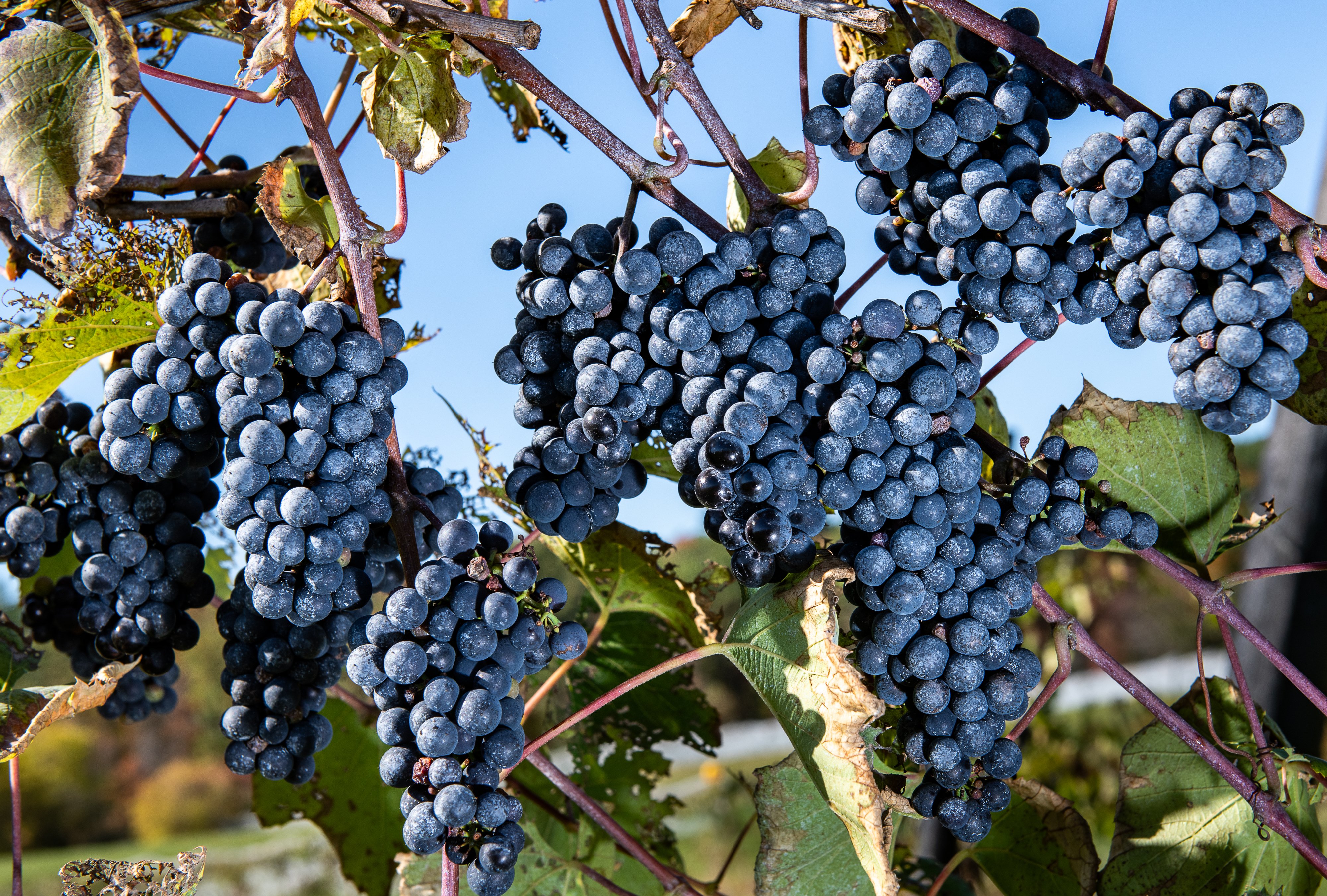
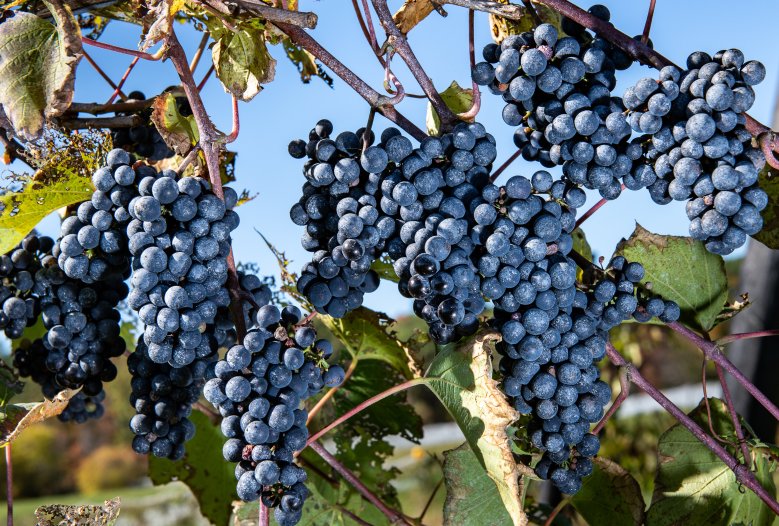
LEEDS — After eight years of hand-planting eight acres of cold-hardy vines, the effort is proving to be fruitful at WillowsAwake Winery, where this year’s harvest is the best yet in terms of volume.
The total harvest last year was 12 tons, or 24,000 pounds, of 10 varieties of grapes chosen especially for Maine’s colder climate.
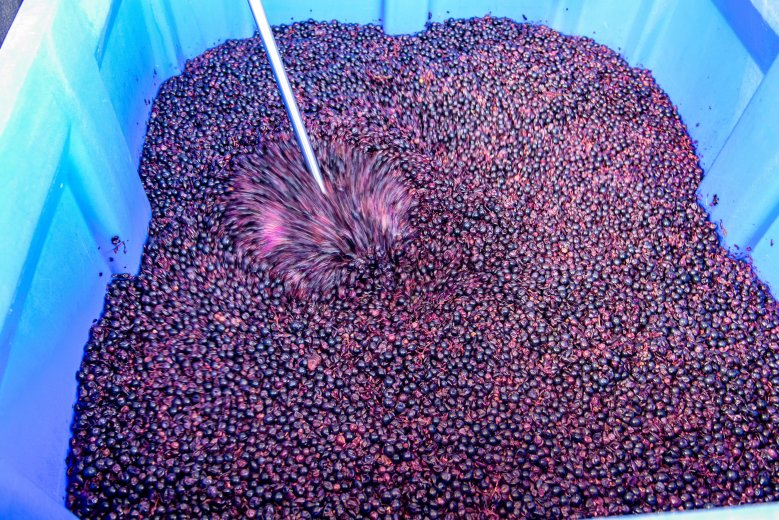
The first two weeks of this year’s harvest brought in 15 tons (30,000 pounds), with one variety of red — Petite Pearl — picked from the vines this past weekend. Petite Pearl is a late-ripening variety that requires more growing degree days to mature.
The Petite Pearl yield of 3,700 pounds pushed the total harvest to 17 tons (34,000 pounds).
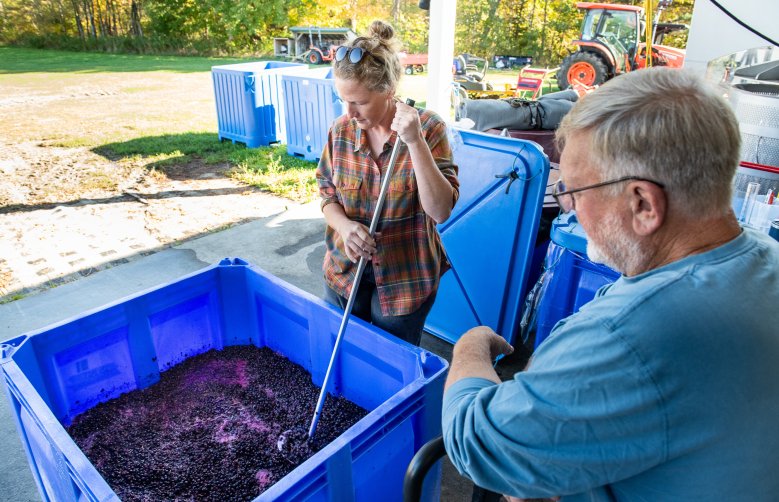
That puts a smile on vineyard owner Tony Lyons’ face and will keep winemaker and vineyard manager Linsday Benson very busy.

“We had a really exceptional fruit set period,” Benson said last week at the vineyard. “You know, we talked about apple farmers having a difficult pollination this year. Because our vines are all self-pollinating, we don’t really worry about that.”
Benson said most grapes have “perfect flowers,” containing male and female parts, allowing the fruit to self-pollinate.
Many orchards in Maine are seeing smaller crops and fruit this year as a result of a lackluster pollination in the spring due to cool, overcast weather.
The overcast and rainy spring turned to drought, which is affecting the harvests of apples and root vegetables like potatoes, with smaller yields and smaller size for many fall harvests.
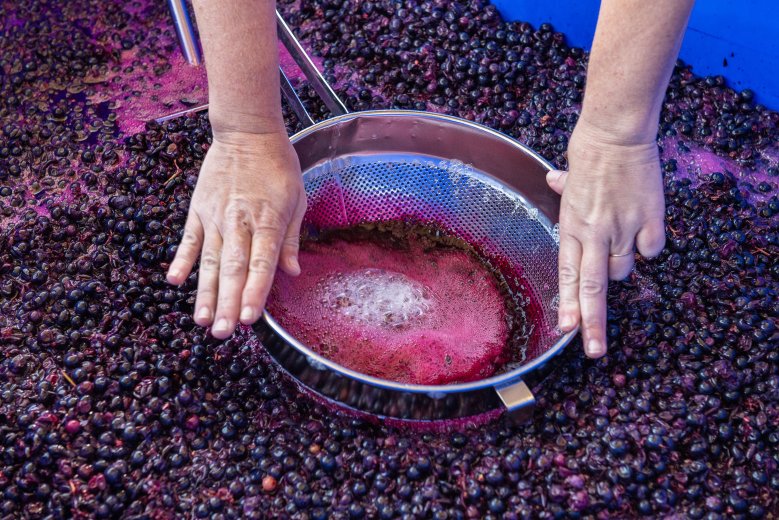
Grapes at WillowsAwake may have actually benefitted from the prolonged drought this year. “If anything, we might have a little bit more concentrated sugar in berries,” Benson said. More sugar potentially translates into a higher alcohol content, a slightly sweeter profile and lower acidity.

Another “benefit” from the dry conditions is a lack of fungal disease. “Because we’re not seeing a lot of fungal pressure, we’re not seeing a lot of disease incidents,” Benson said, with Lyons adding, “primarily that it’s dry, we’re not getting the humidity that favors the fungal infections.”
Japanese beetles did discover a small part of the vineyard, but the overall harm was minimal, Lyons and Benson said.
Benson cautions that if drought conditions persist, next year’s crop could be affected.
“One of the things that could happen if your canopy isn’t particularly strong, then you might end up with not as many buds to select from when you’re pruning during the winter. So, the drought can affect your crop as well,” she added.

Professor David Handley is a small fruit specialist with the University of Maine Cooperative Extension at Highmoor Farm in Monmouth. Handley said they grow a small amount of grapes at the research station, so he’s familiar with the cold-hardy hybrids grown at WillowsAwake, and what it takes to grow them in Maine.
“They’re starting to reap the benefits of approaching this with their eyes wide open,” he said of WillowsAwake’s harvest numbers this year. “And doing things that need to be done in order to be as successful as we can be here in a place where, frankly, grapes, wine grapes, don’t really want to grow.”

Handley is a skeptic of commercial winemaking in Maine, but acknowledges it can be done. He said he’d rather see growers focus on table grapes.
“I’d like to see more farmers putting table grapes out there as another alternative for crops we can have later in the season,” he said, “because we know as the blueberries run out and the raspberries run out, the fall is still a good market for something like local table grapes,” adding farmers in New Hampshire have had some success with table grapes.
Lyons and Benson are carving out a niche with their increasingly successful harvests. There remains only a few other vineyards in the state growing grapes for wine. WillowsAwake boasts at least six estate wines, meaning all the grapes are grown, fermented and bottled on site.
This is the second year WillowsAwake has started aging specific wines in oak barrels. The 2024 Rockless Red is a blend of three varieties all estate grown. The winery can ship their wines to 38 states. Tasting room is open from Friday to Sunday in the afternoons.





We invite you to add your comments. We encourage a thoughtful exchange of ideas and information on this website. By joining the conversation, you are agreeing to our commenting policy and terms of use. More information is found on our FAQs. You can update your screen name on the member's center.
Comments are managed by our staff during regular business hours Monday through Friday as well as limited hours on Saturday and Sunday. Comments held for moderation outside of those hours may take longer to approve.
Join the Conversation
Please sign into your Sun Journal account to participate in conversations below. If you do not have an account, you can register or subscribe. Questions? Please see our FAQs.