


Lucas Segóbia traveled 1,000 miles or more on Memorial Day weekend from a job site in Bar Harbor to an electronic music festival in New Jersey where he was DJing.
Segóbia, a carpenter originally from Brazil, had just finished a long work week and hadn’t even had time to change his clothes before hitting the road. He only had a few days off, but he wanted to attend the festival because it was his community, and being a DJ helped him make friends and pick up English.
Segóbia knew immigrants were being picked up all over the country under the Trump administration’s increased enforcement effort, but neither he nor a friend driving his car that weekend were worried. He had overstayed his visa but he worked hard, had no criminal record and said a family member who is a U.S. citizen had filed paperwork to sponsor him for legal status.
“We’d just make jokes about ICE, because everyone makes jokes about ICE,” Segóbia said.
When they passed through Scarborough on their way home that Monday night, a state trooper turned on his lights. Within an hour, Segóbia and his friend were taken by Border Patrol agents, who held him for a week in Maine before transferring him to a U.S. Immigration and Customs Enforcement detention center in Karnes County, Texas.
The trooper, Sander Van der Lee, told the men he pulled them over because he didn’t see their front license plate, according to body camera footage obtained by the Portland Press Herald. Van der Lee held them on the side of the road for more than 40 minutes, but never told them a Border Patrol agent was coming to arrest them.
Van der Lee did not respond to a request for an interview through the Maine State Police spokesperson.
Segóbia spent two months at the Texas detention center, eating more canned green beans than he could stomach. He also got married there, to a welder from Maine who shares his love for art and the trades. And he became one of the few detainees granted bond by an immigration judge.
Segóbia’s ordeal was harrowing but not unique. He is one of tens of thousands of immigrants in Maine and beyond who have been swept up in Trump’s aggressive detention and deportation efforts. Many of those cases originate from traffic stops by local police.
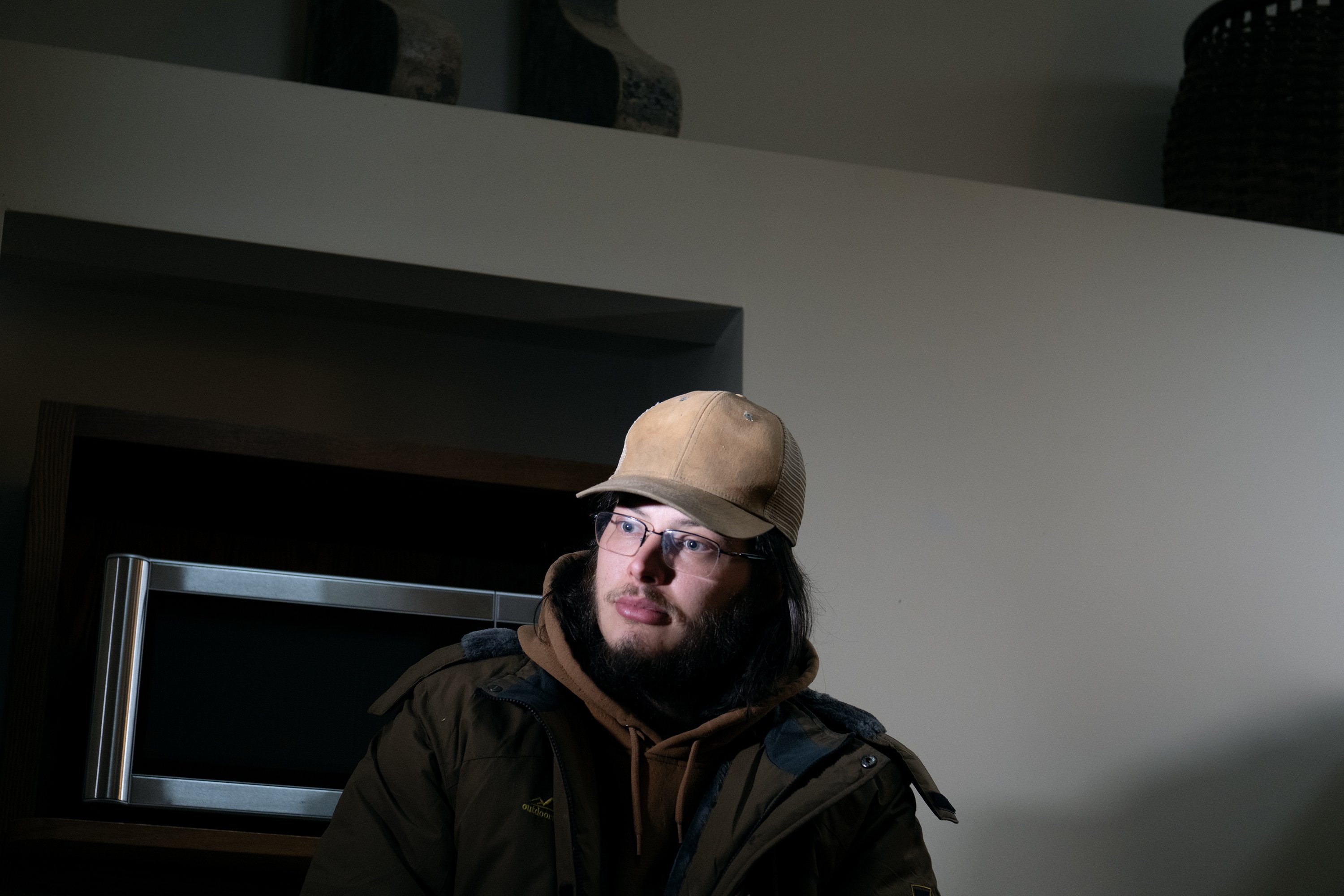
“Most of the individuals that are getting detained, they’re not criminals,” said Segóbia’s immigration lawyer, Luana Morine. “They’re fathers, husbands, sons, and most of them, the only issue or violation they’ve had in the United States might be a minor traffic violation.”
Lucas Segóbia and his wife, Laura, spoke at length to a reporter at their home this month. They said they want the public to know about the conditions immigrants face when they’re being transferred to detention facilities hundreds of miles from their community, and how difficult and expensive immigration court can be.
“That’s why I’m doing this, so people have information,” Segóbia said.
HELD WITH NO INFORMATION
From the minute he was pulled over, Segóbia said he was given few details about what was happening and what federal authorities had planned for him.
During the traffic stop, the body camera video shows Van der Lee telling Segóbia it would take “a while” to write a couple tickets. Segóbia’s friend had been driving without a license. In his car, Van der Lee can be heard on the phone saying he needs that time to take inventory of Segóbia’s van before a tow truck arrives. But he doesn’t do any of that until after Border Patrol Agent Derek Wilcox arrives and arrests the men.
“He just waited for Border Patrol,” said attorney Anahita Sotoohi from the American Civil Liberties Union of Maine, who also watched the video and has been compiling public records from similar stops throughout the state. “It just sort of demonstrates the extent to which he was solely detaining people for Border Patrol, at that point.”
About 25 minutes into the stop, Van der Lee tells another officer on the phone that Segóbia had called Laura to come get him from the scene.
“I do see issues there, maybe?” Van der Lee says. “She might be knowing what’s going on.”
Wilcox was the one to explain to Laura what was going on after she watched him handcuff Segóbia and his friend while a tow truck took the van. Laura said she had to pay to pick it up later.
When reached Wednesday for comment, Wilcox referred a reporter to his supervisor, who said an approved interview wouldn’t be possible that day. Much of the video, which the Segóbias obtained through a public records request, also was redacted by Maine State Police, including how Lucas and Laura responded to officers.
Once he was detained, Segóbia was shuffled between two local jails that contract with the federal government, before agents moved him to a Border Patrol station in Fort Fairfield in Aroostook County, he said. He was among about 10 people held there in a crowded cell.
The lights were always on, he said. They were fed microwavable burritos and water and it wasn’t until Segóbia said he demanded a call with the Brazilian consulate that they were taken somewhere to get a shower.
Segóbia told his consulate that he didn’t know where he was, and he couldn’t reach his family. The consulate arranged for him to speak with a therapist, although that wouldn’t happen until much later.
MAINE TO TEXAS
Segóbia recalled telling the other detainees they had a right to call their consulates. He said some had also been held there for days without the ability to call their families.
He said staff threatened him and told the other detainees that “Lucas wasted the last time” for calls, which upset some of the other detainees.
“‘They are scared because I talked with you guys,'” Segóbia recalled telling them. “They weaponize the language. They use the language against you. If you don’t say anything, then they’re not doing anything wrong, because you don’t complain. You don’t say ‘stop’ because you don’t know how to say ‘stop.'”
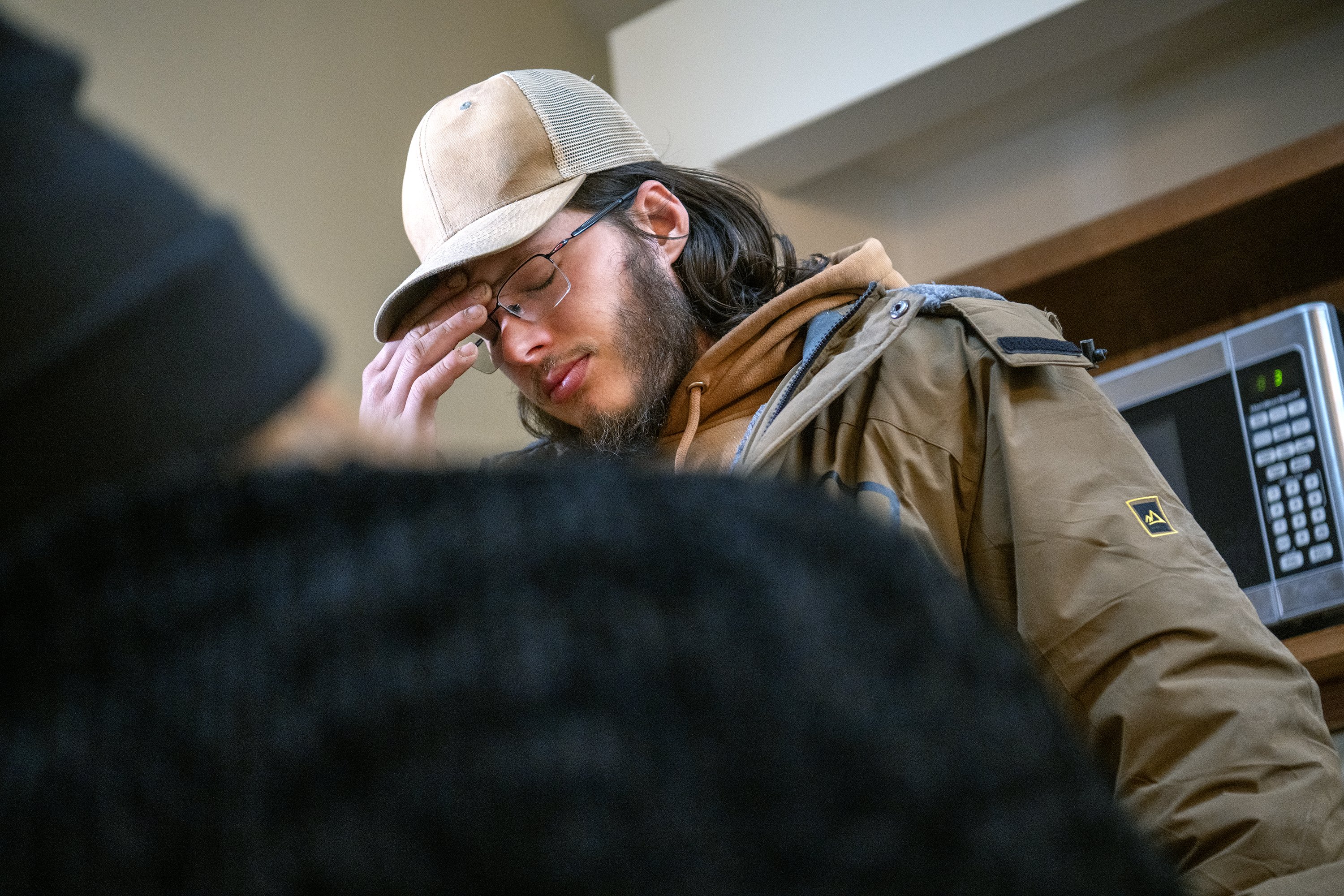
A spokesperson for U.S. Customs and Border Protection said in a written statement that the agency doesn’t operate long-term holding facilities and pointed out there are no immigration facilities to send detainees in Maine. Border Patrol said it tries to transfer its detainees to ICE custody within 72 hours.
“When detention beyond 72 hours is necessary, every effort is made to promptly transfer detainees to (ICE) custody as operationally feasible,” wrote spokesperson Ryan Brissette.
Brissette said detainees are advised of their right to consular access and provide contact “as soon as operationally feasible upon request.” He said showers are provided for those who have been detained longer than three days, and that adult detainees are fed during scheduled meal times and offered blankets.
He declined to address Segóbia’s case, citing “privacy and law enforcement sensitivities.”
Segóbia said he and the others were placed in a van and then they drove for hours until Segóbia recognized he was at the Portland International Jetport. He feared he might be flown out of the country.
Shackled and unable to use a restroom without a guard present, Segóbia said the group flew nonstop for eight hours.
“We didn’t even know where the airplane was going,” he said. “We asked them where are we going, they don’t say.”
Brissette said in his statement that their policy requires restraints during transport to be “safe, secure, humane, and professional.”
It wasn’t until they landed that Segóbia knew he was in Texas. At the Karnes County facility, they gave him a blue jumper — his first change of clothes. He had been wearing the same thing for a week.
GETTING BOND
Laura and her friends spent that first week trying to find her fiancé as Border Patrol shuffled him around Maine. They called jails and Border Patrol stations, they spoke with elected officials and met with reporters.
When ICE finally updated its online tracker to say that Segóbia was in Texas, Laura started driving south.
Donations from friends and their community helped pay for his lawyer. Segóbia said he likely spent hundreds of dollars calling attorneys before hiring her, because the facility charged him 35 cents a minute for the phones.
Laura stayed with a friend in Austin, then found a place for $40 a night closer to the facility that typically hosted oil field workers. She gathered letters of reference, background checks, work history and other documents to help prove that Segóbia deserved bond.
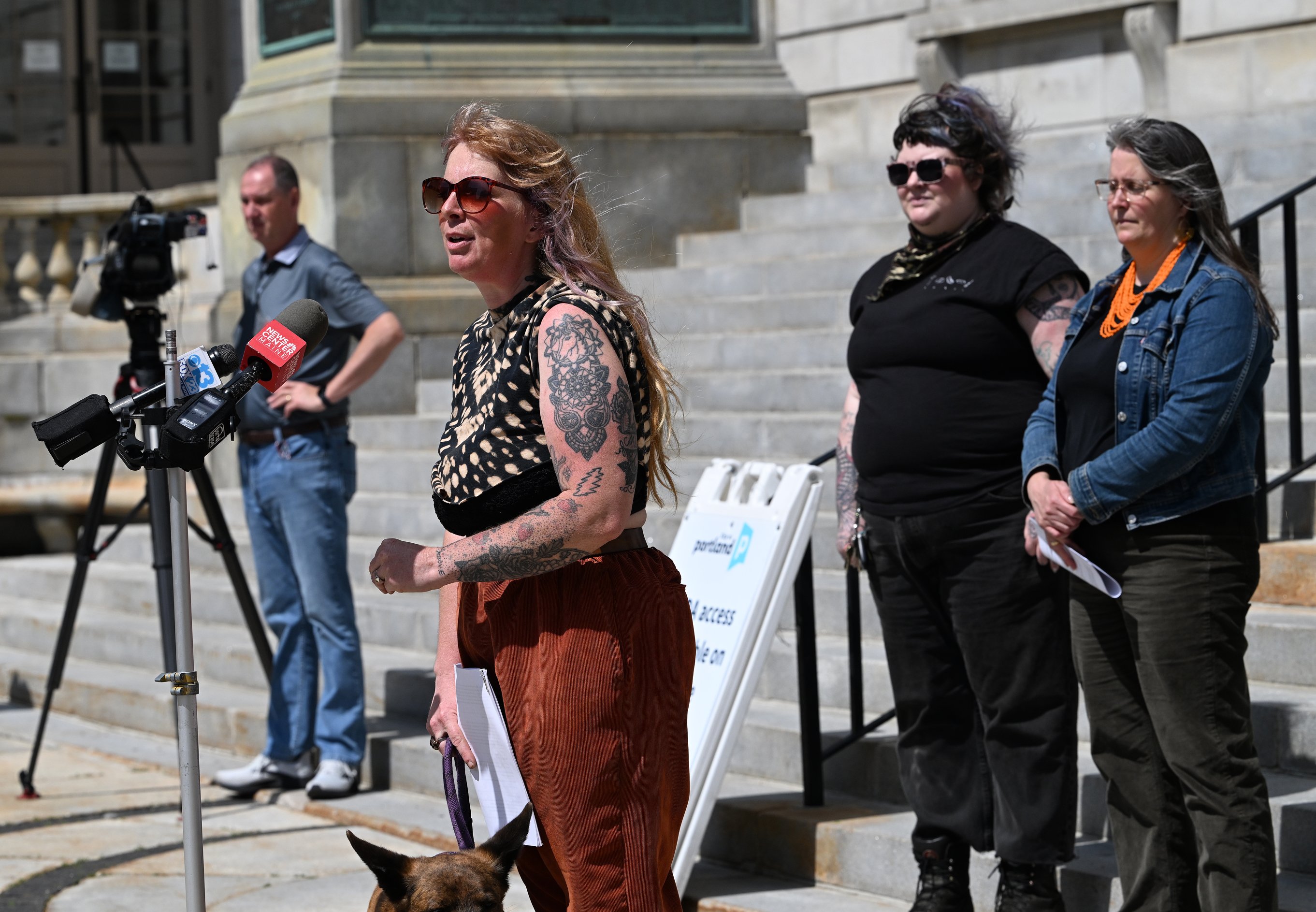
A chaplain for the facility helped the couple and three others get married on June 26. Laura had to write the immigration judge a letter, promising she was there because she wanted to be.
“I was like, ‘I, Laura Anderson, drove 3,000 miles from the great state of Maine to the great state of Texas,” she said, referring to her maiden name. “I’m not being paid to be here.”
Their marriage certificate was the last of dozens of documents they submitted to the Texas immigration judge, who considered whether Segóbia should be released on bond two weeks later.
He said the judge had considered more than a dozen other people that day, denying everyone except him and another man.
The Segóbias paid $15,000 with help from the Boston Immigration Justice Accompaniment Network, a community group that assists immigrants who have been detained. They said they plan to donate the money to someone else’s bond when this is over.
The couple left Texas a few days later, but not before helping an El Salvadoran woman who also had just been released and needed a ride to the bus stop.
When the Segóbias got home, the woman sent them a video of her daughters running to give her a hug after not seeing her in months.
BACK IN MAINE
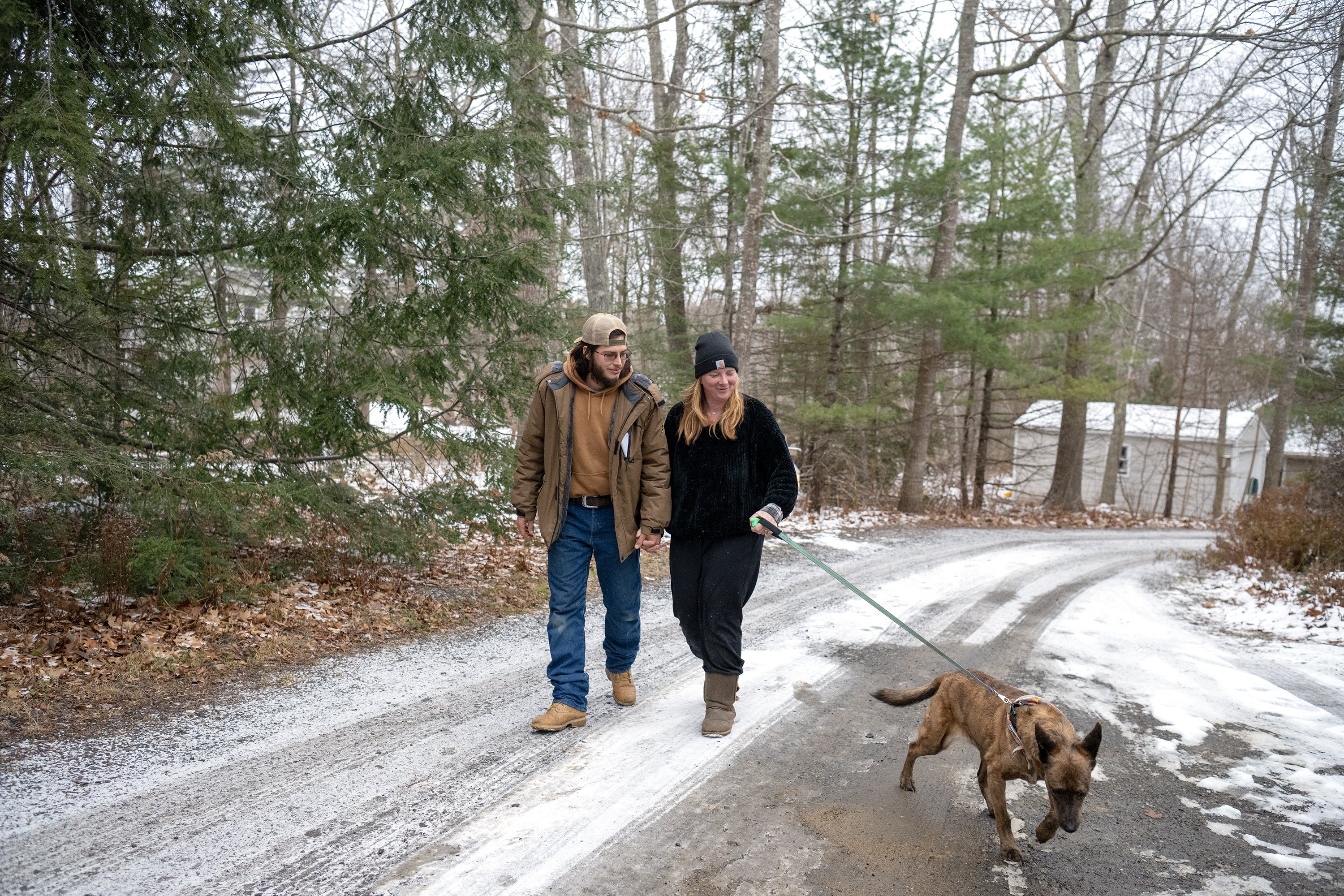
The couple eventually wants to hold a bigger wedding for their friends and family at Laura’s family home in central Maine. But it’s hard to plan for a future that’s still tangled up in immigration court.
Lucas has a hearing scheduled with an immigration court judge in Massachusetts for Dec. 18.
Morine, his attorney, said they’re asking the court to end its removal proceedings against Segóbia in order to let a different agency, U.S. Immigration and Citizenship, consider a request to adjust his legal status given that fact that he’s now married to a U.S. citizen.
“The only issue is that he overstayed, which is simply a civil violation,” Morine said. “The fact that he is married to a United States citizen, he can actually remain in the United States, go through the interview process — which is generally a very simple process — and obtain status or his residency here within the United States, versus those individuals who actually have to leave and attend an interview abroad.”
Morine said it’s unlikely her client will be detained again, because she doesn’t think he’ll commit a new violation or skip a court date.
“But of course, he knows, and I know through my practice, that unfortunately we are getting a lot of calls from clients who are unlawfully detained,” Morine said.
Laura had to get a different job, one with more consistent hours and benefits. Lucas had to wear an ankle monitor for several weeks after returning home, but he has since returned to his carpentry job, the type of job it’s been hard to find workers for. Before he was detained, Lucas was helping build a large hotel in Bar Harbor.
He hasn’t been to any DJ events since the festival in May.
