


A plan for placing a $300 million artificial intelligence data center at Lewiston’s Bates Mill complex faced a wave of opposition Tuesday and was unanimously voted down by the City Council.
Since the proposal to redevelop Bates Mill No. 3 into an 85,000-square-foot data center became public last week, city officials have been flooded with feedback from constituents, with many questioning whether the deal is worth it for Lewiston.
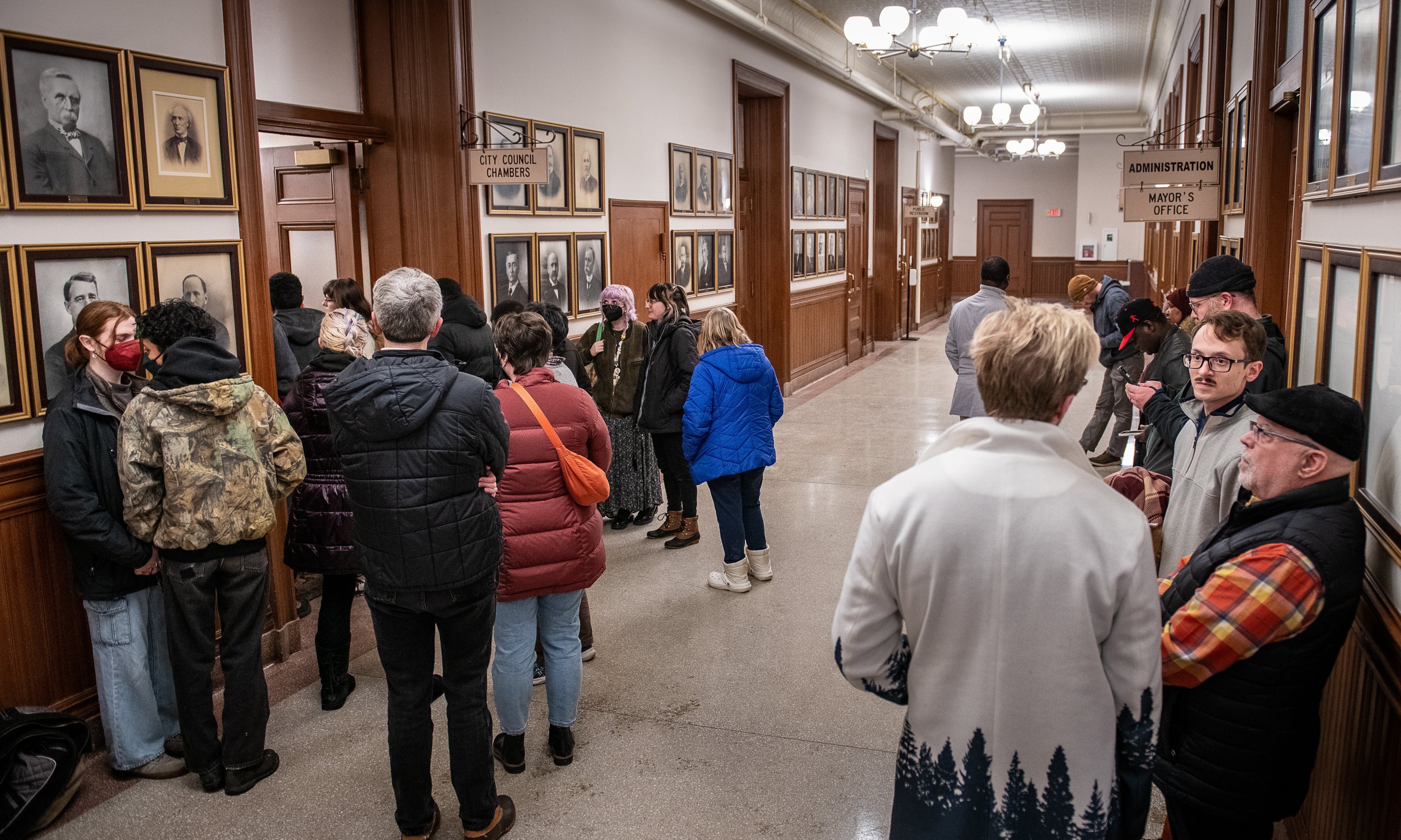
Before the standing-room-only crowd could even begin public comment Tuesday, councilors said they would vote against the project due to the overwhelming outcry over the weekend and lingering questions about the project.
The proposal by MillCompute LLC called for developing a “Tier III” AI data center on two floors of the mill, with the upper two floors becoming “modern office/innovation space for technology companies” and more.

However, officials have faced questions about the group behind the proposal, a tax deal that’s seen as favorable to the developer, and a storm of concerns over potential utility usage and environmental impacts that mirrors a national debate over the rise of AI data centers.
Council President David Chittim said “a lot of work went into” the proposal from developers, and while some resident concerns are “unfounded, there remain a number of other problems.”
Councilor Scott Harriman said the amount of public feedback he’s received on the data center proposal was “by far” the most he’s seen on any topic.
After initially being interested and on board with the project, Councilor Tim Gallant said, “the more we dug in,” the more questions he had, and “I’m not satisfied with all the answers.”

No one from the development team spoke during the meeting Tuesday.
According to MillCompute’s website, the business is “led by a team of Mainers,” and that the team includes “regional and national data center professionals, equipment suppliers and financial partners.”
MillCompute’s limited liability corporation has a Raleigh, North Carolina, address.
During public comment, residents expressed concern about the financial agreement between the developer and the city, the impact on utilities and the environment, and the idea of placing an AI data center in a historic and important area of Lewiston’s downtown.
Kyle Metivier, a Maine resident who works in AI tech and said he believes in it, said the proposal for Bates Mill No. 3 could likely capture $1 billion in revenue over the proposed 20-year deal, and will still give the developers millions in tax breaks.
Metivier said MillCompute doesn’t “have a business plan yet; you have a GoFundMe you’re asking residents to contribute to.”
The joint development agreement in front of the council included a 20-year tax increment financing and credit enhancement agreement that would return 90% of taxes on the property to the developer for the first 10 years, and 85% for years 11-20.
City staff said when taking into account equipment tax, the percentages amount to a net of 79% to the developer and 21% to the city. Under the agreement, Lewiston would receive $798,250 in property taxes annually for the first 10 years, while MillCompute would receive nearly $3 million annually.
“It will house no one, feed no one, provide no beauty, and enrich no one’s lives, only the developer’s pockets. The downtown should be for people, not machines.”
Jae Zimmermann, Lewiston resident
Jae Zimmermann, who lives and works in Lewiston, said the data center is a “poor reuse” of a significant building in an area that city officials would like to see more people.

“It will house no one, feed no one, provide no beauty, and enrich no one’s lives, only the developer’s pockets,” Zimmermann said. “The downtown should be for people, not machines.”
Greg Mitchell, a spokesman for MillCompute, said last week that developers planned to use “wholesale” power supply through Central Maine Power that does not pull from the local distribution grid that serves residences, and that the data center would contain “efficient cooling systems in a closed loop” to keep water usage to a minimum.
However, members of the public said there remained a “lack of transparency” on the project, with no info on who profits from the use, an LLC with no track record and virtually no guarantees for the city.
Councilor Josh Nagine thanked economic development staff for their work on the plan, but said the public process was flawed, with “no window to get any community buy-in.”
“And some of the concerns brought forward, I don’t have an answer for,” he said.

We invite you to add your comments. We encourage a thoughtful exchange of ideas and information on this website. By joining the conversation, you are agreeing to our commenting policy and terms of use. More information is found on our FAQs. You can modify your screen name here.
Comments are managed by our staff during regular business hours Monday through Friday as well as limited hours on Saturday and Sunday. Comments held for moderation outside of those hours may take longer to approve.
Join the Conversation
Please sign into your Sun Journal account to participate in conversations below. If you do not have an account, you can register or subscribe. Questions? Please see our FAQs.