


Maine’s recreational cannabis oversight system is under intensifying scrutiny after the state had to issue its third recall in three months.
The latest recall, on Dec. 3, was issued after testing revealed the presence of a prohibited pesticide tied to NorCO Outdoor Cannabis-branded products. The pattern has raised questions about how contaminated products continue to reach consumers, despite Maine’s mandatory testing framework for recreational cannabis.
The Maine Office of Cannabis Policy issued the first recall Oct. 27 for NorCO/Yani-branded vape cartridges after testing revealed “unsafe levels of the pesticide chlorfenapyr,” a chemical not permitted on any cannabis grown or sold in the state. They were sold at 21 recreational retail stores between July and October.
On Nov. 13, the Office of Cannabis Policy expanded the recall after further audit testing confirmed additional chlorfenapyr contaminated strains sold in retail stores dating back to March 10. The most recent recall Dec. 3 pulled cannabis flower and pre-roll products sold at 22 storefronts between Oct. 15 and Dec. 2 after tests found unsafe levels of yeast, mold, microbials and arsenic.
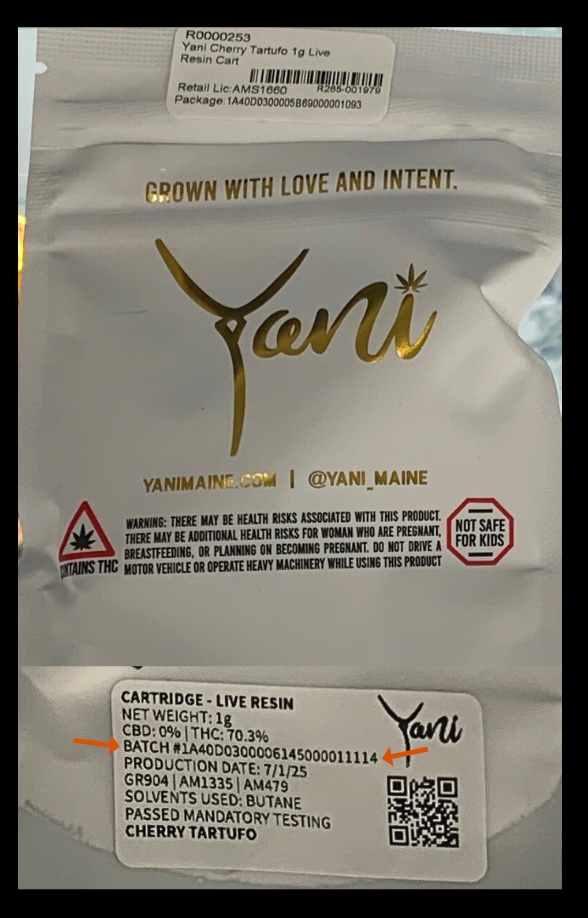
Customers have been advised to dispose of the affected products or return them to the retailer and seek medical care if symptoms occur. But the recalls raise a practical concern for consumers: Vape cartridges are typically discarded after use, along with the batch number, long before any recall is announced.
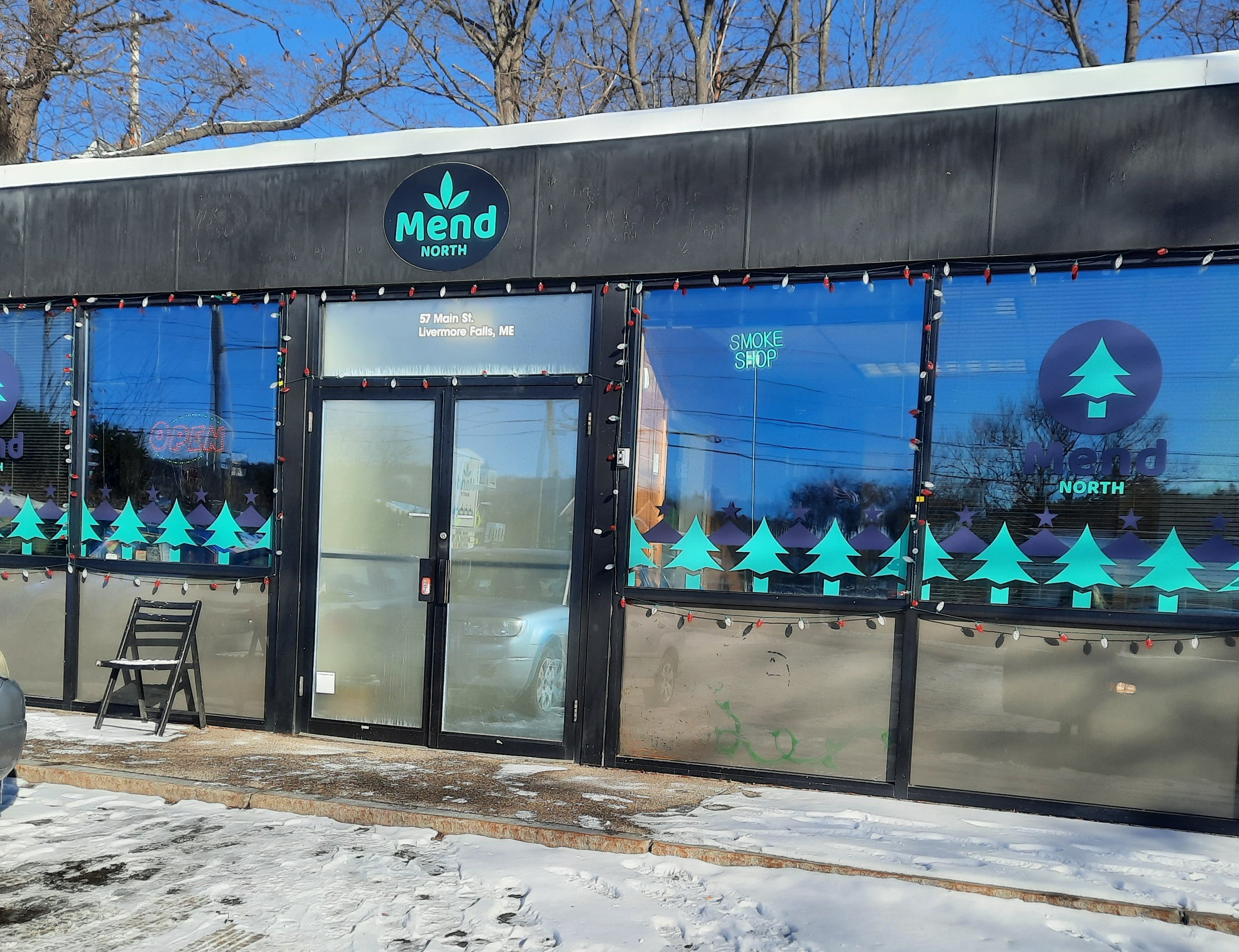
Gabe Gudmundsson, manager of Mend Cannabis Co. in Livermore Falls, said the shop has never carried any Yani-brand items. Gudmundsson said Mend has worked hard to build a reputation where customers trust the safety and consistency of its products.
She said the store is careful with inventory and would immediately pull any cannabis if a recall were issued or if a customer raised a concern about product quality.
The state has not released the number of contaminated units sold, how many remain unreturned or how many consumers may have used them.
Without access to batch IDs or a public lookup tool, many customers who purchased Yani-branded products earlier this year may have no way to determine whether the product they used was among the contaminated lots.
A Washington, D.C.-based law firm, Schmidt & Clark, LLP, has begun soliciting Mainers who purchased the recalled Yani Watermelon Chimera vape cartridges, advertising potential legal claims related to chlorfenapyr exposure.
The Midcoast Maine-based Yani Cannabis sells its products in stores from Portsmouth, New Hampshire, to Dover-Foxcroft, and even as far north as Presque Isle, according to its website.
Attempts to reach representatives of Yani were unsuccessful.
Maine legalized recreational marijuana in 2016 and state laws require products and plants to be tested for mold, yeast, pesticides, fertilizers, heavy metals and other contaminants; currently, the state’s medical marijuana industry does not.
Chlorfenapyr is especially dangerous when heated, a key concern for vape cartridges that routinely reach temperatures capable of thermally degrading pesticides.
The Environmental Protection Agency classifies chlorfenapyr, which is typically used in commercial agriculture and structural pest control, as a Category I acute toxicity pesticide, the most severe tier.
According to OCP, inhaling cannabis containing unsafe levels of chlorfenapyr can lead to high fever, sweating, nausea, vomiting and an altered mental state.
Although chlorfenapyr use is permitted in Maine, applying it to cannabis would violate state and federal label law. Licensed applicators must maintain detailed pesticide records that can be reviewed during any inspection.
Kaspar Heinrici, chief executive officer of SeaWeed Co., said the recalls immediately raised concern. He emphasized that mandatory testing is a cornerstone of the recreational market and said SeaWeed Co., which is based in Portland and South Portland, conducts additional in-house research and development testing on bulk products.
“My reaction was honestly a bit of fear, because I do not know the circumstances of what led to the contamination,” Heinrici said. “What does not seem appropriate … is to cast doubt on every operator out there. The system worked in this instance, but I would withhold moral judgment until a full investigation shows how the product both passed mandatory testing and got onto retail shelves.”
Heinrici also said the state’s testing requirements may be poorly calibrated, focusing heavily on yeast and mold thresholds while devoting fewer resources toward pesticides and heavy metals.
Stores subject to recall
Belvidere Farm
185 Pleasant St., Rockland
Blue Lobster Cannabis
200 Roosevelt Trail, Casco
Cannabis Haven
20 Union St Unit C, Auburn
1150 Center St., Auburn
341 Main St., Waterville
806 Sabattus St., Suite 2, Lewiston
265 Western Ave., Augusta
Cheech & Chong
268 Hammond St., Bangor
Friendly Fire
72 Emery St., Unit 105, Sanford
Garden Lites 420
16 North Main St., Peru
GreenLife
6 Hudson Ave., Guilford
19 Park St., Milo
Harbor Harvest
1048 Atlantic Highway, Warren
Higher Grounds of Maine
45 Wharf St., Portland
Hi-Lo Dispensary
435 Maine St., Poland
Humble Family Farms
415 Sabattus St., Suite A, Lewiston
Meristem
11 Seal Cove Road, Southwest Harbor
Pho King Great Cannabis
1114 Hammon St., Suite 2, Bangor
Rose Mary Jane
327 St. John St., Portland
Royal Leaf Apothecary
415 Main St., Presque Isle
Schedule 1
94 Portland St., Unit 1, Portland
Sweet Relief
1 Priest Road, Northport
The state said it launched the initial October recall investigation after receiving “a consumer complaint about an adverse health reaction,” and later confirmed contamination through audit testing of Yani’s products.
The Dec. 3 recall involved flower and pre-rolls that failed microbial safety testing. Audit results showed unsafe levels of yeast, mold and microbials, and some reporting noted arsenic concerns. These issues were discovered only after regulators conducted batch-wide audit testing triggered by the first incident.
Product information for third recall
Strain name: Frosted Enigma
Product type: 1/8-ounce flower
Batch number: 1A40D0300005BCD000007095
Dates sold: Oct. 24 – Nov. 20
Strain name: Frosted Enigma
Product type: 0.5-gram, 1-gram, 2-gram, and 3.5-gram pre-rolls (singles and multipacks)
Batch number: 1A40D0300005BCD000006998
Dates sold: Oct. 15 – Nov. 21
Strain name: Gold Dust
Product type: 1/8-ounce flower
Batch number: 1A40D0300005BCD000007094
Dates sold: Oct. 21 – Nov. 21
Strain name: Gold Dust
Product type: 0.5-gram, 1-gram, 2-gram, and 3.5-gram pre-rolls (singles and multipacks)
Batch number: 1A40D0300005BCD000006994
Dates sold: Oct. 15 – Nov. 21
Strain name: Blackberry Pie
Product type: 0.5-gram, 1-gram, and 2-gram pre-rolls (singles and multipacks)
Batch number: 1A40D03000014B5000002262
Dates sold: Nov. 7 – Dec. 2
Strain name: Sour Cookies
Product type: 0.5-gram, 1-gram, and 2-gram pre-rolls (singles and multipacks)
Batch number: 1A40D03000014B5000002263
Dates sold: Nov. 7 – Dec. 2
Strain name: Street Tartz
Product type: 0.5-gram and 1-gram pre-rolls (singles and multipacks)
Batch number: 1A40D03000014B5000002264
Dates sold: Nov. 7 – Dec. 2
Maine’s own testing reports show that contamination concerns are not isolated, but the state’s data structure limits how precisely the public can interpret failure rates. In the most recent quarter, licensed labs reported 4,901 recreational samples submitted for compliance testing and 298 substance test failures.
Diana McKenzie, a chemist for the Office of Cannabis Policy, said in a December 2024 webinar on sample collection that testing facilities submit data each week, which is uploaded to the agency’s database.
McKenzie said anomalies between initial failures and clean retest results warrant scrutiny.
“It can be very unlikely such as with the heavy metals or pesticides,” she said, adding that those contaminants are not allowed to be remediated, or cleaned. So when a failed test passes on a second test, “those get flagged for further investigation by the compliance team to find out how that might have happened.”
Cannabis cultivators in Maine are permitted to remediate batches that fail microbial testing using approved post-harvest techniques such as heat, filtration, solvent processing or irradiation. However, remediation is not allowed for pesticide failures, since certain chemicals remain hazardous even after heating or extraction.
Office of Cannabis Policy reviews all test results and flags suspicious, inconsistent or unexpected results, McKenzie said.
Maine does not publish how many failed samples were ultimately remediated, destroyed or diverted. Consumers must rely entirely on regulator assurances during a recall.
Maine uses a statewide batch-tracking database called Marijuana Enforcement Tracking Reporting Compliance to record production histories, tests and retail movement, but none of this recall data is accessible to consumers or retailers during a contamination event.
Vern Malloch, deputy director of operations for the Office of Cannabis Policy, said when a product has failed testing and is remediated, the remediation method must be listed, but “in many cases that step is being missed.”
Products that undergo remediation must be disclosed on compliance labels, giving consumers the opportunity to identify batches that did not pass their initial microbial screen.
Three recalls involving Yani / NorCO (2025)
Recall #1 – Vape cartridges (initial pesticide recall)
Announcement: Oct. 27, 2025
Product: Watermelon Chimera live resin vape cartridges
Reason: Unsafe levels of chlorfenapyr pesticide
Sold: July 10 – Oct. 16
Trigger: Consumer adverse health complaint led to audit confirmation
Recall #2 – Expanded vape cartridge recall
Announcement: Nov. 13, 2025
Products Added: Apples & Bananas, Cherry Tartufo, Lemon Cherry Pie cartridges
Reason: Chlorfenapyr confirmed in additional strains during expanded audit testing
Notes: Expansion added new strains, batch numbers and retail locations beyond the original recall
Recall #3 – Flower and pre-roll microbial recall
Announcement: Dec. 3, 2025
Products: Flower and pre-rolls; Frosted Enigma, Gold Dust, Blackberry Pie, Sour Cookies, Street Tartz
Reason: Unsafe levels of mold, yeast and microbials confirmed through audit testing
Consumer guidance: Products should be returned or disposed; consumers with symptoms advised to seek medical care
One of the central questions is how chlorfenapyr made it through Maine’s compliance testing system. Maine allows cultivators to choose the material they submit for mandatory testing. States such as Colorado and Michigan use independent, regulator-collected samples, which reduce the chance that non-representative or “clean” material is submitted while contaminated product reaches retail shelves.
According to the national law firm Schmidt & Clark, consumers who bought products from the original recalled batch between July 10 and Oct. 16, and later experienced symptoms such as fever, sweating, nausea, vomiting or confusion, may have an argument for legal recourse.
Schmidt & Clark notes that no class action specific to the Yani/NorCO vape recall has yet been publicly filed, but argues that a mandatory recall involving a known toxic pesticide could support product-liability claims alleging a defective product, failure to warn and breach of warranty.
OCP has not released the original Certificate of Analysis from NorCO’s compliance test and has not commented on whether the lab that performed the test will face further scrutiny based on the failed audit.
For Heinrici, the CEO of SeaWeed Co., said improving testing is a shared responsibility.
“If we truly believe cannabis can enhance well-being … we have to agree on what tests are important and submit to that testing to ensure public safety,” he said.

We invite you to add your comments. We encourage a thoughtful exchange of ideas and information on this website. By joining the conversation, you are agreeing to our commenting policy and terms of use. More information is found on our FAQs. You can modify your screen name here.
Comments are managed by our staff during regular business hours Monday through Friday as well as limited hours on Saturday and Sunday. Comments held for moderation outside of those hours may take longer to approve.
Join the Conversation
Please sign into your Sun Journal account to participate in conversations below. If you do not have an account, you can register or subscribe. Questions? Please see our FAQs.