


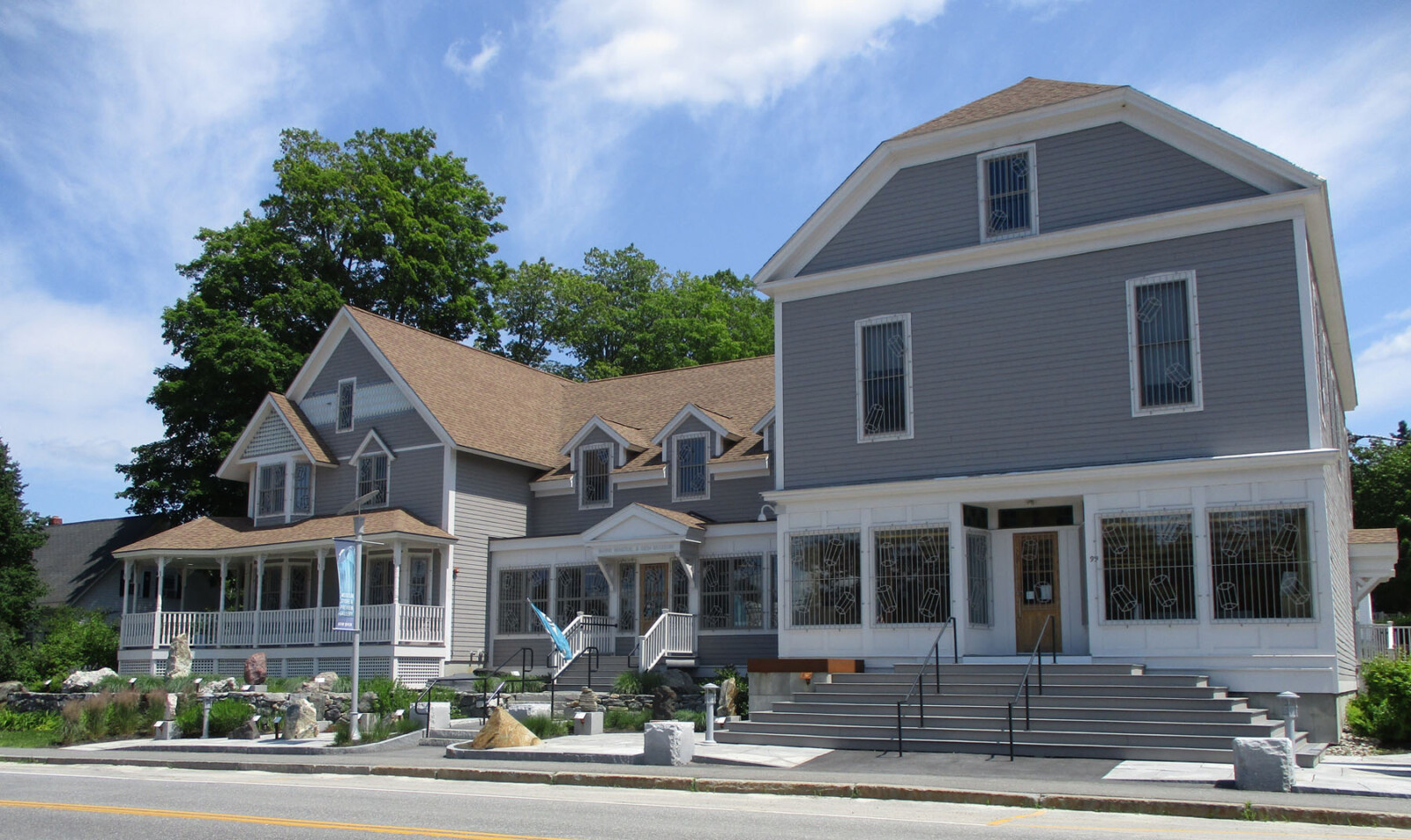
At the Maine Mineral and Gem Museum in Bethel, history and culture converge in a unique way.
The 15,000-square-foot science museum explores the geologic history of Maine and beyond through interactive exhibits. It houses the largest collection of Maine gems and minerals of any institution in the country, along with major meteorite holdings, including lunar and Martian specimens.
There, the state’s mining history is key in the narrative of Maine’s geological story, as tourmaline takes center stage. Pieces of the mineral from historic and modern finds illustrate historical craftsmanship and contemporary design.
Each object in the exhibits, from jewelry pieces to large mineral specimens, help anchor the connection between the state’s mining history and cultural legacies.
“These objects help tell the story of place in a way words alone cannot,” said Michelle Landry, executive director of Historic Rangeley.
Many of the exhibits draw from the personal collection of Frank C. Perham, a prominent Maine mineral expert who contributed to some of the more important finds in the state, including 1972’s “Big Find.” Perham’s legacy is present in the preserved specimens, archival materials and interpretive exhibits.
As part of its “Big Find” exhibit, the museum commissioned 12 artists and craftspeople to create jewelry and decorative works using tourmaline recovered from the 1972 Newry discovery.
Tourmaline is a complex mineral group known for its wide range of colors, including green, pink, red, blue and multicolored crystals. While tourmaline occurs worldwide, Maine specimens are valued for their clarity, saturated color and frequent occurrence in well-formed crystals.
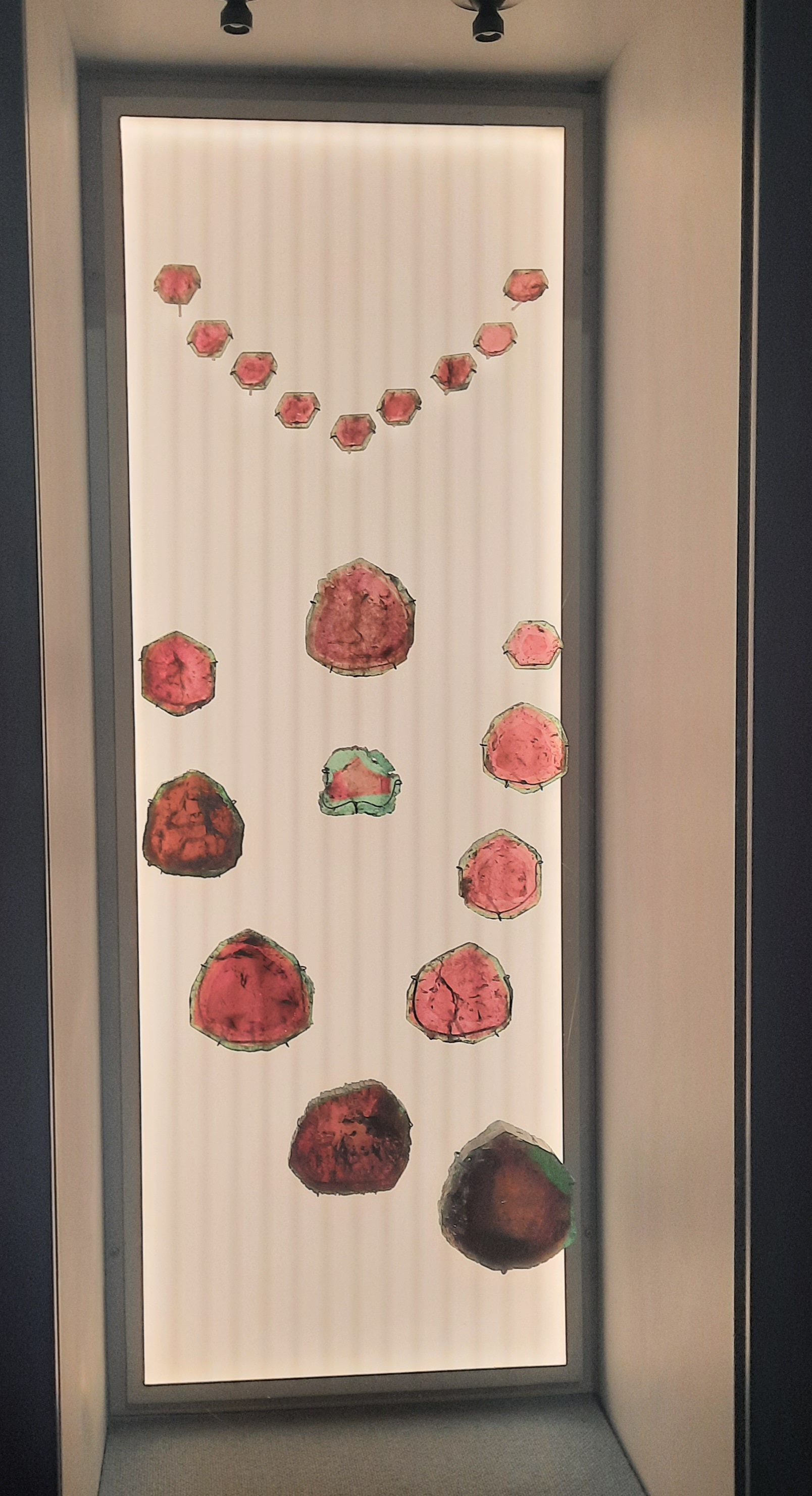
In the weeks following the “Big Find” at the Dunton Mine in Newry, the volume and value of the recovered tourmaline quickly outgrew on-site handling. The Plumbago Mining Corporation leased a bank vault in Rumford, along with office space above it, where the material was secured, sorted and prepared for distribution to dealers and collectors nationwide.
To mark the project’s completion, the museum hosted “The Big Reveal” in 2022, a runway-style event showcasing 12 finished jewelry pieces created by artists from across the country. The works incorporated tourmaline gems from the “Big Find” ranging from 9.78-49.30 carats in size and representing a wide range of colors and cutting styles.
The gems used in the pieces were donated to support museum fundraising efforts and were collectively valued at approximately $300,000. Participating artists represented South Dakota, Colorado, New Mexico, Massachusetts, New York and Maine, underscoring the national reach of Maine’s 1972 discovery and its continued influence on contemporary jewelry design.
Alexander U. Falster, an experimental chemist and researcher at the museum’s William B. “Skip” Simmons Research Laboratory, said the institution focuses on both preservation and scientific context.
“The museum works to preserve not only extraordinary specimens, but also the historical and scientific context in which they were found,” Falster said. “Many Maine tourmalines are chemically complex and visually striking, and they continue to inform ongoing research.”
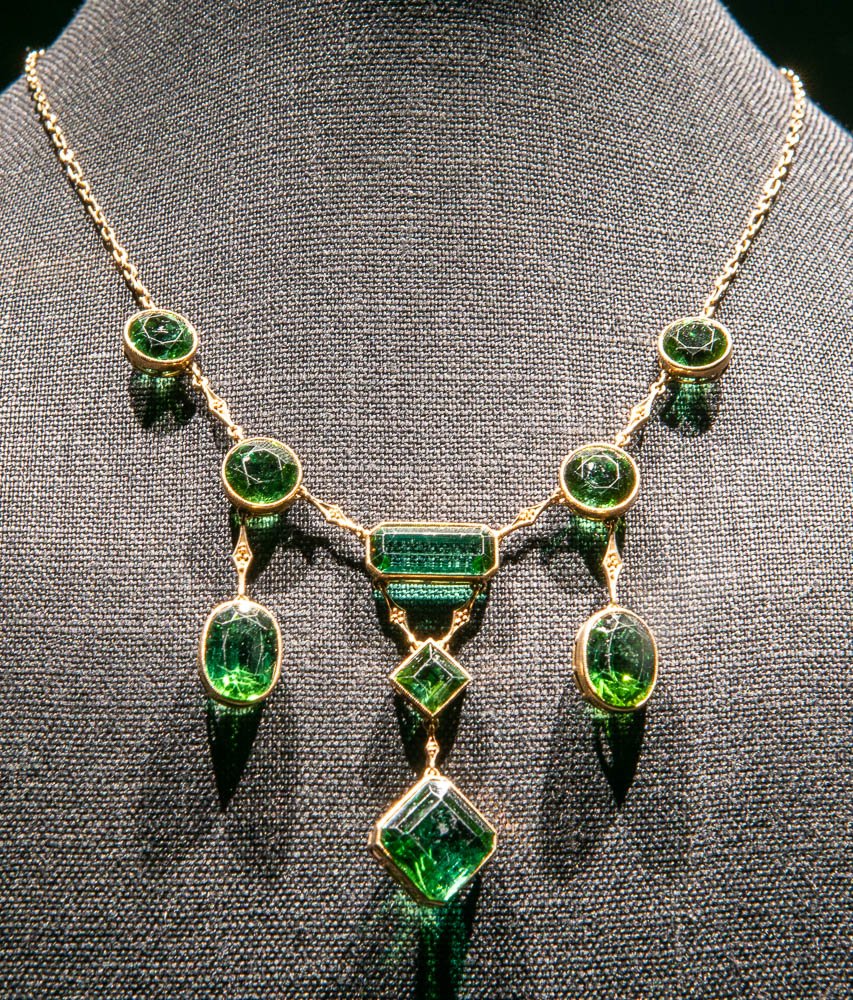
The museum’s collection includes historically significant jewelry tied to Maine’s mineral heritage. Among its notable pieces is the Peary Necklace, commissioned in 1913 by Arctic explorer Robert E. Peary as a birthday gift for his wife, Josephine. The necklace features Maine tourmaline mined in Auburn in 1907 and is part of the permanent collection at the museum, linking early 20th-century exploration, craftsmanship and Maine’s gem industry.
“There is something powerful about holding an object that has survived for thousands of years and knowing people walked this land long before us.”
Michelle Landry, executive director of Historic Rangeley
Educational ties also extend to the Farmington area. Larry Tuttle, assistant professor of geology at the University of Maine at Farmington, said direct engagement with Maine geology is essential for students.
“In all of my classes, I include content that focuses on Maine’s geologic heritage,” Tuttle said. “Field trips to local quarries and to the Maine Mineral and Gem Museum allow students to physically explore that heritage and understand that these resources exist in their own backyard.”
History and interpretation also play a role in connecting people to the land.
“There is something powerful about holding an object that has survived for thousands of years and knowing people walked this land long before us,” said Landry, of Historic Rangeley.
Jason Latham, natural resource specialist with the Rangeley Lakes Heritage Trust, said understanding what lies beneath the surface adds meaning to the landscape.
“Understanding what lies beneath the surface adds another layer to people’s connection to this region,” Latham said.
Tourmaline specimens from Maine continue to circulate through regional mineral shops and galleries in communities including Farmington and Wilton, connecting local commerce to a global collector market.
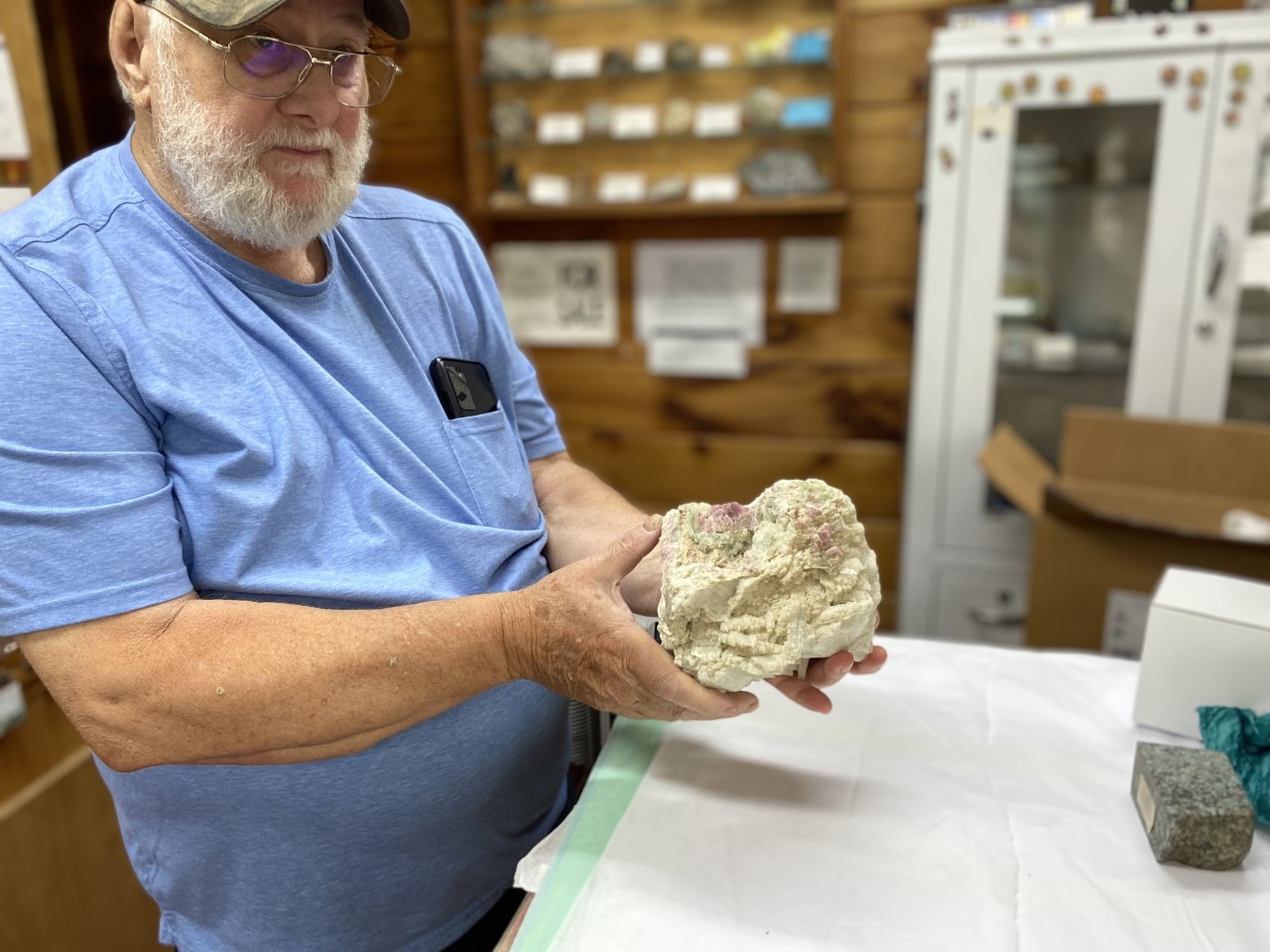
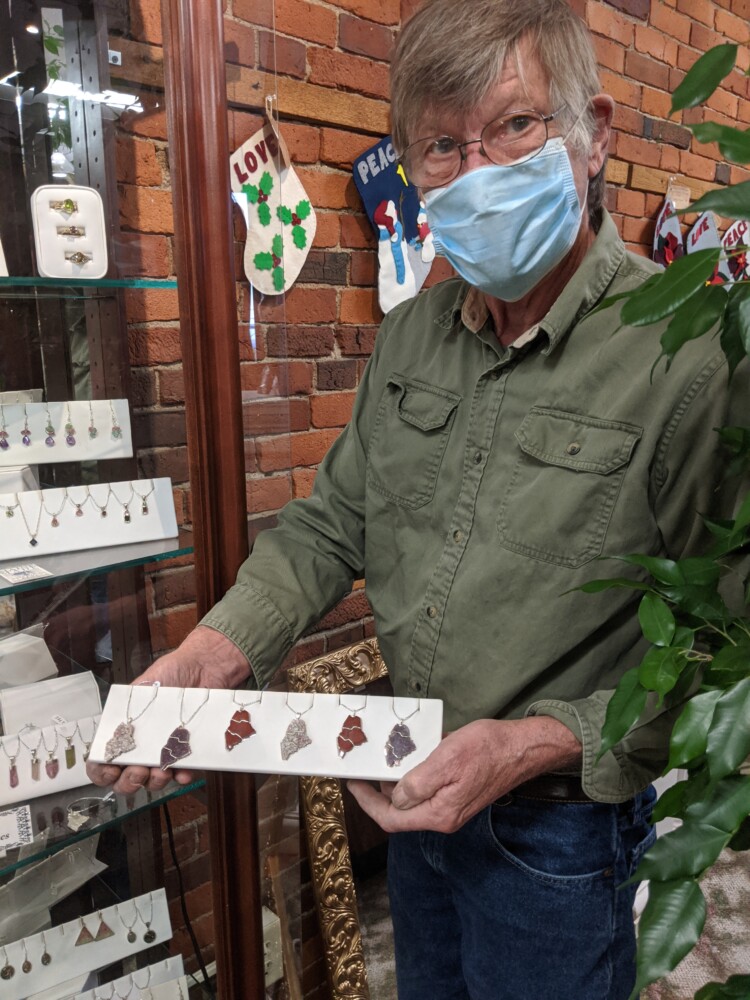
Local jewelers in the Farmington area, like Ron Gelinas of Mainestone Jewelry, have also incorporated Maine tourmaline into wearable art, reflecting the mineral’s continued cultural and economic presence beyond museums and collecting circles.
Although large-scale mining has slowed since the 1970s, Maine tourmaline remains an active area of study and interest. New finds, museum research and private collecting continue to shape understanding of the mineral’s formation and distribution, even as increased online access expands awareness of Maine’s mineral heritage far beyond the state’s borders.
EDITOR’S NOTE: This story is the second part of two stories looking at the history and cultural importance of tourmaline in Maine. Read the first part here.

We invite you to add your comments. We encourage a thoughtful exchange of ideas and information on this website. By joining the conversation, you are agreeing to our commenting policy and terms of use. More information is found on our FAQs. You can update your screen name on the member's center.
Comments are managed by our staff during regular business hours Monday through Friday as well as limited hours on Saturday and Sunday. Comments held for moderation outside of those hours may take longer to approve.
Join the Conversation
Please sign into your Sun Journal account to participate in conversations below. If you do not have an account, you can register or subscribe. Questions? Please see our FAQs.