


Marcos Gaspar-Da Silva has been held in five correctional facilities since U.S. Immigration and Customs Enforcement arrested him on his way to work.
It’s been less than three weeks.
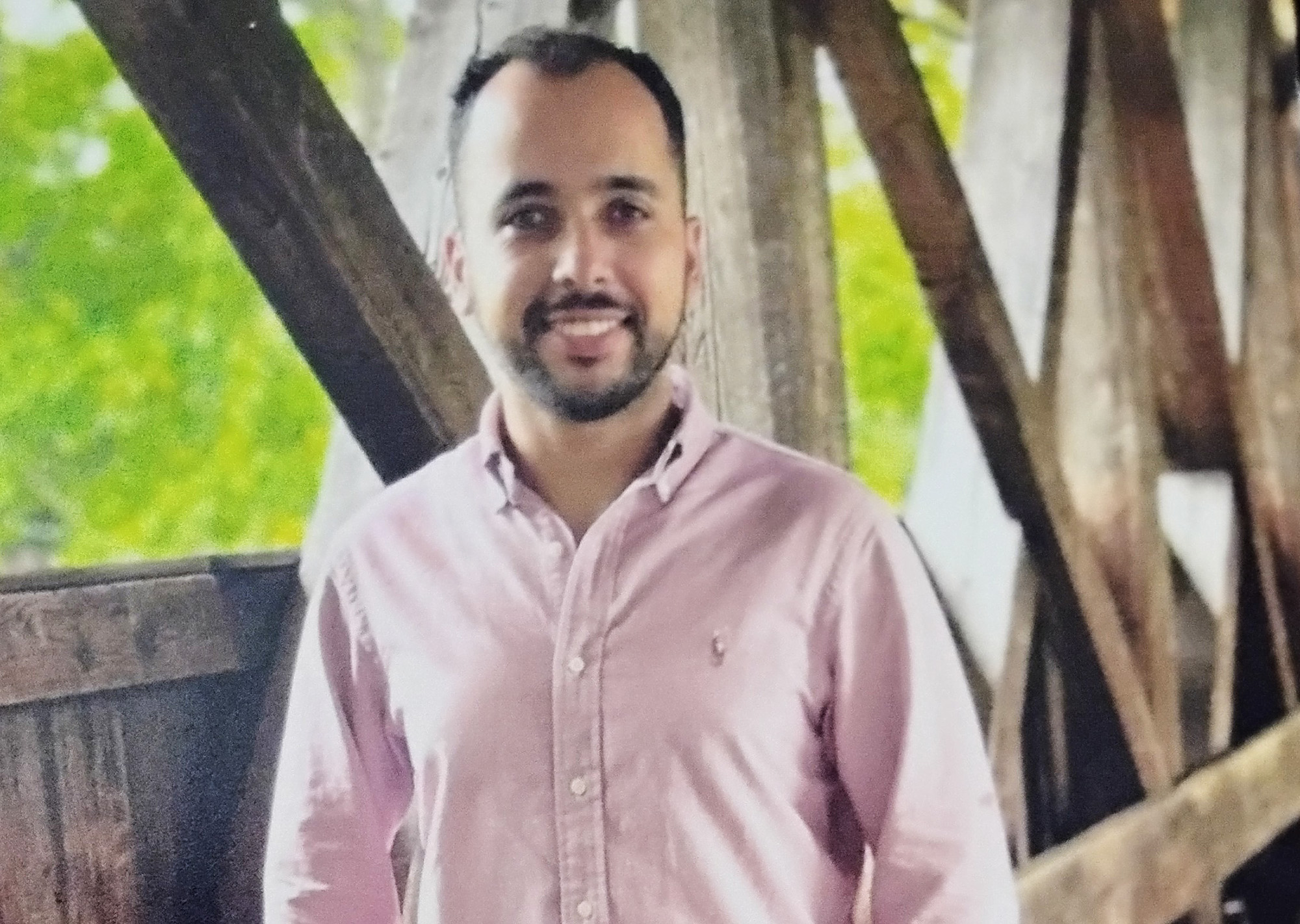
His wife, Alessia Gaspar-Da Silva, said he was constantly disappearing from and reappearing in ICE’s online detainee tracker after his arrest on Jan. 20. Searching for her husband, while he has been shuffled across several different states and facilities, has taken its toll.
“They’re cutting him off from me,” she said. “This is not due process. This is wearing people down. This is giving them doubts and trying to make them weaker, and playing a shell game with human lives.”
Attorneys and families in Maine say it has become even harder to locate detainees who have been arrested by immigration authorities and flown out of New England since ICE’s recent enforcement surge in the state. The Department of Homeland Security has said the operation led to the arrest of more than 200 people. In addition to concerns about the long distances, lawyers say ICE’s online detainee tracking tool is becoming increasingly unreliable.
Neither ICE nor DHS responded to requests for comment. Attorneys for the agencies said in court records last year that people are sometimes sent to facilities in other states because there’s not enough bed space in New England.
Immigrant rights advocates and state leaders have questioned the capacity issue, after ICE decided to stop holding immigrants at the Cumberland County Jail in Portland, following Sheriff Kevin Joyce’s criticism of the agency’s arrest of a corrections officer who was authorized to work in the U.S. Joyce called the actions “bush-league policing.”
Federal detainees were moved out of the Portland jail on Jan. 22 and, based on court records, at least some were sent to Massachusetts. Joyce said that, for the past several months, the jail typically held an average of about 60 inmates for ICE.
Public records reviewed by the Boston Globe confirmed ICE is pursuing a 1,500-bed facility in Merrimack, New Hampshire. Local officials have shared concerns about the plan, according to reporting from New Hampshire Public Radio.
Immigration lawyers and families of people arrested by ICE say finding detainees has been a challenge since President Donald Trump took office.
The Immigrant Legal Advocacy Project, which provides pro bono help in Maine, said it received more than 70 referrals during ICE’s recent operation. That has included requests from people now being held in facilities in Mississippi, Kentucky, Texas and Louisiana, co-legal director Melissa Brennan said.
She said the transfers have made it hard to keep in touch with clients and advocate for them.
One detainee from Maine reported to ILAP that he and others at an ICE facility in Louisiana were sleeping in a tent by tarmac. Several detainees, like Gaspar-Da Silva, have been shuffled between facilities and states multiple times.
“There appears to be no rhyme or reason to it,” Brennan wrote in a later statement.
WAITING FOR ANSWERS
Rep. Chellie Pingree, D-1st District, and Maine state leaders, including Gov. Janet Mills and Attorney General Aaron Frey, have asked DHS for the whereabouts of the people arrested during the recent operation.
Federal officials have not yet provided answers, according to Pingree and a spokesperson for Frey.

“We don’t really know the rationale behind this,” Pingree said in an interview Thursday. “Sometimes we speculate that it’s to make it impossible for families to locate them, or for judges to issue orders.”
Members of Pingree’s constituent services team, which provides help to Mainers interacting with federal agencies, said they have received nearly 3,500 ICE-related calls since Jan. 1.
“It was a lot of people not knowing where their loved ones were,” caseworker Rona Sayed said on Thursday. “It was all a frenzy after that.”
Most of the detainees reported as missing to Pingree’s staff have been located and connected to legal representation, they said.
The office continues to hear from people that “it feels like a huge chunk of our community has just up and disappeared,” caseworker Christina Starr said. “Families we’ve been working with for years have been torn apart overnight.”
A federal judge will typically issue an order, prohibiting ICE from moving detainees who have filed petitions alleging they’re being held in violation of their constitutional rights.
These no-transfer orders allow a judge time to consider the arguments. Lawyers say filing these petitions has become a crucial step in keeping their clients in New England.
In a handful of recent Maine cases reviewed by the Press Herald, judges found that ICE had violated their orders by moving the detainees out of state. That includes two immigrants who ICE transferred from the Cumberland County Jail to Massachusetts on Jan. 22 and two men who had been flown to Louisiana after they were arrested by Border Patrol agents at a jobsite in Bethel.
Judges ordered that the two detainees moved from the jail be released and that the men arrested in Bethel be returned to Maine.
‘WHO WOULD BE FIGHTING FOR HIM?’
In Marcos Gaspar-Da Silva’s case, a federal judge in Massachusetts ordered on Jan. 23 that ICE not move him out of state. According to court records, his attorney had filed a petition that same day, alleging his client was being detained in violation of his constitutional rights.
Marcos Gaspar-Da Silva, a contractor originally from Brazil, entered the country as an asylum seeker and, since 2024, has been applying for a green card through his wife, who is a U.S. citizen. That application was pending when he was detained last month.
His wife said that after his arrest she realized her husband was moved from Plymouth County Correctional Center to an ICE processing center in Basile, Louisiana. ICE then transferred him to a staging center in Alexandria, Louisiana, his wife said, before flying him to Arizona where he’s been held at facilities in Mesa and Florence.
ICE did not respond to requests to discuss Marcos Gaspar-Da Silva’s transfers or the court orders in his case.
Alessia Gaspar-Da Silva said that in conversations with her husband since his arrest, he told her about an ICE officer who had warned him each facility would only get worse.
In one facility, she said, her husband told her that he was held in a small room with 40 other men, shackled for longer than five hours. There were no beds and only one exposed toilet. In another, he reported there was overcrowding, no showers and the food made people sick, his wife said.
Alessia Gaspar-Da Silva said she gets anxious when she’s not by her phone because she might miss a call from her husband and an opportunity to learn where he is and how he’s doing. Even while taking a shower, she’s worried she might miss him.
“The worry of, ‘If I was to get into a car accident, who would take over?'” she said. “Who would he have to call, and who would be fighting for him?”

