

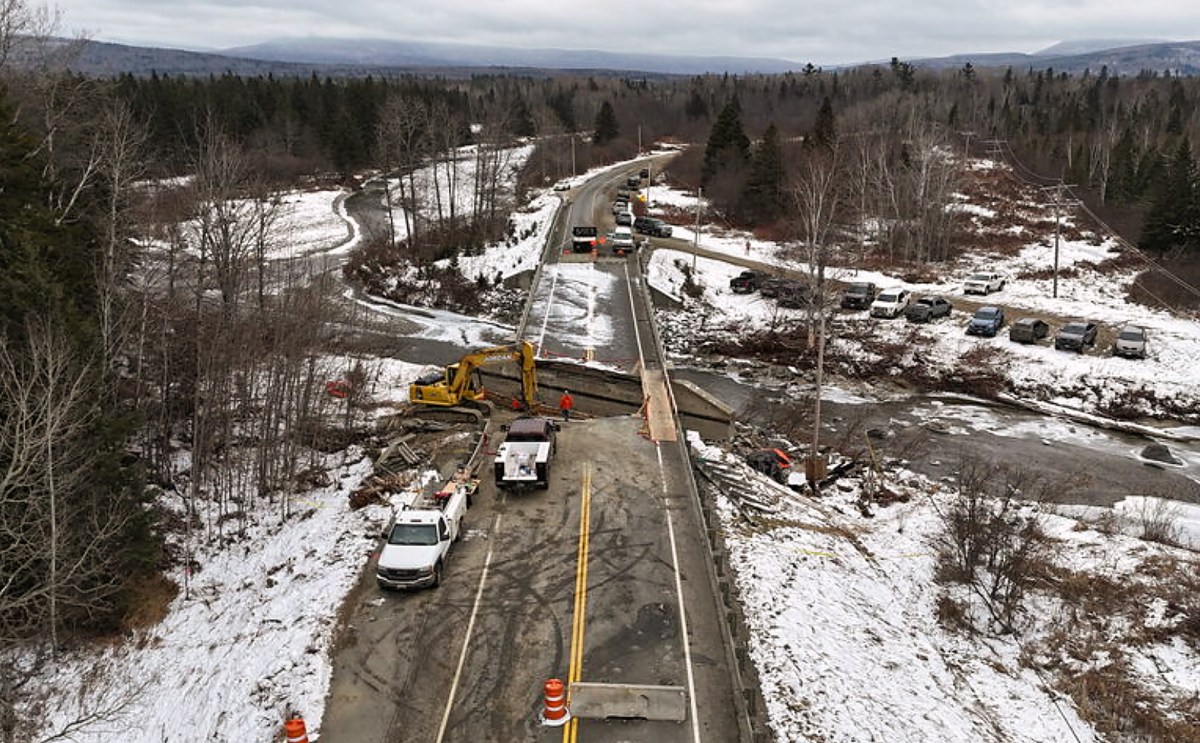
With winters growing more unpredictable, the Maine Forest Service has issued guidance to help the state’s loggers, foresters and woodlot owners navigate the new era of extreme weather.
The 42-page handbook acknowledges a stark reality for people who earn their living in the Maine woods: the traditional methods are often no longer enough to handle the unseasonable thaws and heavy rains that are increasingly common in a changing climate.
“Extreme weather events aren’t just more frequent and more severe but are inevitable,” the guide warns. “Being prepared for these events with the tools and ideas described in this manual is a good start.”
Failure to adapt would have economic as well as environmental consequences. Washed-out roads stall harvests for an industry that is already suffering razor-thin profit margins. Meanwhile, unchecked runoff can scar the forest floor and choke trout streams with sediment.
Maine’s $582 million a year logging industry has been under stress due to low demand, reduced markets, shrinking operational capacity and high equipment costs, according to Dana Doran, the executive director of the Professional Logging Contractors of the Northeast.
Although logging is done year round, Maine’s peak season occurs in the winter, starting when the ground freezes so the heavy bunchers, skidders and loaders used to cut, move and stack logs in steep terrain will not destroy the forest soil.
Though this winter has been somewhat of an outlier, warmer winters due to climate change are causing longer, more frequent shutdowns. Winter is Maine’s fastest warming season, with average winter temperatures rising about twice as fast as summer temperatures. In northern Maine, winters are about 6.5 degrees warmer than in 1970.
With warmer winters come more frequent and ferocious storms. According to an industry poll, Maine logging companies lost an estimated $2.6 million due to infrastructure damage and lost productivity in the “Grinch Storm” of December 2023, Doran said.
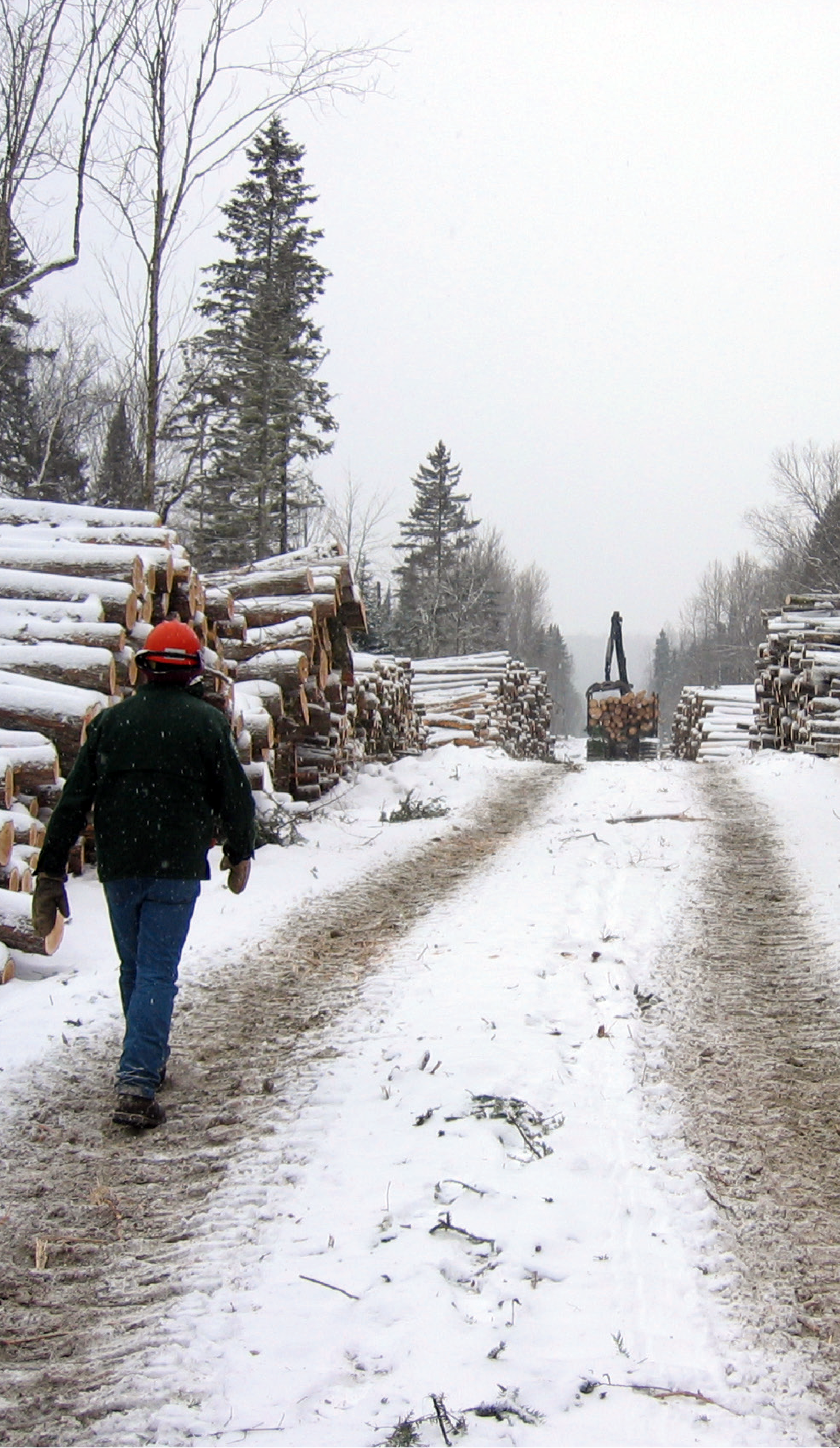
The Maine Forest Service is now urging loggers to expect extreme weather every harvest. In the handbook, which was intended to suggest best practices rather than require specific action, state loggers are asked to voluntarily adopt proactive behavioral changes.
Some of the practices are already used in the field, Doran said. For example, most loggers already use online soil maps to identify wood on dry, higher ground that is safe to work on during wetter periods, and saturated risky areas that should only be worked when the ground is frozen.
To be certain, loggers can drive a piece of rebar into the ground to measure the frost layer depth.
The manual urges loggers to embrace nontraditional ways to divert storm or thaw water and the sediment it carries away from logging roads and critical environmental areas, like trout streams, using hay bales, snow berms and slash-backed logs.
These suggested practices could be employed by more loggers, Doran said — when time permits. Field conditions can change quickly, he said. A contractor probably doesn’t have enough time to lay erosion-control matting over a 5-mile forest road before every winter storm hits, he said.
Perhaps the most significant change for Maine’s woodlot infrastructure is the call to go big. The handbook recommends upsizing the standard 15-inch culverts used to divert water to 18 or even 24 inches to prevent ice and debris clogs during sudden thaws.
The manual urges loggers to avoid crossing streams whenever possible. If a crossing is necessary, the state now recommends that bridges and culverts be sized 20% larger than the width of the stream to handle the high-volume flows associated with extreme storms.
Doran said logging contractors don’t have the financial means to install bigger temporary stream crossings and culverts or erosion-control silt fencing for every three-week stumpage job — where a landowner sells trees still on-the-stump to a logger to harvest — in southern Maine, Doran said.
Loggers have been asking the Maine Forest Service to include funding in its budget to help them adopt these kind of best practice management strategies for several years, Doran said. Loggers in Vermont have a $1 million state assistance fund to help them, he said.
Still, Doran appreciates the intent of the handbook: “It’s definitely the direction we’ve got to go.”

We invite you to add your comments. We encourage a thoughtful exchange of ideas and information on this website. By joining the conversation, you are agreeing to our commenting policy and terms of use. More information is found on our FAQs. You can update your screen name on the member's center.
Comments are managed by our staff during regular business hours Monday through Friday as well as limited hours on Saturday and Sunday. Comments held for moderation outside of those hours may take longer to approve.
Join the Conversation
Please sign into your Sun Journal account to participate in conversations below. If you do not have an account, you can register or subscribe. Questions? Please see our FAQs.