

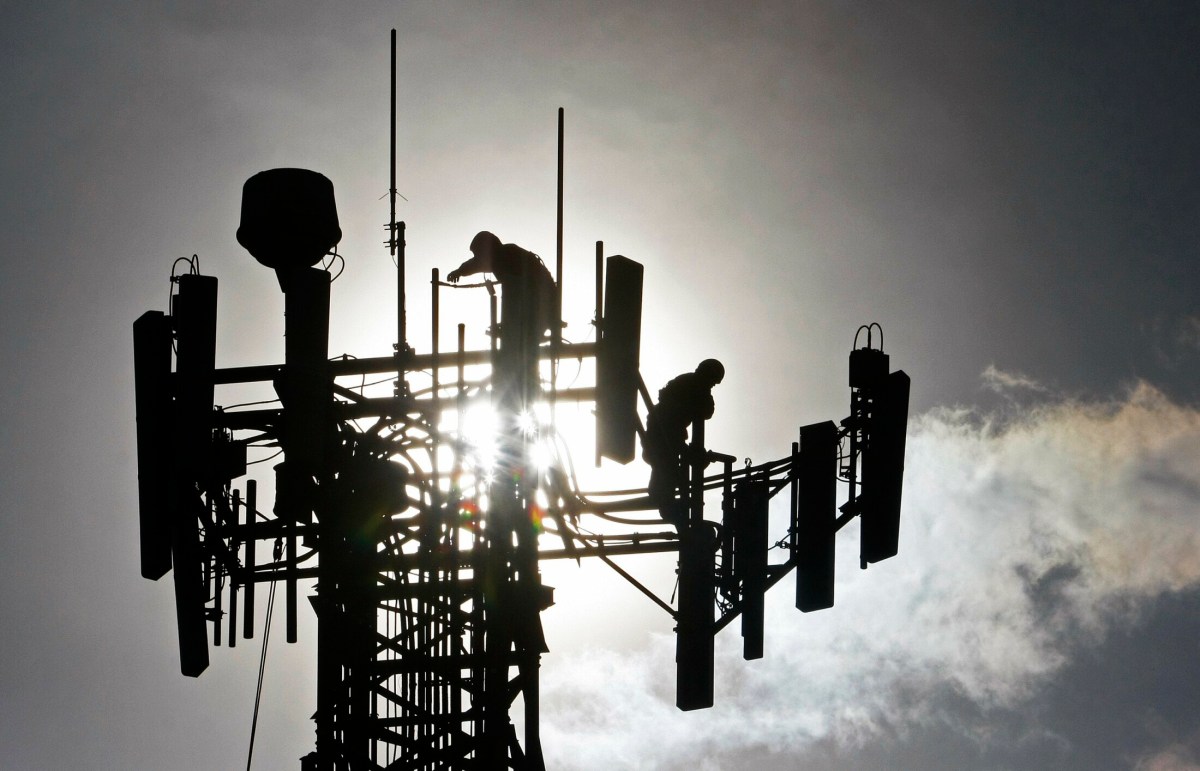
A wireless networking company is suing the town of Nobleboro after local officials denied its application to build a Verizon Wireless cell tower.
Blue Sky Towers III, LLC, last year applied to build a nearly 200-foot tower on the northern edge of town. The tower would “remedy a significant gap in coverage” along Route 32 and near the narrows of Damariscotta Lake, the company claimed in a lawsuit filed Tuesday.
But Nobleboro’s zoning ordinances prohibit any cell towers from being built more than 300 yards from U.S. Route 1.
Last month, the Nobleboro Board of Appeals ruled against approving the tower. Blue Sky had requested an exemption from the zoning rules, which the board unanimously denied.
In its lawsuit, Blue Sky said that the town’s ordinance and the board’s decision violate federal telecommunications laws. Under the Federal Communications Act of 1934 and the Telecommunications Act of 1996, state and local governments cannot take actions that would prohibit “the provision of wireless services” or other telecommunication.
In its filing, Blue Sky called the appeals board’s decision “an effective prohibition of personal wireless services in northern Nobleboro.” It is asking that the court order the planning board to approve the site plan and issue all necessary permits to begin construction.
The company claims that the town’s decision will cause itself, Verizon and their customers “irreparable harm” unless overturned.
The Nobleboro Board of Appeals, Planning Board and town as a whole are named as defendants in the suit.
On a Thursday morning phone call, a representative of Blue Sky said no one was immediately available to discuss the lawsuit, and suggested calling back. Later calls went unanswered.
David Libby, chair of the appeals board, said no one in the town’s government — including its attorney — had been notified of the lawsuit before a reporter inquired Thursday morning. He declined to speak about the case or the board’s decision, saying he was waiting for guidance from other officials on how to approach the suit.
Libby said he was not necessarily expecting a lawsuit to follow the board’s ruling, but said going to court was a logical next step for Blue Sky.
“It’s a surprise and not a surprise,” he said on a phone call.
Libby, who has worked in town for about 20 years, said he could not recall any other instance of an entity suing the town after getting an unfavorable verdict from the appeals board.
“This has never happened,” Libby said.
THE TOWER
The proposed tower would stretch 192 feet into the sky, including a 6-foot lightning rod at the very top. Though it would be built primarily for Verizon, it could eventually accommodate up to three additional carriers, the company said in its filing.
Blue Sky is eyeing a site at 29 Starter Dr., which is about 3 miles from Route 1 — more than 10 times the maximum distance allowed by local ordinance.
In its decision, the appeals board said the proposed site’s location is “uniquely positioned to provide the coverage Verizon requires,” and it said that there is no suitable alternative location available within the Route 1 corridor.
But the tower would be significantly taller than all the neighborhood’s existing structures and more than twice the height of all the surrounding trees, impacting local residents’ views, the appeals board ruled.
At a public hearing last month, local residents argued that the tower could disrupt the visual landscape and drive down property values.
Some people said they had never experienced issues with their cell service, arguing that there is no dead zone.
Verizon did not return messages seeking comment on the suit and details about the dead zone.
Several at the public meeting added that they were concerned about the health impacts of being so close to a cell tower.
“I don’t think the federal government’s really ever figured out the effects of these electromagnetic pulses on people, children, livestock and farming,” said Glenn Hibbard, who lives less than a mile from the proposed site.
The possible health impacts of radio waves sent by cell phones and towers remain contested, according to a ProPublica analysis. Though some studies have pointed to potential risks — from headaches and nausea to fertility issues and cancer — they have generally yielded inconclusive results.
There is “no strong evidence” that radio frequency waves cause health effects, according to the American Cancer Society. “However, this does not mean that the (radio frequency) waves from cell phone towers have been proven to be absolutely safe,” and more research is needed, it says.
Blue Sky Towers III, LLC, is registered in Delaware and headquartered in North Reading, Massachusetts, according to filings with the Massachusetts Secretary of State.
Nobleboro is less than 20 miles southeast of Augusta. Its population was about 1,800 in 2020, according to the latest available data from the U.S. Census Bureau.

We invite you to add your comments. We encourage a thoughtful exchange of ideas and information on this website. By joining the conversation, you are agreeing to our commenting policy and terms of use. More information is found on our FAQs. You can modify your screen name here.
Comments are managed by our staff during regular business hours Monday through Friday as well as limited hours on Saturday and Sunday. Comments held for moderation outside of those hours may take longer to approve.
Join the Conversation
Please sign into your Sun Journal account to participate in conversations below. If you do not have an account, you can register or subscribe. Questions? Please see our FAQs.