


CUMBERLAND — While demand remains high in Maine’s housing market, there is also sign of it slowing down, with prices either declining or increasing slowly each month in 2025.
It could signal a shift, a rebalancing of what’s been a strong seller’s market to a more even playing field. And with more houses coming on the market, that means more competition.
More and more, sellers are using home staging — the redecorating and rearranging of a home to put it in the best possible light for potential buyers — to stand out from the crowd.
“It’s more relevant than it’s ever been because of the competition,” said home stager Theresa Bouchard.
The National Association of Realtors reports that 1 in 3 realtors that staged their sellers’ homes led to an increase in the sales price (between 1%-10%), while almost half reported that staging reduced the time the home was on the market.
A majority (83%) of realtors polled said staging a home made it easier for a buyer to envision the property as their future home.
Home staging is a tool that can help sellers and realtors get top dollar for a property in a shorter period of time. But not every realtor believes in home staging — because of cost and the subjective nature of interior design — and home staging is not a guarantee a home will sell.
CONNECTING EMOTIONS
With spring upon us, real estate is warming up.
Realtors and sellers are readying new listings for the market, a process that starts with cleaning, painting, decluttering and possibly moving on to home staging, virtual staging, and video and photo 3D tours.
Elizabeth Carper is the founder and owner of The Styled Home in Westbrook, and has been staging homes since 2004. In addition to being the largest home stager in Maine, she says she also does interior design work for clients and helps owners of vacation homes furnish their units.

Among the most important aspects of home staging, Carper said, is “creating a beautiful, cohesive look and feel that the buyers are going to connect with.
Earlier this month, her team of six staged a home in Cumberland Foreside. The four-bedroom, four-bathroom home is listed at $850,000.
Home staging helps define a space and allow the potential buyers to see themselves in the home. Carper says buyers want a move-in ready look.
Carper’s No. 1 recommendation is to paint the house and stick to neutral colors to give the home a fresh feel. “The power of paint is absolutely magical,” she said.
It takes about 10 hours to stage a home from start to finish after the home is cleaned out, painted and ready for her stagers, Carper said. Movers will typically bring in the furniture and fixtures, then her team gets to work.
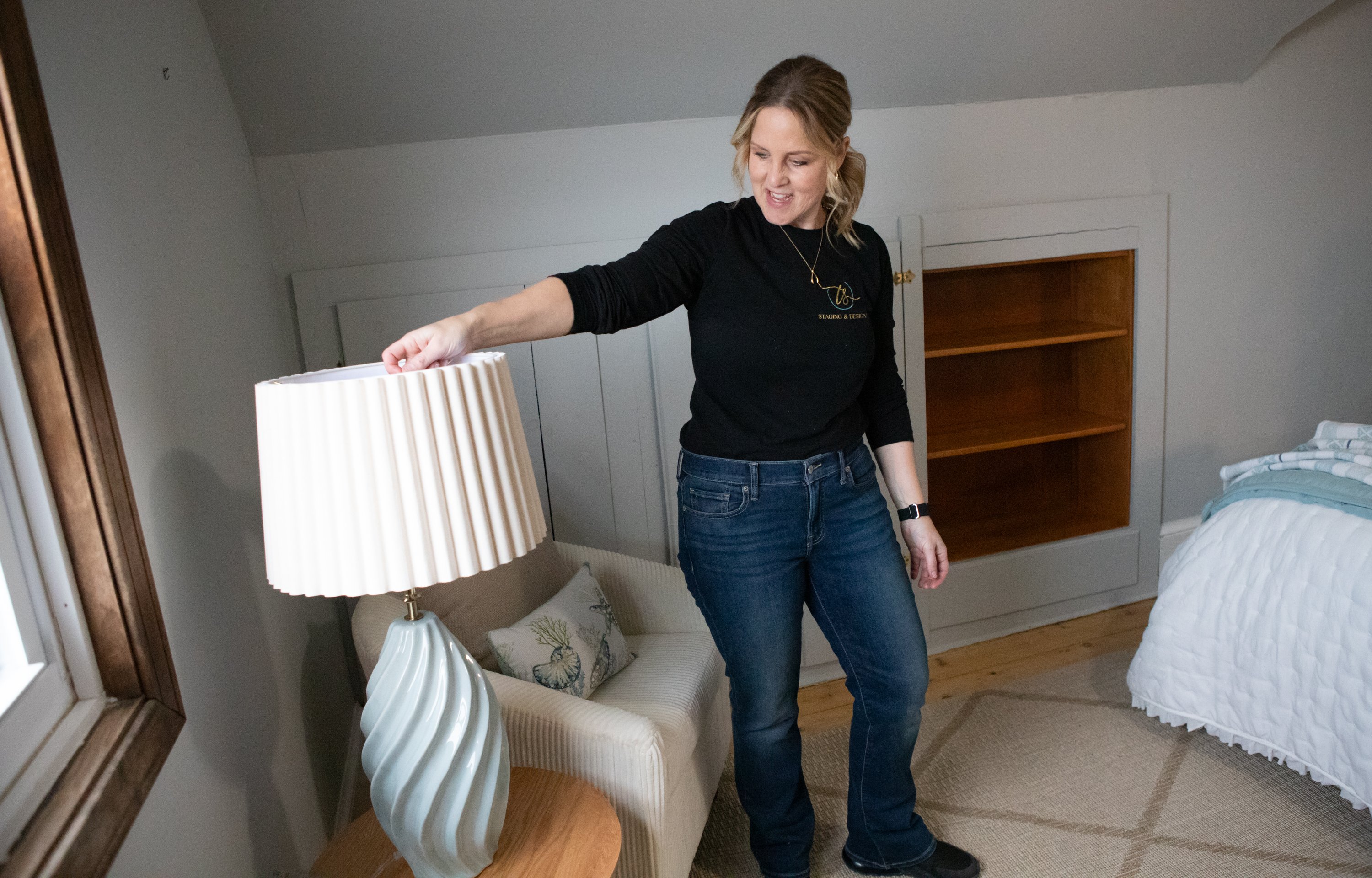
Bouchard and her longtime friend, Stephanie Shue, co-founded TS Staging & Design in Windham during the COVID-19 pandemic. She understands that buying and selling homes is an emotional experience for many people. That’s why she feels it’s important to capture that emotion through home staging.
“It’s important because people can’t visualize themselves living in a place that’s just empty,” Bouchard said. “They need to see stuff. They need to see, ‘How’s my furniture going to fit in here?'”
Bouchard developed a connection with realtor Keller Williams, where the bulk of her referrals come from. She covers Portland, down to York County and all the way to central Maine.
Last year her team of three staged 100 homes and she is prepared for a busy season. With a 5,000-square-foot warehouse full of furniture, rugs, paintings, and knickknacks, Bouchard says they can stage 20 homes at one time.

Elisa Viscarelli is also seeing signs of a busy real estate season ahead.
Viscarelli, of Lewiston, started her business — Studio V Home Staging — in 2022, at a time when home sales were falling due to rising interest rates and a lack of inventory.
She said things started changing for her last summer and have not slowed down since. Like Carper and Bouchard, Viscarelli understands the connection with home staging and buyer emotions.
She pointed to virtual staging photos to illustrate her point. Virtual staging is a digital technique to add furniture, decor, and styling to photos of empty or dated homes. While the photos may initially draw buyers in, it all changes when they go see the home in person.
“When people actually come to see the home and they’re doing a walkthrough, there’s nothing … there’s nothing there to emotionally connect them.”
Viscarelli said investors who flip homes are the biggest skeptics, especially as flipped homes tend to have more quirks or be dated.
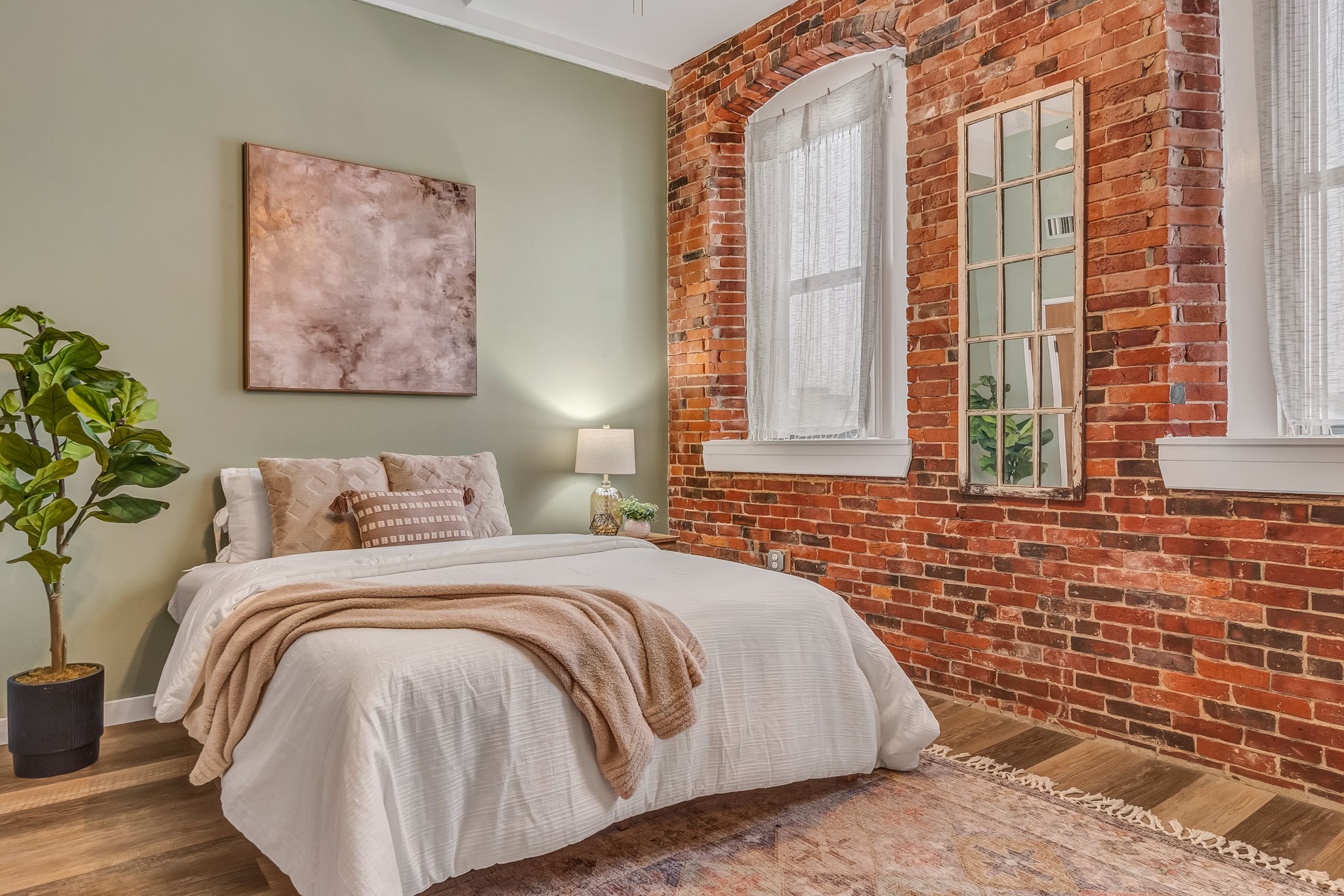
Home staging may be a cost, she said, but sellers typically come out ahead.
“Would you rather pay $3,000 to $4,000 to have the house staged?,” she said. “Or would you rather do a $10,000 price decrease? Because it’s typically one or the other.”
It’s not only for the more costly properties, either, the home stagers said.
“I think it’s really important that our services really are for everybody at every budget,” Bouchard said. Carper said homeowners should expect to pay between 1%-3% of the home’s value to get it ready to market. And Viscarelli has separate price levels for occupied and unoccupied homes. Many stagers will not work in occupied homes.
Expect the key rooms in a house to be staged: living room, dining room, kitchen and primary bedroom and ensuite. Bathrooms usually get some attention as well. Unless requested, spare bedrooms are usually not staged.
Staging stays in place for 30-45 days, and a second month can be added as a rental fee if needed.
Some realtors will pay part or all of the cost of staging, but in most cases it’s a cost the homeowner is expected to pay for. Both Viscarelli and Bouchard offer payment at closing options.

Comments are not available on this story. Read more about why we allow commenting on some stories and not on others.
We believe it's important to offer commenting on certain stories as a benefit to our readers. At its best, our comments sections can be a productive platform for readers to engage with our journalism, offer thoughts on coverage and issues, and drive conversation in a respectful, solutions-based way. It's a form of open discourse that can be useful to our community, public officials, journalists and others.
We do not enable comments on everything — exceptions include most crime stories, and coverage involving personal tragedy or sensitive issues that invite personal attacks instead of thoughtful discussion.
You can read more here about our commenting policy and terms of use. More information is also found on our FAQs.
Show less