


At Andover Elementary School, concerns about students, phones and mental health have moved from hallway chatter to a monthslong, communitywide conversation.
The principal, several teachers and two Andover residents have been meeting regularly over Zoom to dissect the book, “The Anxious Generation: How the Rewiring of Childhood Is Causing an Epidemic of Mental Illness” — and to confront how its themes are playing out in their own homes and classrooms.
The group’s Nov. 20 session sparked a spirited discussion about the addictive nature of social media, the developing teenage brain, algorithms, cellphone rules and the role of “risky play.”
One mother said she was revisiting the rules around her daughter’s flip phone after seeing her daughter’s recent reactions.
“It was scary how desperate and anxious she was to run to it, to see if somebody had messaged her back. It was starting to make her feel bad that nobody was messaging her back.”

Author Jonathan Haidt argues that today’s epidemic of mental illness among young people stems from changes in childhood experiences caused by technology — particularly smartphones and social media.
“It’s about my generation. I’m a millennial, I’m 26. It changes the way I plan to parent my son,” said Andover art, physical education, and after-school co-coordinator Brooke Harris. She grew up using iPhones and iPads in school.
“You do see some kids that are constantly on technology and it’s changing the way they develop, it’s changing their social relationships — how to play and interact with each other,” Harris said.
This conversation at Andover elementary reflects a growing local and national awareness among parents and teachers about how digital technology and social media may affect children’s mental health, attention and social skills.
“It’s a crazy epidemic,” she said, referring to excessive engagement on social media.

In response, Andover Elementary has taken a hands-on approach. Cellphones stay tucked away in backpacks, and the school’s new homesteading initiative encourages students to engage in tangible, practical learning. The program includes sewing, reading and writing recipes in their cooking club, farming, and canning and preserving their vegetables.
The lessons are designed to blend practical skills with academics such as math and English, Harris explained standing alongside school Secretary Amanda Belleveau and Superintendent Leanne Condon in office space, part of a 20th-century addition to the original 1918 school. They said Andover parents have been supportive of this direction, and the homesteading initiative is part of the school’s vision statement.
This year, 10 students — about half the school — are enrolled in the after-school program. Increasing enrollment, both from out-of-town families and within the prekindergarten program, which has two students, remains a goal for the small community.
On Oct. 20, the connection between creativity and play was easy to see at recess. Most of the older students were building a bunker in a pile of dirt, dragging branches from the woods and shouting commands to each other. Fourth-grader Zander Davidowicz explained that the back of the bunker serves as a storage space.
The group of fourth and fifth graders was excited as they brainstormed ways to keep their creation safe after school — ultimately rejecting the idea of installing a security camera but agreeing that a “do not ruin” sign might help.
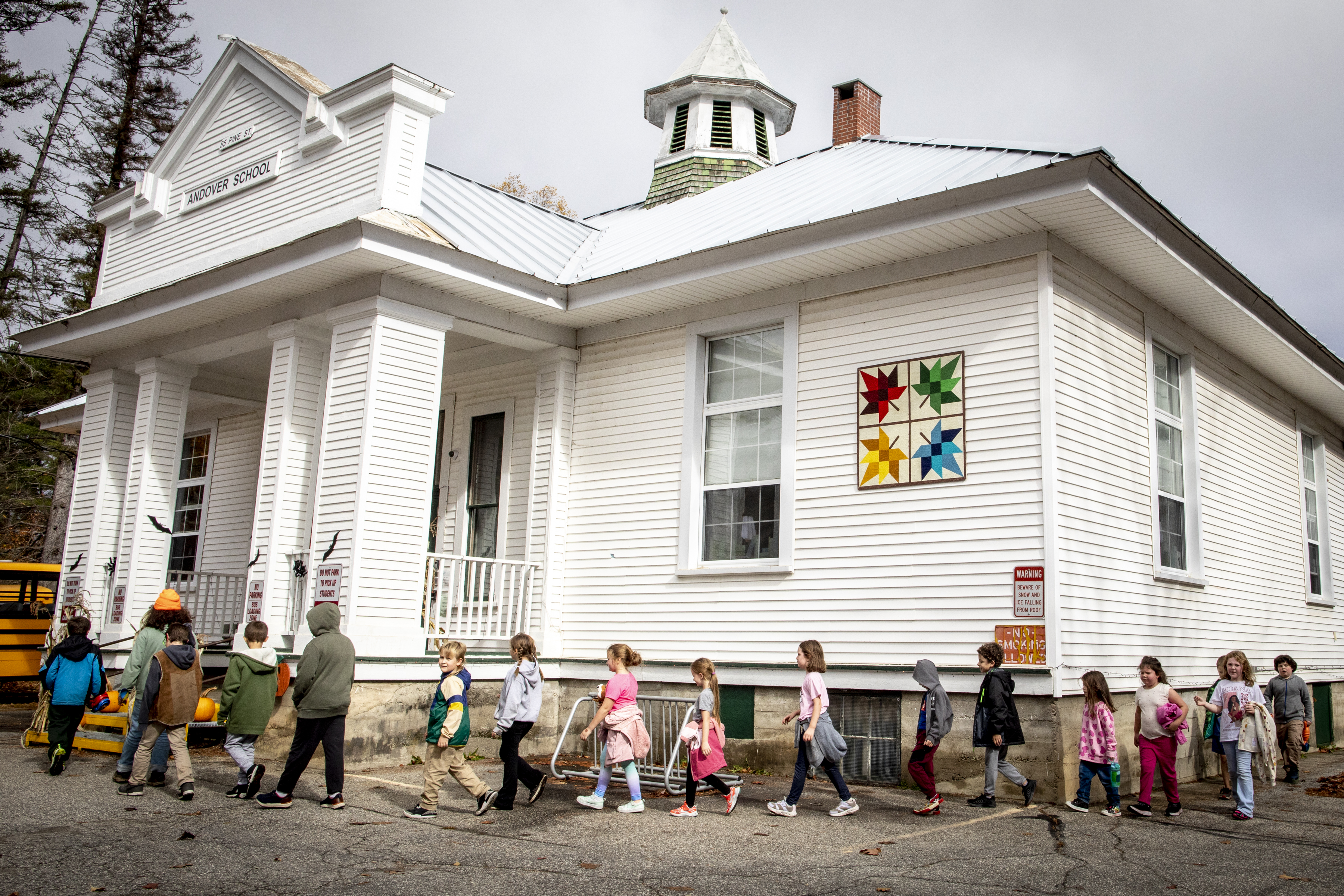
The school’s outdoor learning continues in other ways as well. Harris said all 21 Andover Elementary students grew corn, strawberries, kale, cabbage and lettuce in their 20 raised beds, while six pear and apple trees have been grafted in a small nearby orchard. A few times each month, students walk through a path to the Andover Public Library or explore a nearby bog to study the environment.
Soon, the dirt pile that became the bunker will be gone, as the mulch will be needed to winterize the garden. By then, Harris hopes the students will begin playing in a mud kitchen and forest playground that are still in the planning stages.
Now in her third year at Andover Elementary, and having previously worked for Regional School Unit 10, Harris said the size of the school allows for creativity and close community connections. Including the chef, custodial staff, teachers and superintendent. Only 10 staff members work at the school.
“… They can do math and science in the gardens. They can do math and reading with canning and reading and writing recipes,” said Harris, noting that other schools have seen similar success with hands-on learning. “We’re trying to get the kids reengaged with school again.”

We invite you to add your comments. We encourage a thoughtful exchange of ideas and information on this website. By joining the conversation, you are agreeing to our commenting policy and terms of use. More information is found on our FAQs. You can update your screen name on the member's center.
Comments are managed by our staff during regular business hours Monday through Friday as well as limited hours on Saturday and Sunday. Comments held for moderation outside of those hours may take longer to approve.
Join the Conversation
Please sign into your Sun Journal account to participate in conversations below. If you do not have an account, you can register or subscribe. Questions? Please see our FAQs.