

EDITOR’S NOTE: This story is the first of three parts examining homeschooling in rural Maine and its growing popularity.
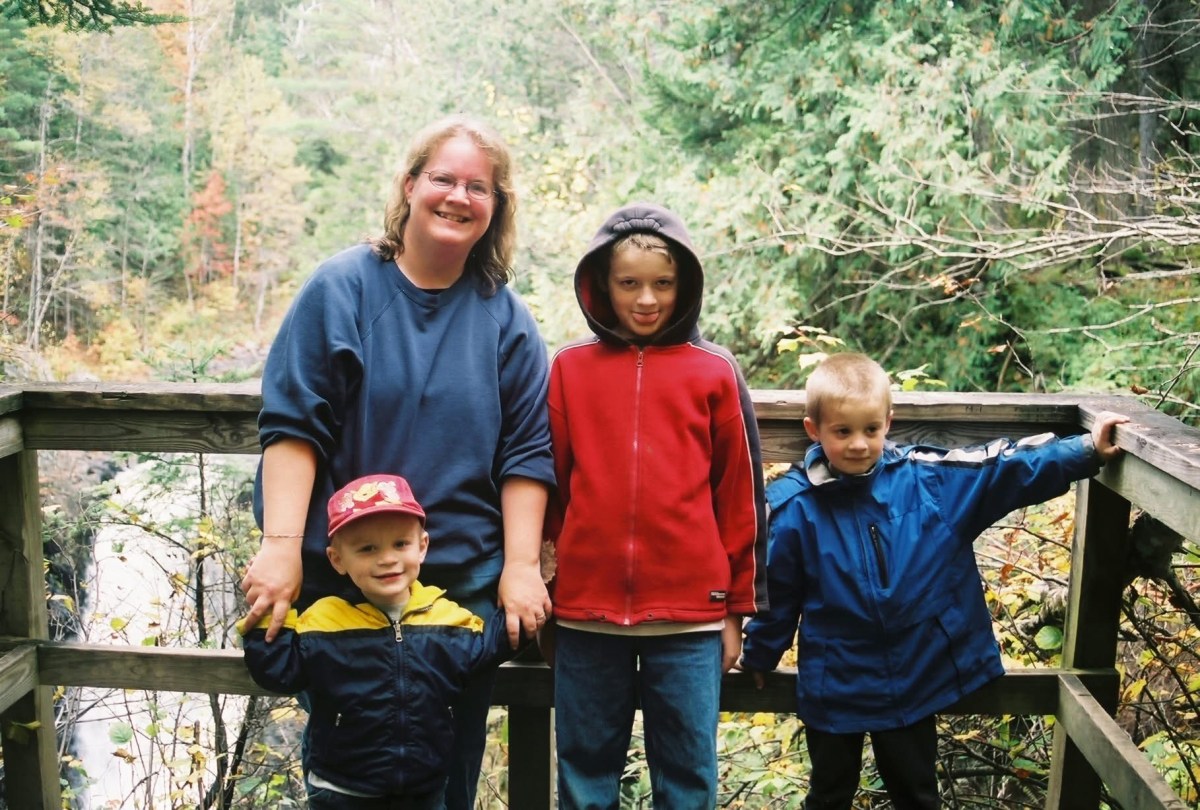
JAY — For longtime Franklin County homeschooling parent Lisa Berry, of Jay, homeschooling was never just an educational decision, it was a family decision.
“Family relationships played a central role in our decision to homeschool from the very beginning,” Berry said.
When her oldest son was about to start kindergarten and her second son had just arrived, she and her husband made the decision for her to leave her job and stay home. They realized how much time their oldest would spend away from them “under the care of others,” she said, and they knew a traditional school path “wasn’t the right fit for our family.”
Berry went on to homeschool her three sons over more than 20 years. Her experiences later shaped her work supporting other families, including her leadership of Freedom Academy, an umbrella school model recognized in Maine as a private school providing equivalent instruction while families continue to teach primarily at home.
“At the time, my goal was straightforward: make homeschooling feel less overwhelming and more accessible by sharing resources, guidance, and practical support,” she said.
Over time, families began reaching out seeking the same kind of support: someone familiar with the realities of homeschooling in Maine and able to help them navigate legal requirements and day-to-day uncertainty with more confidence.
“As the community grew, so did the scope of what Freedom Academy offered,” Berry said, “but the heart of it stayed the same: being a steady, reliable resource for families choosing to educate their children at home.”
FINDING A RHYTHM

Berry’s recent book, “Beyond Lesson Plans,” reflects that long view. Released last year, she said it focuses less on curriculum and more on “the realities of homeschooling over the long haul, how priorities shift, how confidence grows, and how families find their own rhythm over time.”
That rhythm, she said, is one reason homeschooling looks different from year to year and child to child.
“You learn very quickly that what works one year, or for one child, may not work the next,” Berry said. “Flexibility is essential.”
In her own home, Berry said she balanced structure and flexibility by building a consistent daily rhythm while refusing to let lesson plans become the boss of family life.
“I created our own lesson plans, and we began each day together with shared activities like read-alouds and subjects we could do as a group, adjusted to each child’s level,” she said. That routine gave “stability and connection.”
But she held plans loosely. “If an educational opportunity came up, a field trip, a seasonal event, or something worth exploring in real time, I was happy to close the books and take advantage of it,” she said.
Living in Maine made that approach especially meaningful, she said, because families can learn through hands-on experiences that cannot be replicated at a desk.
“We spent a lot of time exploring the state and learning through hands-on experiences,” she said. “So while there was always a plan for the day, the plan served us, not the other way around.”
‘CURIOSITY TAKES THE LEAD’
Berry said she was influenced by several educational philosophies rather than a single rigid approach. Her primary influence, she said, was Charlotte Mason, a 19th-century educator who emphasized narration, memorization, rich language through poetry and hymns, nature study, and broad exposure to traditional subjects.
“Her philosophy respects children as whole people and values depth over speed,” Berry said.
She also drew from classical education and child-led learning.
“I believe children are naturally curious and capable of learning when they’re given time, space, and meaningful opportunities,” she said. That meant encouraging mastery rather than rushing through material and leaving room for children to pursue genuine interests.
“Families were encouraged to dig deeper into areas that sparked curiosity while still maintaining a strong academic foundation,” she said. “The goal was never to force families into one method, but to support them in finding an approach that fit their children and their values.”
In her book, Berry focuses heavily on encouragement. She said that emphasis comes from how she defines success.
“In ‘Beyond Lesson Plans,’ I focus on encouragement because academics alone rarely define long-term success,” she said. To Berry, success is fundamentally about functioning well in the world: “holding a job, supporting yourself or a family, contributing to your community, and engaging meaningfully with the people around you.”
Academic mastery mattered, she said, but not in a rushed, checklist-driven way.
“One of the greatest advantages of homeschooling is the time it allows, time to fully grasp a subject before moving on, and time to explore interests more deeply when curiosity takes the lead,” she said.
Berry said she saw that principle play out clearly in her own children. One son developed a strong interest in aviation early on, she said, and that interest was supported rather than treated as a distraction.
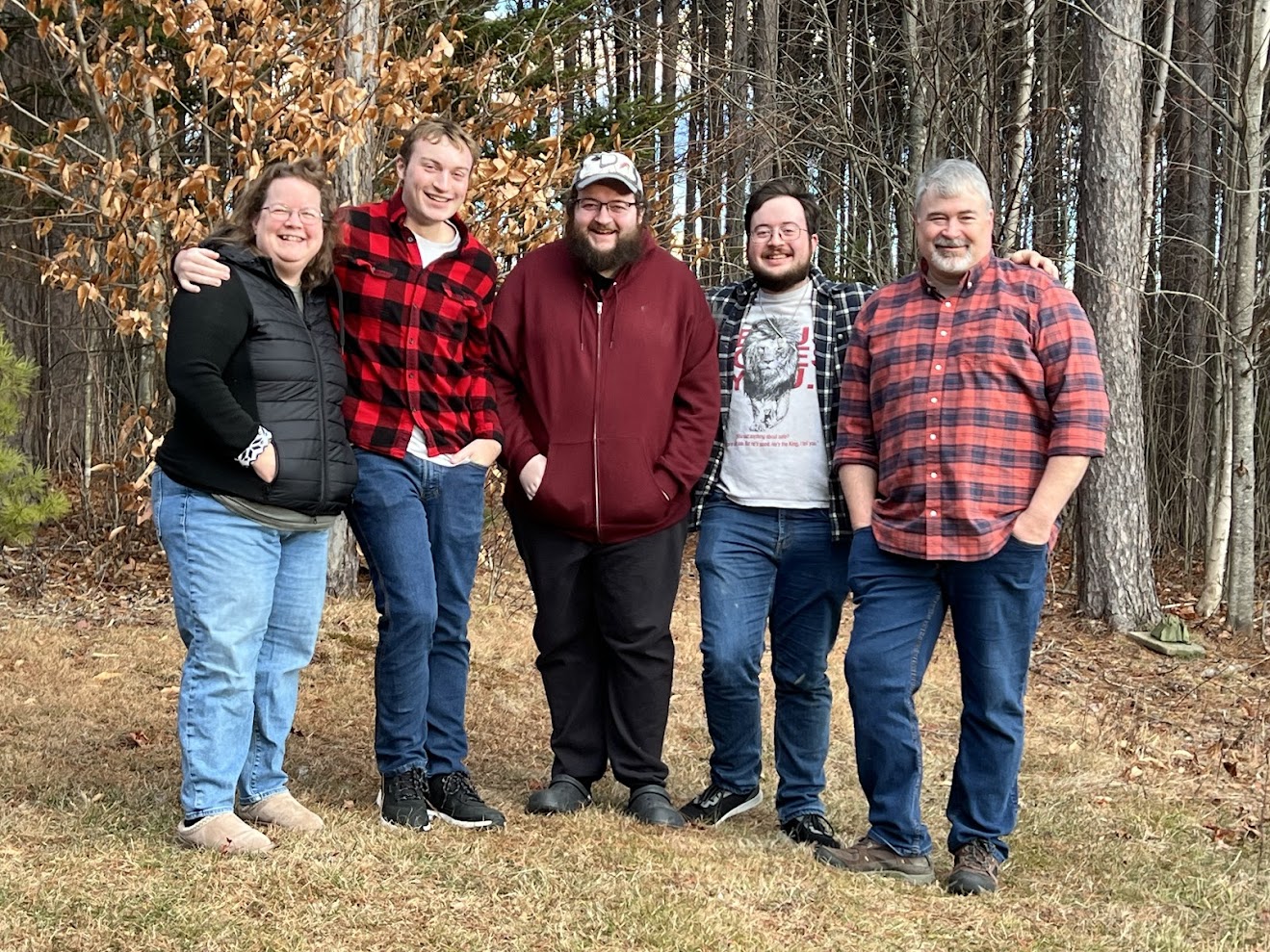
“Today, he’s finishing his aviation studies at the University of Maine at Augusta and will soon graduate with a degree in aviation and his Certified Flight Instructor license,” she said.
“To me, success in homeschooling beyond academics looks a lot like success in life beyond college: confidence, competence, purpose, and the ability to step into adulthood prepared, not just educated,” Berry said.
HOMESCHOOLING IN RURAL MAINE
When Berry presented at homeschooling events around the state, she said certain themes were consistent.
“One of the most common challenges parents mention is isolation,” she said. Maine is rural, and connecting with other homeschooling families often requires significant travel, especially for families new to homeschooling.
Financial pressure is another recurring theme.
“Many homeschooling households operate on a single income, and Maine’s cost of living can make that a real strain,” she said. Families often balance educational goals with practical realities, and that tension is “an ongoing conversation within the homeschool community.”
At the same time, Berry said families frequently talk about Maine’s unique advantages.
“The state’s natural beauty, rich history and abundance of local resources provide learning experiences that can’t be replicated in a classroom,” she said. “From historical sites to outdoor exploration, families often find that meaningful education is literally right outside their doors.”
Berry said homeschooling is often misunderstood, particularly by educators and policymakers, and that misunderstanding can shape public debates about oversight.
“One of the most persistent misconceptions about homeschooling, particularly among educators and policymakers, is around socialization,” she said. “In my experience, the opposite is frequently true.”
Homeschooled students, she said, are often comfortable interacting across age groups because they spend time in multi-age environments rather than being limited to same-age peer groups.
“They tend to include others naturally and adapt well in public and community settings,” she said.
Berry also said it is a misconception that homeschooling lacks structure or accountability.
“Maine already has clear legal frameworks in place,” she said, and families are often highly intentional. Many tailor education “more thoughtfully than a one-size-fits-all system allows,” she said.
From her perspective, part of what drives tension is that homeschooling challenges the assumption that there is only one effective way to educate children.
“That can lead to calls for increased oversight,” she said, “not necessarily because families are failing, but because alternative models don’t fit neatly into established norms.”
Berry said one of the most meaningful parts of her work with families was seeing confidence return, not only for students, but for parents.
“The most rewarding outcomes I’ve seen from families connected with Freedom Academy have been personal growth and restored confidence, both for students and for parents,” she said.
She described watching children from unstable situations slowly become more secure. In one case, she said, a family joined after leaving a domestic violence situation. The children had experienced constant upheaval and were withdrawn and hesitant around others.
“With the stability of home, the support of extended family, and the flexibility of homeschooling, those children gradually began to open up and thrive,” she said.
Berry also said parents often underestimate progress when they measure learning only through traditional school expectations. Parents would come to her discouraged because their children did not appear to be advancing in the usual way.
“But when we stepped back and looked at everything their children had learned and experienced over the year, it became clear that real growth was happening, it just didn’t look like what they were used to seeing in a public school setting,” she said.
Over time, Berry said she has watched homeschool graduates go on to earn degrees, start businesses and contribute to their communities. Those outcomes, she said, reinforce what she believes is most important.
“When families are supported and children are given time, stability and trust, the results reach far beyond academics,” Berry said.
EDITOR’S NOTE: Writer Rebecca Richard has homeschooled her eight children, and is an administrator at Freedom Academy.

We invite you to add your comments. We encourage a thoughtful exchange of ideas and information on this website. By joining the conversation, you are agreeing to our commenting policy and terms of use. More information is found on our FAQs. You can update your screen name on the member's center.
Comments are managed by our staff during regular business hours Monday through Friday as well as limited hours on Saturday and Sunday. Comments held for moderation outside of those hours may take longer to approve.
Join the Conversation
Please sign into your Sun Journal account to participate in conversations below. If you do not have an account, you can register or subscribe. Questions? Please see our FAQs.