
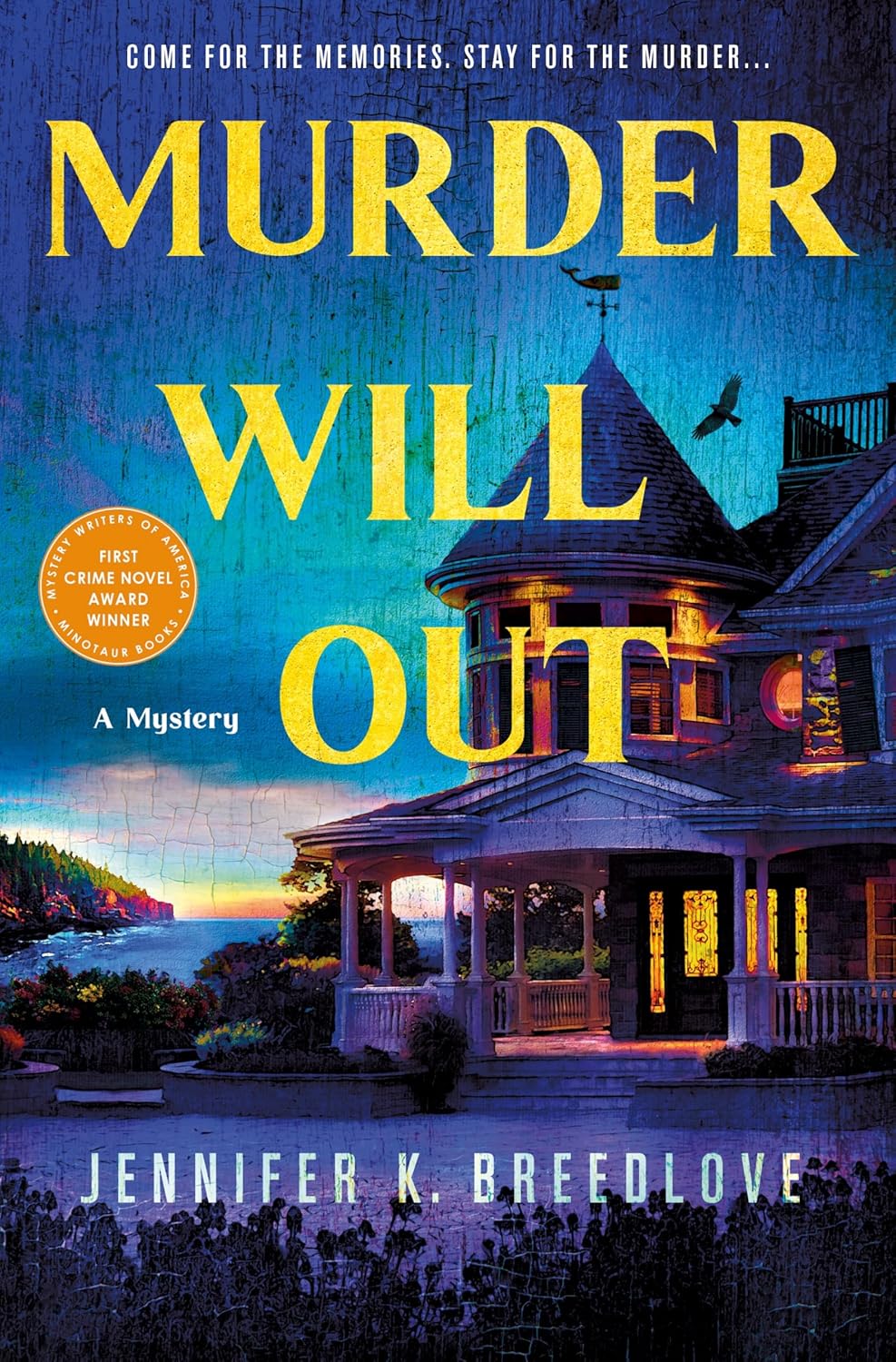
Who will inherit Cameron House, a sprawling mansion enviably located on an island off the Maine coast? This question drives Jennifer K. Breedlove’s debut, “Murder Will Out.” The novel begins when organist Willow Stone receives a wedding invitation from her godmother, Sue, who disappeared from Willow’s life 15 years earlier. But then Sue, who happens to be Cameron House’s most recent occupant, dies the night before the nuptials. What follows is a delight: an intricate, engaging plot, full of delicious red herrings and many extravagant characters, including some rather engaging ghosts.
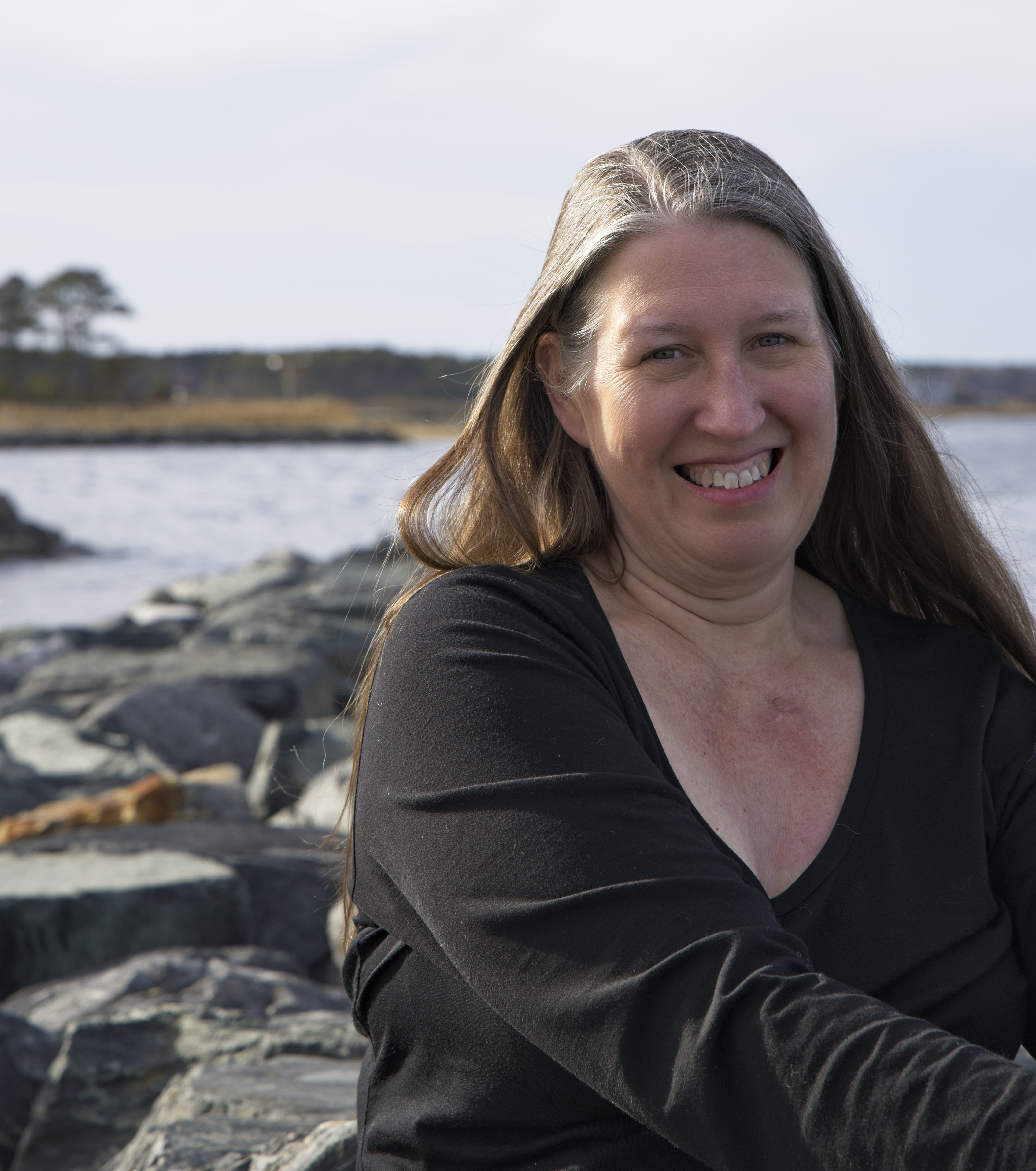
The winner of the Mystery Writers of America First Crime Novel Award, Breedlove always wanted to write, but became a musician because her parents thought she needed a more secure day job. Not, she jokes, what her parents had in mind.
You’ve been writing since childhood, but this is your first published novel. Can you tell me how this book came to be, and how it got published?
This particular novel started the moment I was able to focus on fiction writing again. As a musician, you have to say yes to every job. That’s the life of the freelancer. When COVID came, group singing, choruses and performances shut down. At the time, I was also working as an editor for a music publisher. And of course, if everything’s shut down, nobody’s buying music. So for this stretch, there was just no work.
So, A, I had some time, but B, the creative side of my personality was starving. I thought, “This is my chance. I actually have time to write a novel now.” And of course, since I had not written one before, I had to learn how to write a novel. I took courses, and I talked with people, and I studied, and I read.
I was just getting to the point of saying, “Well, maybe this was my learning experience novel,” when I got a call from Minotaur Books, who had sponsored the Mystery Writers of America First Crime Novel award, saying, “Hey, we’ve chosen your book as our winner for this year, and we would like to offer you a publishing contract.”
You set this book on Little North Island, a fictitious spot that will nonetheless feel familiar to Mainers. What is your connection to Maine, and how does place function in the book?
When I was young, we would come to Maine every summer and stay for two weeks on Mount Desert [Island] and at Blackwoods Campground. Once we kids grew, my parents bought a little log home on the quiet side of the island and basically moved there. I would visit for as long and as often as I could.
The setting, especially Cameron House — that big old haunted house — is inspired by the Gilded Age summer cottages that fill Bar Harbor. The house actually is a character. It literally has a point of view and a voice.
Mount Desert [Island] has this extreme changeability. You can be walking through absolutely colorless fog and everything is hazy. Then you go a few more steps, and suddenly the sun is out, and the blues are bluer, and the greens are greener and the air has a flavor. It’s as if when the world was being created, someone said, “OK, let’s make a place where we can just dial everything up to 11.” I love that.
We never learn much about Willow’s life back home, but we do learn that she’s been somewhat timid in her life. How does fear, and conquering fear, come to be central to this book?
Willow has spent most of her life not quite fitting in, always being the “weird kid,” and perpetually second-guessing herself. She’s terrified that if she steps even an inch outside accepted social boundaries, people will see through her carefully constructed normal person exterior. But then there’s the letter from Sue, at the very beginning of the book, about a Willow “who could never resist mystery or adventure.” So over Willow’s 15 years away from the island, she didn’t just lose her relationship with her godmother, she lost her connection to her genuine self — a version of herself that only Sue seemed to understand.
I see your book as both embracing and subverting mystery novel conventions. What tropes did you want to include and what did you veer away from as you wrote?
I would love to say that I deliberately tried to subvert trope expectations, but I don’t think it would be true. I create characters separately from plot, and there I absolutely work against stereotypes and generalizations and made these people as complicated, messy and real-feeling as possible. And they still surprise me — the image-conscious elegant woman orders a brownie sundae, or the prissy organist is somehow relaxed and cool playing jazz standards, or the gorgeous cop is a vegetarian who watches “Doctor Who.”
This novel is a whodunit, but it is also about two kinds of mysteries, which we all encounter: the mystery of the past and the mystery of the unexplainable behaviors of others. What inspired you to include these other mysteries in the book?
To me, they’re completely related. The whole story is full of people who have things that happened that they don’t pass on and they don’t share with others. A lot of the inexplicable behavior of people is completely explainable or would’ve been if they had felt free to say what they needed to say.
I can’t help but think of place-based, single-character mystery series like “Murder, She Wrote,” when I read your book. Any plans to return to Willow Stone and/or Little North Island in your future writing?
Yes! Even though this mystery was solved, that house is full of mysteries.
Debra Spark is an author and Colby professor whose last novel, “Discipline,” also begins with a mystery that starts on an island off the coast of Maine.
We invite you to add your comments. We encourage a thoughtful exchange of ideas and information on this website. By joining the conversation, you are agreeing to our commenting policy and terms of use. More information is found on our FAQs. You can update your screen name on the member's center.
Comments are managed by our staff during regular business hours Monday through Friday as well as limited hours on Saturday and Sunday. Comments held for moderation outside of those hours may take longer to approve.
Join the Conversation
Please sign into your Sun Journal account to participate in conversations below. If you do not have an account, you can register or subscribe. Questions? Please see our FAQs.