

JAY — Hugh J. Chisholm rose from selling newspapers as a boy to building paper mills, railroads and industrial communities that helped supply the newsprint and postal cards used across the United States, tying western Maine directly to the nation’s communications network.
According to the Maine Memory Network, Chisholm was born May 2, 1847, in Oakville, Ontario, and entered the newspaper trade at an early age, selling and delivering papers along railroad routes. That work introduced him to the publishing industry and the growing demand for paper. After moving to Portland in 1872, he and his brothers founded Chisholm Brothers, a printing and publishing firm that produced books, lithographs and postcards. Surviving early 20th-century Chisholm Brothers postcards are marked “Printed in Germany,” reflecting the common practice of American publishers commissioning German printers, which led the world in color lithography before World War I disrupted international trade.
Postcards became an important form of communication and promotion in the late 19th and early 20th centuries. Historians commonly refer to the period from the late 1890s until World War I as the “Golden Age” of postcards, when Germany dominated high-quality color postcard production for the American market. Publishers produced scenic cards featuring New England’s mountain landscapes, lakes and seacoast, helping promote destinations such as Mount Washington, the Rangeley Lakes region and coastal resort communities.
Railroads originally built to serve industry also carried tourists, allowing visitors to reach mountain summits and vacation destinations. Historical materials maintained by the Mount Washington Observatory document that visitors mailed souvenir postal cards from the seasonal summit post office during the height of the region’s tourism era.
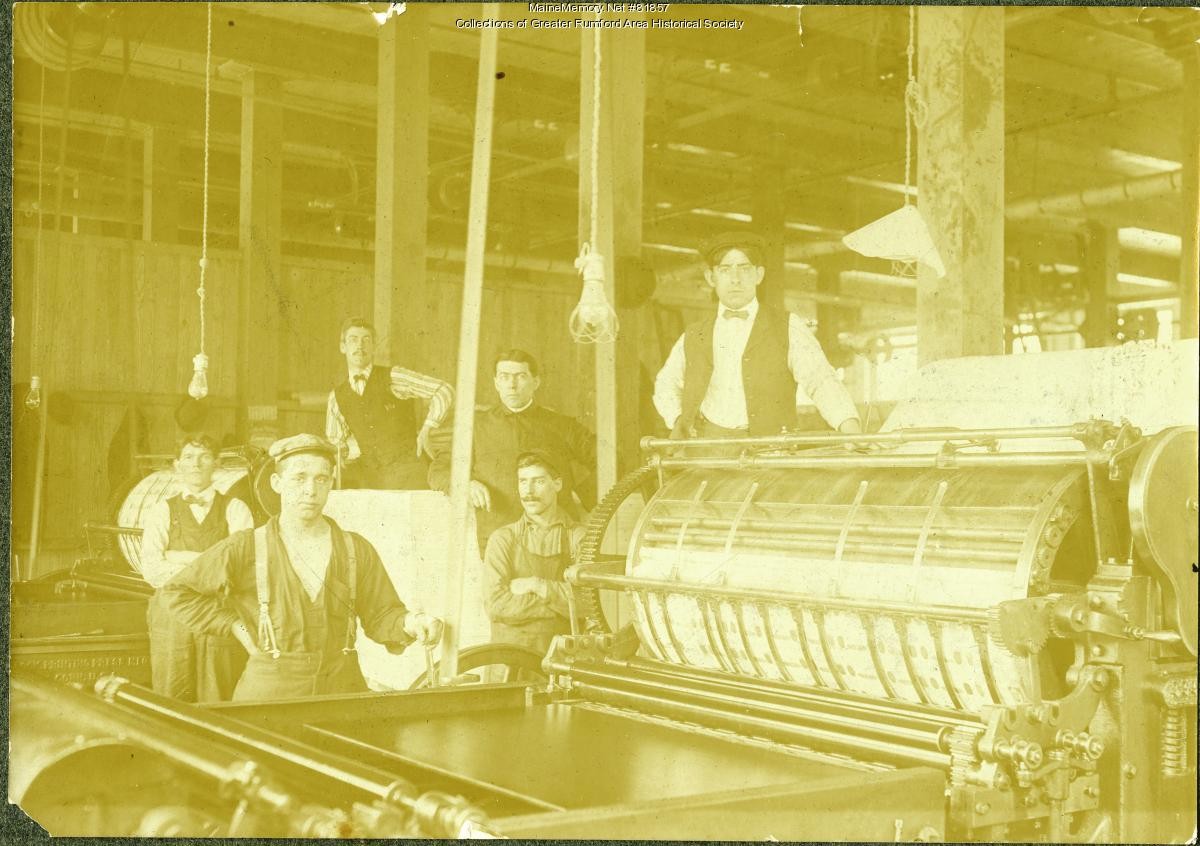
Chisholm expanded into paper manufacturing in 1888 when he founded the Otis Falls Pulp and Paper Company in Livermore Falls, according to records documented by the Maine Historical Society.
Located along the Androscoggin River, the mill used water power, regional timber and rail access to produce newsprint, the primary paper used by newspapers across the country. His operations later became part of International Paper Company, formed in 1898 through the consolidation of major paper manufacturers. After the death of the company’s first president, William Augustus Russell, in 1899, Chisholm became president and helped guide the company during its early expansion.
Paper mills along the Androscoggin River produced not only newsprint but also the cardstock used for government postal cards. Before 1903, the U.S. Post Office obtained postal card stock from several American paper manufacturers.
In 1903, the Oxford Paper Company mill in Rumford secured a federal contract to manufacture postal cards for the U.S. Post Office, producing them at a rate of millions per day. Postal cards manufactured using paper from western Maine mills were distributed nationwide, including to Mount Washington’s summit post office.
Chisholm also helped develop the transportation infrastructure needed to support large-scale paper production. He organized the Rumford Falls & Rangeley Lakes Railroad in 1894 to connect timberlands with the Rumford mills and link them to national rail networks. The railroad carried pulpwood to the mills and transported finished rolls of paper to publishers across the United States.
In Rumford, Chisholm planned worker housing at Strathglass Park, building durable brick duplexes to provide stable housing for mill employees and their families. In nearby Jay, the village of Chisholm was named in his honor, reflecting his central role in the region’s industrial development.
Today, the legacy of Maine’s paper industry is preserved by Maine’s Paper & Heritage Museum in Livermore Falls, located near the site of Chisholm’s original Otis Falls mill. The museum documents the mills and workers who helped establish the Androscoggin River corridor as a major center of paper manufacturing.
Chisholm died Dec. 8, 1912, at his home on Fifth Avenue in New York City, and was buried at Evergreen Cemetery in Portland, where he had established his early publishing business with his brothers. His career reflected the full cycle of the paper and publishing industries, from selling newspapers as a boy to leading one of the nation’s largest paper companies. The mills he founded and helped develop supplied paper used for newspapers, books and postal cards across the country, while postal cards mailed from places such as Mount Washington remain lasting artifacts of the industrial and tourism era he helped shape.

Supporting Sponsor for Franklin Journal, Livermore Falls Advertiser, Rangeley Highlander and Rumford Falls Times.
Keeping communities informed by supporting local news. franklinsavings.bank

We invite you to add your comments. We encourage a thoughtful exchange of ideas and information on this website. By joining the conversation, you are agreeing to our commenting policy and terms of use. More information is found on our FAQs. You can update your screen name on the member's center.
Comments are managed by our staff during regular business hours Monday through Friday as well as limited hours on Saturday and Sunday. Comments held for moderation outside of those hours may take longer to approve.
Join the Conversation
Please sign into your Sun Journal account to participate in conversations below. If you do not have an account, you can register or subscribe. Questions? Please see our FAQs.