


Maine lawmakers have dropped a proposal that would have ended license plate manufacturing at a prison in Warren, despite state officials’ requests to either fund repairs for the deteriorating facility or outsource plate production.
Now the facility must keep making plates with outdated equipment, at least until the next legislative session.
Secretary of State Shenna Bellows said in an interview Tuesday that the plate-making facility will continue to “limp along” and make necessary repairs until her office and the Department of Corrections return to the Legislature with a new proposal.
Workers at the Bolduc Correctional Facility produce about 650,000 plates per year, according to state officials who testified before the Maine Legislature’s transportation committee Thursday.
Costs to maintain and repair the “plate shop” are steep: Short-term fixes for the next few years, like replacing the current custom-made oven and other structural repairs, would cost more than $1 million.
The prison was also unable in recent months to take on the manufacturing of Maine’s new pine tree plates. Waldale Manufacturing of Nova Scotia won the bid to make 1 million pairs of those plates for the state — a feat that officials said wasn’t feasible for the prison shop.
When the contract with Waldale ends, the plate shop will begin making the pine tree plates. That agreement expires at the end of the year, but officials have the option to renew it.
The Warren facility will need to do necessary repairs on a patchwork basis, officials said, until they get more funding.
“We can’t guarantee that it’s going to continue to function,” Bellows said. “There’s some significant infrastructure needs that must be addressed over the next two to five years if we’re going to continue to produce plates.”
Advocates say they’re hesitant about any changes being made to the facility, because people who are incarcerated depend on work in the plate shop for income and building skills they can use after they are released.
The now-dead proposal was included as part of LD 2179, which suggests several changes to motor vehicle laws; the rest of the provisions in the bill are unrelated to the prison system.
SHOP IN DISREPAIR
A report from the Maine Department of Secretary of State shows that the plate shop’s oven needs to be repaired every six months. A new oven would cost about $1 million because it has to be custom-made to fit the facility.
The facility’s structure is also deteriorating. There are cracks in the cement walls and floors, as well as water leaks where the wall meets the floor, according to the report. The Maine Department of Corrections was quoted about $135,000 to make immediate repairs.
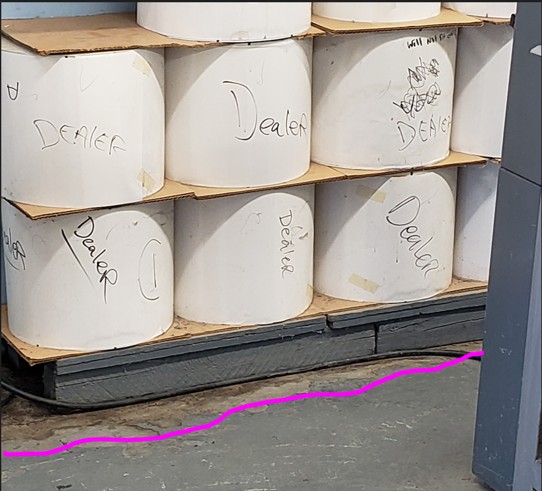
State officials also told the committee that unreliable machinery leads to pauses in production and that replacement parts are hard to find.
As a result, Bellows said, the plate shop “won’t always be able to deliver what it needs to, and that will create delays for our customers.”
It’s cheaper to make the plates at the Warren facility than to outsource production. The plate shop’s cost per plate is about $2.89, while a third-party manufacturer charges about 50 cents more, according to the report.
With the production of the standard pine tree plate outsourced, the plate shop has been focused on making Maine’s multitude of other plate options, which include designs featuring a lobster, special interests like conservation or animal welfare, University of Maine logos, and honors for military veterans.
WORKING CONDITIONS
Joseph Jackson, executive director of the Maine Prison Advocacy Coalition, said the plate shop is an essential resource to prepare people who are incarcerated for reentry after they are released from prison.
Between six and nine people worked at the plate shop in recent months, according to data from the Department of Corrections. Those workers are paid $5.50 per hour.
Jackson said he wishes that those workers’ pay could be higher. The plate shop has constant turnover, but people who have worked there have told him they’re happy to have the job, Jackson said.
He said he hopes that state officials will consider the workers who rely on the shop for income and job experience before making any changes.
“We view this as a vital resource for incarcerated folks, and it’s hard to replace them when you lose them,” Jackson said. “Let’s make sure we at least maintain some sort of work for that population.”
Experts say prison systems need more vocational training because the job opportunities in the license plate industry are limited.
An adjunct professor at the John Jay College of Criminal Justice who only uses the name Kimora said the plate manufacturing industry has changed rapidly, but it’s common for prisons to not keep up because they tend to lack funding for such programs.
People who are incarcerated might opt for a higher-paying job, making it harder to staff positions in the plate shop. But overall, trades-based practices are lacking in prisons, Kimora said.
“If they abandon (plate-making) in the prison, then what are these people going to have for job skills?” Kimora said. “That’s what I worry about.”
