


Tara Savage, who owns Polished Dental in Bethel, said she first considered offering customers a Venmo discount on cleanings after seeing a sign at West Bethel’s Sugar Shack. The sign read: “Cash is King. Cash is our preferred method of payment. We retain 100% of the value. The Big Banks get 0%. Credit card companies get 0% … ”
Across the Bethel area, some small businesses are encouraging customers to pay with cash, citing thousands of dollars a year in credit card processing fees.
Anna Sysko, co-owner of Gemini Cafe in Bethel, said her business paid $35,000 in credit card processing fees last year — about the cost of hiring another full-time staffer.
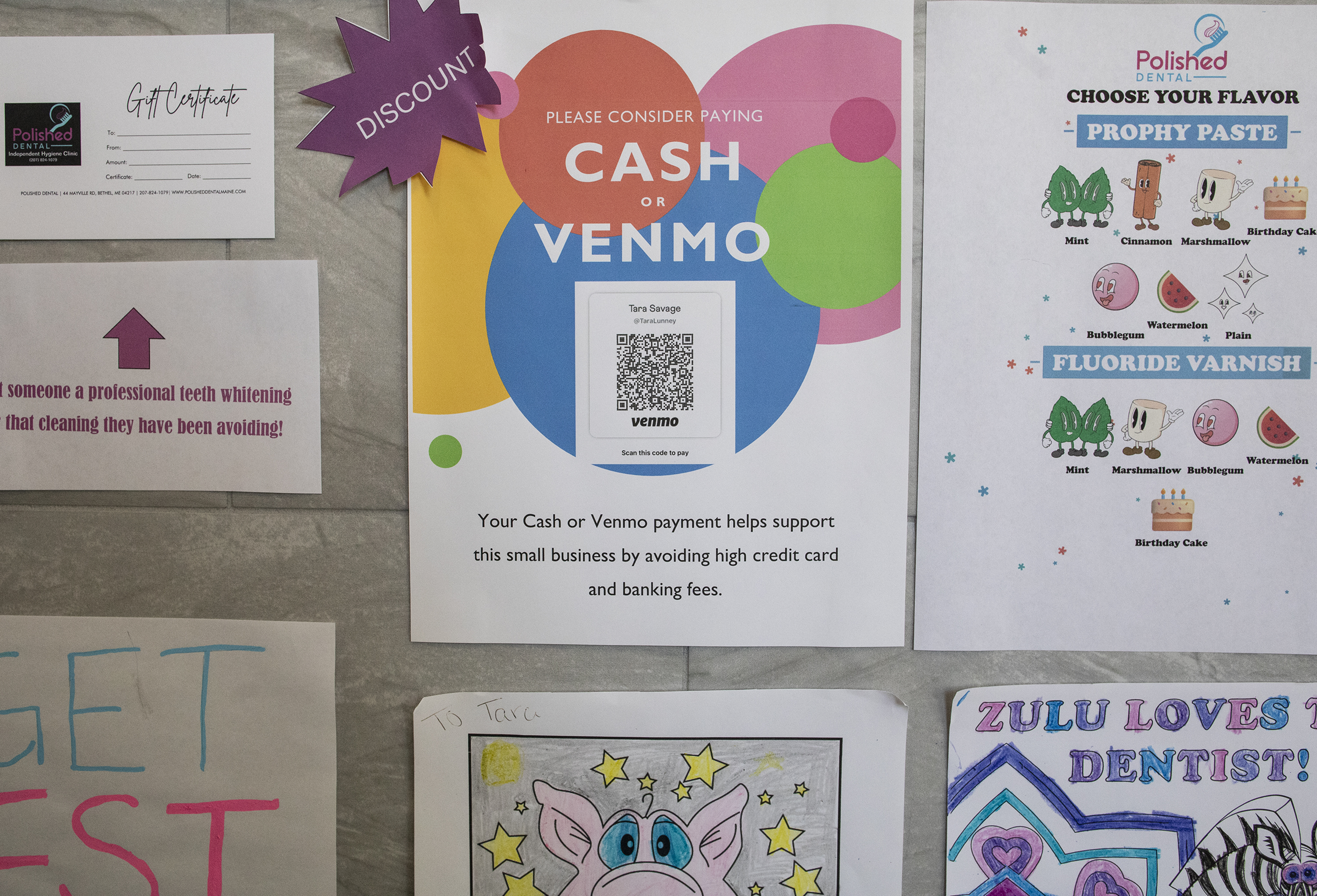
While some businesses — like farm stands and marijuana retailers, which face federal banking restrictions — accept only cash or apps like Venmo, others have stopped taking credit cards entirely.
Mike Evans, owner of Mighty Good Wrench, 152 Barker Road in West Bethel, said he stopped accepting credit cards about five years ago after discovering he had been unknowingly charged by two credit card companies for more than a year.
When customers call for an auto repair appointment, he reminds them: cash or check. When he provides an estimate, they come up with the money “a different way,” he said.
Evans, who has been in business 27 years, said he does not believe he has lost customers over the policy.
Mike Wheeler of West Bethel, who lives next door to Mighty Good Wrench, said he does not use credit cards, only a debit card. The only problem he’s encountered is when renting a car. “(But) we can get rides with an Uber. They’ll take cash.”
He said his grandparents instilled in him that if you couldn’t afford something, you didn’t need it.
Jen Devaney, of Hanover, said the Sugar Shack decided to take a positive approach by offering customers 5% off when they pay cash.
On March 4, Devaney and owner Michelle Wells discussed the fees. They said in-person card payments cost just under 3%, while phone orders carry fees of more than 4%, with credit card companies also taking a percentage of tips.
“They tax us for everything. You would be amazed,” Wells said.
“I could pay a couple of full-time employees with what we pay … Credit card companies don’t need the money. We are a small business,” she added.
Wells said regular customers have gotten into the habit of bringing cash to their two stores.
“But we still get quite a few cards, especially people at Sunday River because it’s cashless there,” she said.

THE LAW
Businesses that want to pass the cost to customers must navigate Maine’s credit card surcharge law.
Maine law prohibits businesses from adding a surcharge to cover credit or debit card fees on top of an advertised price.
The rule is intended to ensure customers see the full cost of a product or service upfront. For example, a business cannot advertise an item for $10 and then charge $10.50 at checkout for credit card use. Instead, a business may list the price as $10.50 and offer a discount for customers who pay with cash. Supporters say the law promotes price transparency, while critics argue surcharge bans were influenced by credit card industry lobbyists seeking to shield merchant fee increases.
Maine, Connecticut and Massachusetts are among the states that prohibit credit card surcharges.
Like local businesses, town offices also face credit card processing costs. However, municipalities are not subject to the same restrictions as private businesses when passing along credit card fees. Under Maine law, towns may charge a surcharge if they disclose that the fee can be avoided by paying with cash or check.
About three years ago, Gilead residents voted to allow credit card payments for real estate taxes and licensing, with a 3% fee added. “They wanted the convenience,” Town Clerk Patsy Cox said.
Last year, the town collected $549,522.13 in real estate taxes. Absorbing a 3% credit card fee on every payment would have cost the town $16,485.66.
“That’s a big number for a very small town,” Cox said.
At the Hanover Town Office, a chart shows customers the exact cost of paying by credit card. Municipal Registrar Ellie Andrews said the town’s bank automatically adds a 3% processing fee. She has waited while some residents have gone home and returned with a check to avoid the charge.
Others nearing a payment deadline opt to use a credit card rather than risk delinquent taxes. “Who wants to have their name in the Town Report book?” she said.
Noting some older residents set aside tax money in savings accounts such as Christmas clubs, Andrews said, “They know to the penny what they’ve saved all year.”

We invite you to add your comments. We encourage a thoughtful exchange of ideas and information on this website. By joining the conversation, you are agreeing to our commenting policy and terms of use. More information is found on our FAQs. You can update your screen name on the member's center.
Comments are managed by our staff during regular business hours Monday through Friday as well as limited hours on Saturday and Sunday. Comments held for moderation outside of those hours may take longer to approve.
Join the Conversation
Please sign into your Sun Journal account to participate in conversations below. If you do not have an account, you can register or subscribe. Questions? Please see our FAQs.