


NEWINGTON, N.H. — Before you judge me, know that it was your interests I had in mind in deciding to leave my reusable bags in the car when visiting the (for now) closest location of Aldi, the fastest-growing grocery chain in the U.S., which will open its first Maine store March 26 in Portland.
Evaluating the bagging options and process, I thought, would be key to assessing the shopping experience. After witnessing what happens when groceries get to the other side of the register, I can tell you that, boy, was I right.
But that’s how this story ends. It begins with a quarter.
Needing a 25-cent coin to unlock a shopping cart from the stack was one of the few things I knew about Aldi, whose cult following has fueled intense interest in the opening of the store in a former Big Lots on Brighton Avenue. Not long after the news broke, and excitement followed, I joined a Facebook group called ALDI Aisle of Shame Community, hoping that in my passive scrolling I’d pick up on what exactly makes this brand so beloved.
Most posts have sought input on certain products or posed open-ended questions about favorites. The sourdough bread, I’ve gathered, is a big hit, while the cranberry-almond chicken salad can be divisive. Some people swear by the produce; others skip it altogether. Even after months of lurking online, I didn’t have a real sense of what to expect when I borrowed a quarter from my laundry roll and headed for Maine’s southern border.
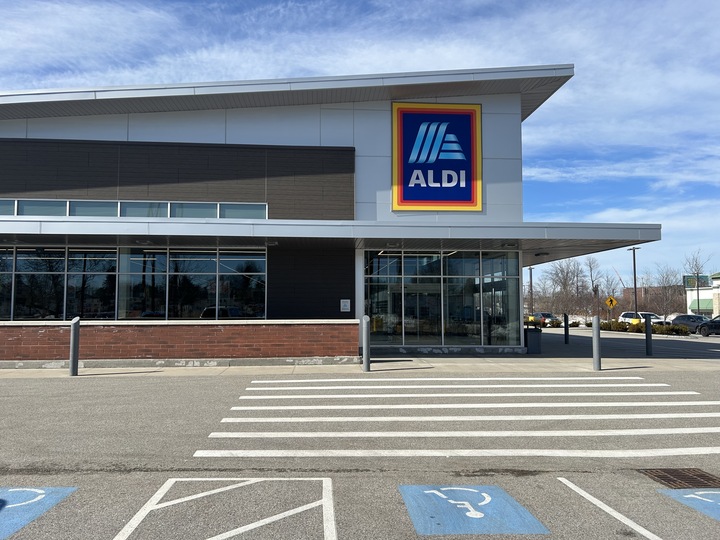
Aldi has 10 locations in New Hampshire. Newington, just west of Portsmouth and about 50 miles from Portland, barely beat out Dover for closest to me. As I pulled into the shopping center where the store was located, I wondered if Siri was mistaken. Where was it?
I’ve come to expect supermarkets to dominate whatever plaza they’re in, but here, it took a few turns until the Aldi came into sight. The 22,000-square-foot store is tucked into a corner, requiring drivers to circle around back to access the small, dedicated lot in front, where about 20 cars (a few with Maine plates) took up a good portion of the spaces that Monday afternoon.
Quarter in hand, I headed for one of two cart corrals where I was disappointed to see a single size option, and it was big. At Hannaford, where I regularly procure my groceries (supplemented by trips to Trader Joe’s), I typically choose the smaller cart and fill it to the point where I’m steering with one hand and stabilizing items on top with the other. Some people budget their finances on spreadsheets; this is how I attempt to keep my spending in check.
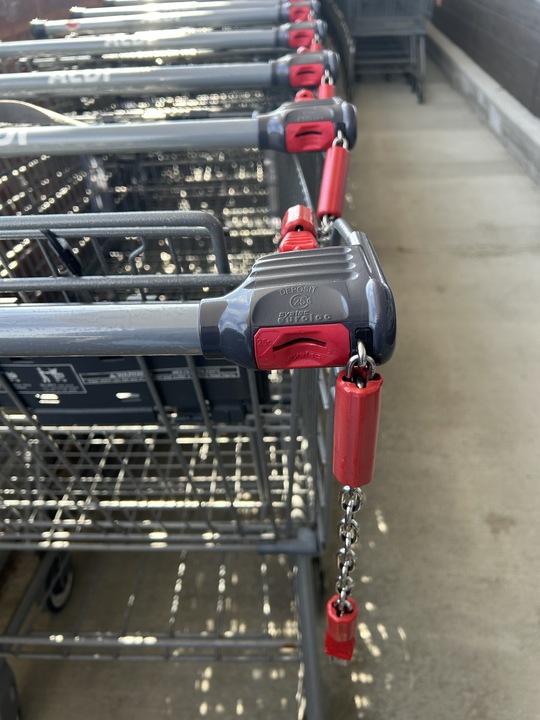
As I pushed the quarter into the slot on the handle, unchaining the cart from one in front of it, I gave myself a pep talk about exhibiting restraint, knowing it could be particularly difficult in the face of so many new-to-me products.
Entering the store, the first thing I noticed was that I could see all the way to the opposite corner. The compact size is one of the chain’s selling points, helping shoppers get in and out quickly. The Portland store will be slightly larger, at 25,000 square feet, which is less than half the size of the Hannaford that opened on Payne Road in Scarborough in 2023 and a third the size of the Market Basket at Rock Row in Westbrook.
For people really in a rush, the “quick meals” section was located closest to the door. So, you can easily grab a take-and-bake pizza (one of the most commonly recommended products) or, like I did, a tray of fully cooked meat, including pork carnitas and chicken thighs in a Thai curry, both of which I can already vouch for.
Beyond that was the produce, taking up three half-aisles. On the whole, I thought it looked a tad sadder than Hannaford’s, while matching that chain’s sale prices. Notable exceptions included the very green bananas, bright-red Roma tomatoes and a three-pack of bell peppers for $2.19, a price lower than I can remember ever seeing elsewhere.
I also appreciated the 75-cent bunch of cilantro. Regardless of how it compares to other stores pound for pound, I would always choose this smaller-size package to avoid the stress of using it all up. On the other hand, several items (onions, sweet potatoes, lemons, limes) were only available by the bag, which my two-person household could never get through before they went bad. So much for this week’s antioxidants.
To avoid boring you by going through my shopping list aisle by aisle, here’s the overview of the rest: Aside from store size, Aldi’s other big thing is its store brands, from Fremont Fish Market frozen seafood to Happy Farms cheeses. The products, snacks especially, closely align with nutrition fads — high-protein this, cauliflower that — and are often positioned next to the name-brand products they’re knocking off, so you know exactly how much you can save, which ranges in significance. Cans of private-line Popz prebiotic soda for $1.49 sat next to Poppi brand on sale for $1.89, while store-brand Simply Nature’s thin-sliced Graintastic bread was $3.49, compared to the almost identically packaged loaf from Dave’s Killer Bread for $5.78.
Another unique aspect of shopping here — and the namesake of the Facebook group I joined — is the random assortment of non-food items in the middle aisle of the store, which on my trip included memory foam sneakers, mattress pads, trunk organizers and fake flowers. As I watched a young woman frantically search the shelves, kneeling down and digging into the back, I started to understand the associated “shame.”
On a couple similar shelves at the front of the store near the registers was a wrist blood pressure monitor, on sale for $18.74, which struck me as less of an impulse buy and more like a wise investment, considering the sodium content of all the packaged foods that ended up in my cart.
I don’t envision myself regularly stopping at Aldi just to see what household items might appear, but I can imagine the new Portland store playing a similar role for me as Trader Joe’s — a place I’ll visit occasionally for certain store-brand items I like and things I regularly buy that are cheaper there than anywhere else.
One way Aldi keeps its costs down is by not employing baggers, which I only realized after fully unloading my cart onto the conveyor belt, then seeing all my scanned items had been placed loose in another cart on the other side of the register. That’s also when I noticed customers who’d already been rung up bagging their purchases by the windows.
Seeing my confusion, the friendly cashier patiently walked me through the process — buy paper bags for 12 cents or reusable ones for more which, normally, I’d have to do before checking out. Because it was my first time, I could get a pass until after I finished bagging. And, yes, we would be switching carts (this might explain their uniform size).
I said I had some bags in my car, so I would take the cart out there. I thanked the cashier, who said it was good practice in explaining how it all worked — something that would come in handy upon starting an assistant manager role in Portland later this month.
See you there, I said.

We invite you to add your comments. We encourage a thoughtful exchange of ideas and information on this website. By joining the conversation, you are agreeing to our commenting policy and terms of use. More information is found on our FAQs. You can update your screen name on the member's center.
Comments are managed by our staff during regular business hours Monday through Friday as well as limited hours on Saturday and Sunday. Comments held for moderation outside of those hours may take longer to approve.
Join the Conversation
Please sign into your Sun Journal account to participate in conversations below. If you do not have an account, you can register or subscribe. Questions? Please see our FAQs.