


Maine superintendents have been rolling out early drafts of their budgets over the past few weeks, and things aren’t looking great.
The state’s largest school districts, Portland and Lewiston, have both said they will need to make staffing cuts to maintain a balanced budget amid rising costs.
And South Portland is projecting an even more dire budget situation as that district looks to cut nearly 80 positions, 42 of them teachers, and potentially close an elementary school.
Across the state, even in districts that have not proposed any staff reductions, budgets are up 5% to 10% over the last fiscal year. Education leaders are struggling to balance providing quality services to students without passing on costly burdens to local taxpayers, who must approve budgets via referendums in June.
Two major factors driving this tough budget year are the cost of providing competitive teacher salaries and rising health care premiums, said Eric Waddell, director of the Maine School Management Association, the statewide organization that represents superintendents.
Districts have to provide competitive wages to attract and keep teacher talent in an unaffordable time, he said, and often have negotiated contracts with teacher and support staff unions that require raises.
Waddell also said health insurance costs — which districts won’t know the details on until later this month — are almost certain to increase. There are two reasons for that: the recent agreement between insurance provider Anthem and Northern Light, Maine’s second largest hospital network, which may shift costs onto consumers in the form of higher rates; and the expiration of Affordable Care Act tax credits at the end of last year.
Waddell said in the past districts have been able to look at national trends to assess likely rate increases, but with those disruptions, that no longer feels possible.
“You need to anticipate that you’re going to be spending more on health insurance in the upcoming year than you have historically,” he said.
For districts that are proposing staff reductions, he said two omnipresent statewide trends play a role: enrollment is down, and property valuations — which the state uses to assess a district’s ability to pay for its education costs — are on the rise.
“That’s the perfect storm,” Waddell said. “Declining enrollment (and) increased valuation will always yield reduction in state funding.”
THE SITUATIONS
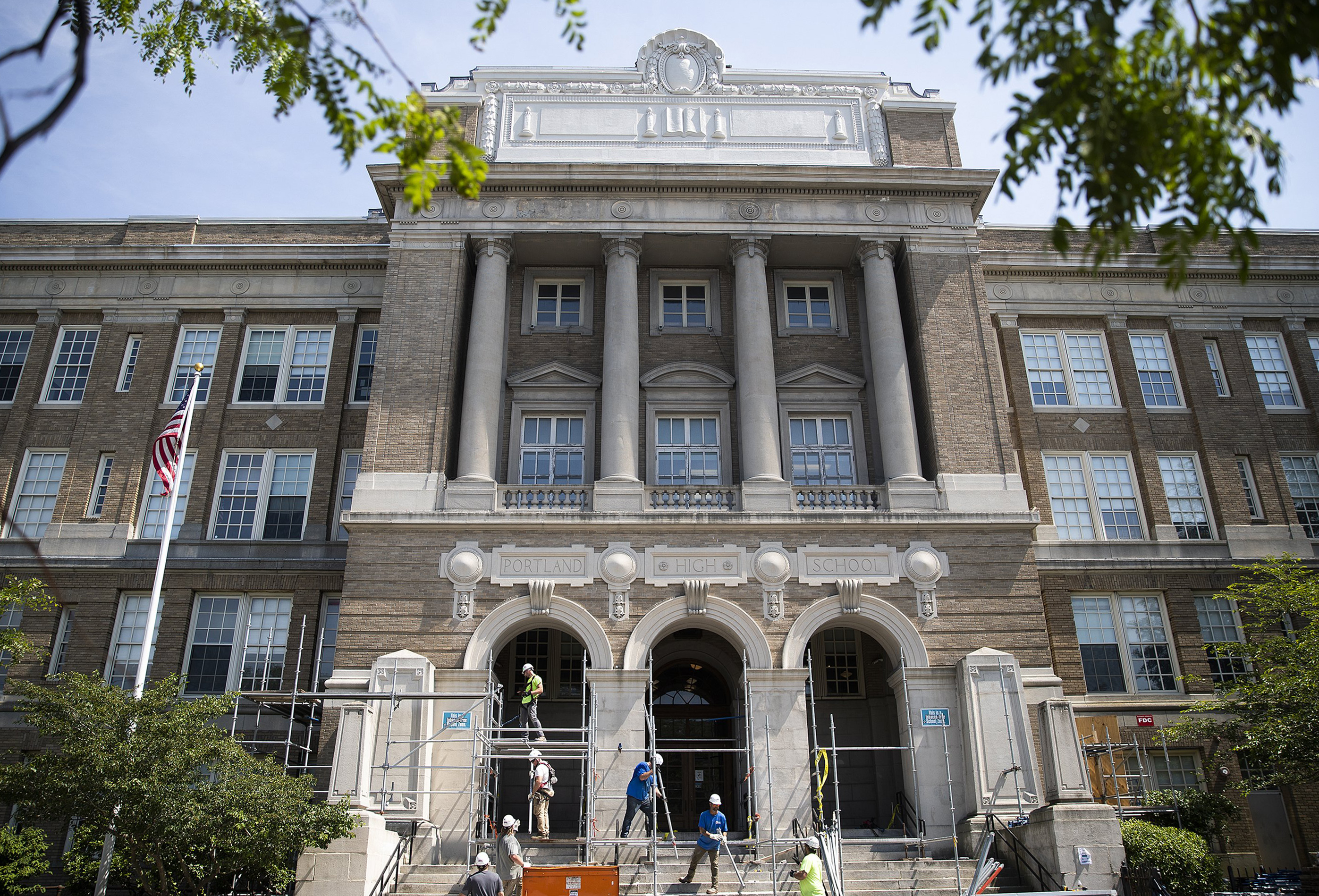
Portland Superintendent Ryan Scallon pointed to all of those reasons — declining enrollment, increasing property valuations, salary raises and rising health insurance costs — as factors in his proposed budget with a 4.7% increase and cuts to 20 positions, most of which are vacant.
Educators and school mental health professionals spoke passionately against cuts to student-facing positions at a public hearing last week. In testimony, some argued that Portland voters were supportive of the district and would be willing to pick up those costs on behalf of students. Board Chair Sarah Lentz cautioned against that.
“Think about taxpayers in this district, and renters, who get these costs passed on to them,” Lentz told fellow board members. “I have heard, ‘Our taxpayers always show up,’ and the ones that can afford that do. The other ones move from Portland.”
Lewiston Superintendent Jake Langlais said uncontrollable costs such as negotiated teacher and staff salaries, benefits and inflation are driving up spending, and he laid out a budget with an 11% increase even as it cuts 30 positions. The City Council took up the budget Monday, when members worried that the tax increase would be too much of a burden on homeowners.
South Portland is facing an especially tough situation as leaders are trying to cut $8.4 million from the budget while keeping their increase below 6%, the high end of what city councilors have recommended. The district drained the last of its savings last year to preserve teaching positions, and its enrollment has continued to decline.

Jesse Hargrove, president of the statewide teacher union organization, the Maine Education Association, said an environment where districts are cutting dozens of staff does not bode well for the profession as a whole. Mass layoffs dissuade young people from entering teaching because it feels like an unstable field, he said. On top of that, when positions are cut, it creates more work for those who remain.
“You can’t cut dozens of staff without impacting the kids that are there,” Hargrove said.
He said MEA anticipated it would be a tough budget season, but was still surprised by the severity of cuts in districts like Lewiston and South Portland.
MEA and the Maine School Management Association, as well as many school superintendents, have been advocating at the legislative level for changes to the statewide funding formula, which has long been considered inequitable. Lawmakers are considering reforms this session, but it’s unclear whether there will be enough support.
VOTERS WILL DECIDE
In every Maine community, voters ultimately approve or reject a school district budget. Elections typically happen in June when turnout is low (fewer than 10% of registered voters cast ballots in Portland and Lewiston last year) and can reflect how taxpayers feel about controversial budget elements, like layoffs or significant tax increases.
But in 2026, most referendum votes will align with high-profile primary races, including the crowded campaign to replace Gov. Janet Mills, who is termed out, and the U.S. Senate race for the seat held by Republican Susan Collins, where the Democratic primary between Mills and political newcomer Graham Platner has become one of the most-watched races in the country.
Waddell said it’s impossible to know how those races will affect the referenda, but higher turnout often favors budgets.
In a low turnout year, he said, voters who are upset about large proposed increases can sometimes be successful at mobilizing people against a budget.
Staff Writers Emily Duggan and Dana Richie contributed to this story.

We invite you to add your comments. We encourage a thoughtful exchange of ideas and information on this website. By joining the conversation, you are agreeing to our commenting policy and terms of use. More information is found on our FAQs. You can update your screen name on the member's center.
Comments are managed by our staff during regular business hours Monday through Friday as well as limited hours on Saturday and Sunday. Comments held for moderation outside of those hours may take longer to approve.
Join the Conversation
Please sign into your Sun Journal account to participate in conversations below. If you do not have an account, you can register or subscribe. Questions? Please see our FAQs.