


Ryan Jennings died a hero.
The 46-year-old North Yarmouth man was on vacation in Florida this week with his wife and children. They were swimming Wednesday at Juno Beach when the water began to move. A rip current formed. In moments, Jennings, his son and one of his daughters were pulled away from the shore.
Instinctively, Jennings threw his 12-year-old son toward shore and out of the current. He grabbed his 9-year-old daughter and hoisted her above his head, keeping her above the water as they were both dragged away from land.
Both children survived.
Jennings did not.
“He made sure they made it out alive,” his wife, Emily Jennings, said in an interview Friday. “He truly was our hero.”
Ryan died the same way he lived, Emily said. No matter what, he was thinking of others first. And there was no one he cared about more than his kids.
The couple met about 10 years ago. At that time, she was a single mom. She wasn’t sure if she and Ryan were meant to be together, but after a fire at Emily’s apartment, it was Ryan who gave her and her son a place to stay. Almost immediately, they became a part of his family.
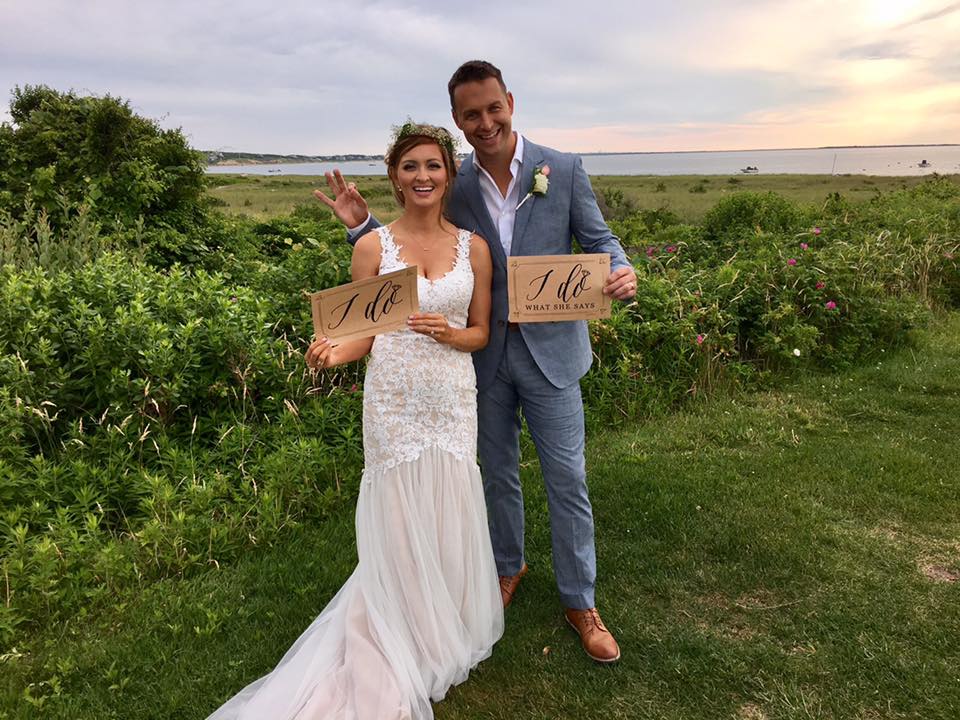
Ryan took in Emily’s son as his own, even though he wasn’t the biological father. They’d often listen to “My Boy” by Elvie Shane together, Emily said. It was their song.
“He ain’t my blood, ain’t got my name. But if he did, I’d feel the same,” Shane sings. “I wasn’t there for his first steps, but I ain’t missed a ball game yet. And that ain’t ever gonna change.”
Emily described Ryan as her rock. No matter what she needed, whether it was housework or a new dress, he was happy to help. Gifts and acts of service were his love languages, she said. And he spoke those languages fluently.
Soon after they married, they had two daughters of their own and bought a house in North Yarmouth. Just before they made the trip to Florida, Emily learned she was pregnant with their fourth child.
“I just don’t know how I’m going to go on,” Emily said, choking back tears.
The vacation was supposed to be a relaxing break for the Jennings family. That stretch of ocean, just north of Palm Beach, is home to miles of sandy beaches along the Atlantic coastline. In recent years, the area has seen sudden and violent rip currents.
Rip currents occur when a narrow stream of water flows quickly away from the shore, through the surf zone and past the line of breaking waves. They are formed when waves break near the shoreline, piling up water between the break and the beach.

They aren’t always dangerous, but under certain conditions, the speeds can be too much for even an Olympic swimmer.
Most of Florida’s eastern coast has been under a rip current red flag for much of this week, according to Chuck Caracozza, a forecaster at the National Weather Service’s Miami office, including the stretch where Ryan Jennings drowned.
“We’ve had a high risk all week. Strong winds that can create high surf and dangerous surf as well,” Caracozza said.
The Palm Beach County Fire Department initiated a water rescue at Juno Beach around 3:25 p.m. on Wednesday, the department said in a news release, adding that the low tide and onshore wind at that time were consistent with rip current activity. Ryan Jennings and his children were not swimming in an area overseen by lifeguards, the department said.
Rip currents account for about 80% of rescues conducted each year at U.S. beaches, according to the National Oceanic and Atmospheric Administration. Storms in recent years have made rip currents — and emergency rescues— much more common in Maine.
On average, about 70 people drown in rip currents every year in the U.S., data from the National Weather Service shows. Maine has never had a rip current fatality. Florida, meanwhile, has seen nearly 300 over the last 15 years.
The area near Juno Beach where Jennings drowned has seen more than a half dozen rip current drownings in the last two years alone, according to published reports.
Ryan’s mother, Gail McLaughlin Toti, hopes Ryan’s death reminds others about the dangers of the ocean. But she hopes even more that it inspires others to live as selflessly as he did.
“My son was everybody’s best friend. From the CEO to the janitor, it didn’t matter who you were. He treated you with kindness and love,” she said.
Ryan grew up a talented multisport athlete in Longmeadow, Massachusetts, she said. He carried that passion for fitness and sports through his whole life. In recent years, Ryan began coaching Greely’s youth football programs, where his son played, and helped out with wrestling, lacrosse and other sports as well.
“He was always willing to jump in, raise his hand and say ‘I want to help,'” said George Spino, who coached Greely’s middle school football team alongside Ryan. “No matter who you were or where you were, Ryan saw the best in you. And darn it, he was gonna bring it out.”
A family friend set up a GoFundMe for the Jennings family that had raised more than $70,000 by Friday afternoon. On social media, dozens of messages poured in from friends, neighbors, acquaintances and others sharing stories of how Ryan had impacted their lives.
“He was everyone’s biggest cheerleader,” one person commented.
“He was someone they could always turn to when things were tough,” said another.
“Ryan’s selfless act of love and sacrifice will never be forgotten,” wrote a third.
Ryan is survived by his parents, Ernest and Gail Toti; his sisters, Martha Mathews and Kristy McMahan; his niece Rylee McMahan; his siblings-in-law, Alex McMahan, Zach Woods and Cam Woods; and his mother- and father-in-law, Steve and Katie Woods.
His parents plan to start a scholarship in his honor — $5,000 each year to a student from the Cumberland-North Yarmouth area who best embodies Ryan’s selfless spirit, his mother said.
“He wasn’t always a straight-A student, so I didn’t wanna give it out based on grades. It’s more about character,” she chuckled. “So that all the kids growing up in the school system, Ryan’s kids, they’ll all understand what it means to have an open heart.”
“He really, truly made our family and the community a better place,” she added, sniffling back a tear. “He left it better than he found it.”
Staff Writer Drew Johnson contributed to this report.

Comments are not available on this story. Read more about why we allow commenting on some stories and not on others.
We believe it's important to offer commenting on certain stories as a benefit to our readers. At its best, our comments sections can be a productive platform for readers to engage with our journalism, offer thoughts on coverage and issues, and drive conversation in a respectful, solutions-based way. It's a form of open discourse that can be useful to our community, public officials, journalists and others.
We do not enable comments on everything — exceptions include most crime stories, and coverage involving personal tragedy or sensitive issues that invite personal attacks instead of thoughtful discussion.
You can read more here about our commenting policy and terms of use. More information is also found on our FAQs.
Show less