
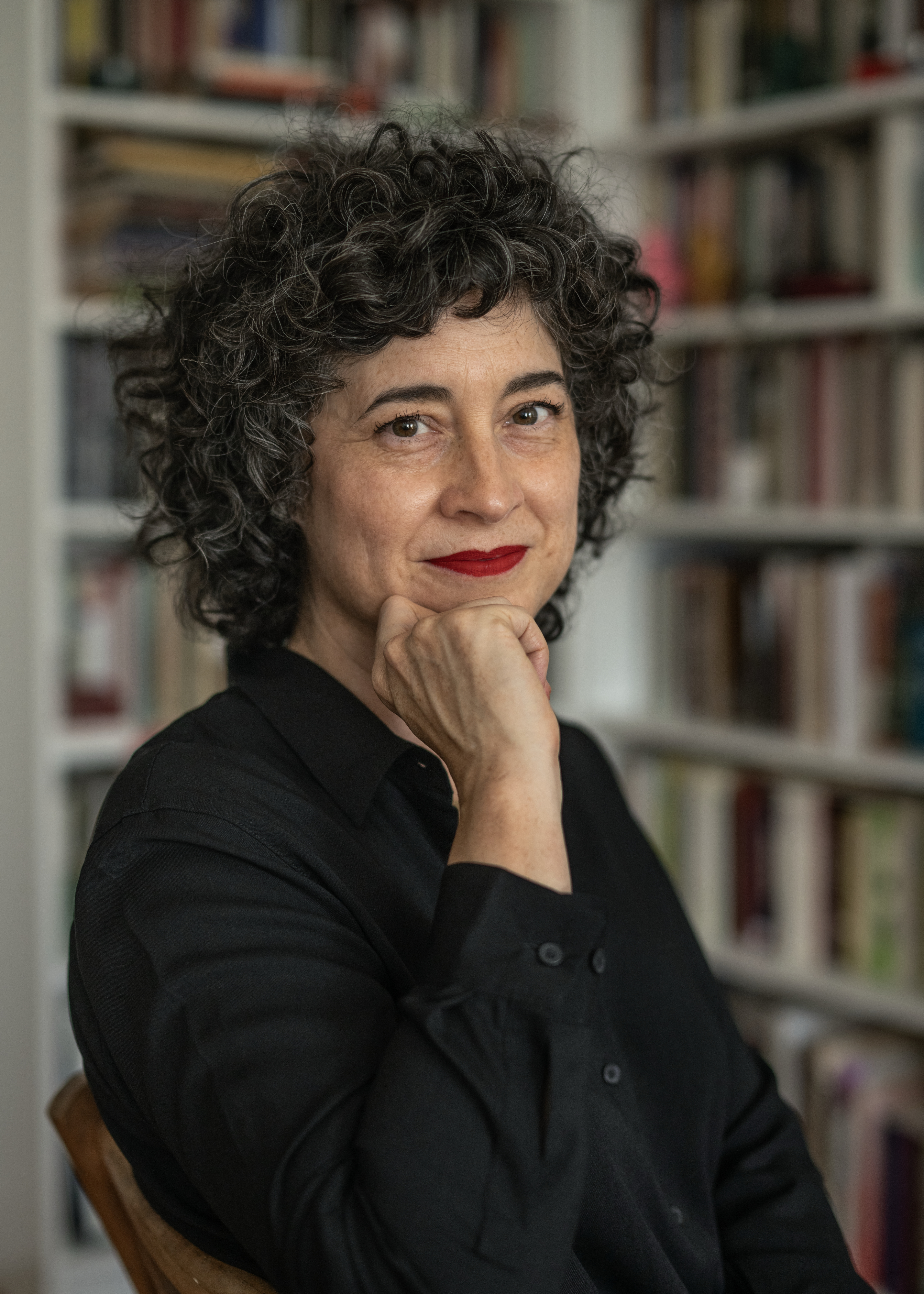
Laura Mauldin’s journey as a sociologist began when she moved to New York for graduate school. That was also when a couple of queer friends invited her to a WNBA game where she met J.
They wrote love letters all winter. In the throes of their romance, Laura’s role as romantic partner suddenly transformed when J’s leukemia returned and she became J’s unpaid caregiver.
Dr. Mauldin’s book uses her own story as part of a larger investigation into the brutalities of our failing health care system and the ableism it protects. Her journey in caregiving is one of many she archives as she seeks to reimagine care. She spoke with the Portland Press Herald about navigating the shame, humiliation and grief espoused by our institutions with an unflinching belief in the expansive power of love — in the self and in others.
This book is a memoir, but it also recounts other people’s stories. What impulses as a writer or academic drove the shape of the book?
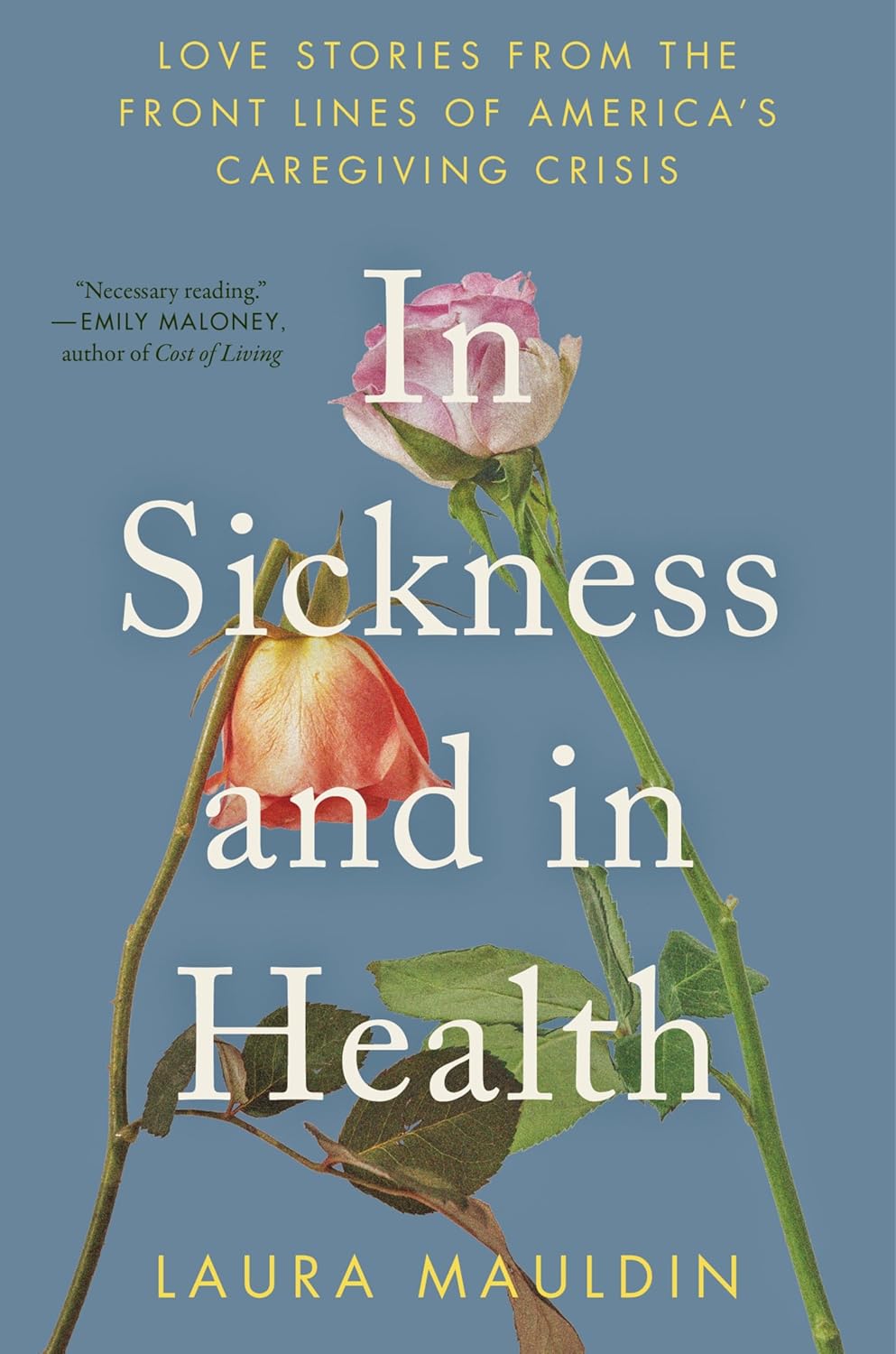
The memoir is the framing — my entry point into this topic. Because I was in community with disabled people and other caregivers, I thought, “This can’t be just about me.” I occupy this straddled space between being someone with personal experience and being a trained academic in this area.
I’ve been a writer my whole life. It’s the only way I can make sense of the world. There was a part of me throughout the whole experience that knew this would one day be material for something, but I didn’t know what that thing was. Once my partner passed away, I spent many years recovering. It was through writing — I went to a poetry grief group for widows — that I saw, “OK, I’m working with this as material now,” and it took these different forms. I don’t think I could have survived it if I didn’t write it down.
The communal is one of the central values in the book. Is that a sociologist’s impulse? Is it in your nature to feel connected?
I think it’s a combination. Because of my academic training and my understanding of how ableism works, I know that ableism also works internally, on me and on each of us. In order to live an anti-ableist life, we have to be willing to put our vulnerability out so that others can care for us. We have to also, in return, allow people to be authentic and put their vulnerabilities out so that we can care for them.
Ableism is about this mythical idea of being this autonomous being that needs nothing. How can we fight that except by being vulnerable, putting ourselves in that space and doing this with others?
The title of your book is a marriage vow, which suggests love. Buried within that is so much grief. In the final movement, you write directly to the reader and all the people whose lives you have archived in the book. Do you feel that grief can be held there — not just in the community, but in your own self?
One of the reasons I chose to write this book was because of this idea that we’re not supposed to bring our pain, and our grief and our emotion. You’re a neutral observer. I knew there was no way in which I could talk to people about this and not feel. I don’t think that would yield anything that would help anybody.
One of the book’s final questions is “what is the expanse of love?” Where do grief and pain hide in that question?
Well, you can only find out how expansive love can be through grief. That’s the only way. There’s no other way to find it out.
That’s the truest and hardest news.
I’m going to tell you a story. I sat in a virtual room with 30 spousal caregivers to discuss the book. One of them said, “I can’t connect with anybody because I’m so ashamed of everything I feel.” Caregivers are supposed to be little angels and do everything, and then you’re seen as bad if you don’t. What I said to her is, if they don’t get it, that’s the limit in their humanity, not yours, and you’re still OK, and we’re going to try again. That’s really hard, but we have to do it. There’s no other way out. There’s no other way to find out how expansive love can be than grief.
What you went through with your partner, J, and your research, began long before COVID-19. How are you thinking about these stories and ableism in our current context?
There was this moment when the editor and publisher said, “We don’t want to have a COVID book.” Yet, I think we went through something with COVID that unfortunately put disability and illness right in front of our faces. Instead of responding with care, we doubled down on eugenics, on the idea that if you can’t hack this, then you’re not worth it and you’re an acceptable loss.
That’s what I felt was the guiding principle. Over and over again, I heard government officials say, “It’s just people with preexisting conditions,” and the eugenic frame that we approached that pandemic with betrays the exact sort of collective psychological aversion that we carry as individuals and as a society. That is not just a policy problem. That’s not just a structural problem. My thought was, if I can work on that individual emotional, psychological puzzle, then maybe the ideas in this book can be almost portable and can help us reframe.
Maine is known as “the grayest state.” How does the elderly community fit into your understanding of ableism?
I feel very strongly that the word disability — disabled people, disability as a category — should be as expansive as possible and include those people who are aging into what we would call aging impairments. Just because you’re older doesn’t mean your impairment isn’t a disability. We often think, “There’s elder care, and then there’s disabled people.” No: They’re all disabled people. Some just happened to have aged into it rather than acquired it earlier. All those people are part of the same group, and if we can make connections across those different ways, into disability, then we can see ourselves as part of something bigger. Then we can demand more, and we can find solidarity.
Lisa Hiton is a writer living in Brooklyn, N.Y. She is the author of the poetry collection “Afterfeast,” and her work has been featured or is forthcoming in the Kenyon Review, The Slowdown, NPR, New South and elsewhere.
Laura Mauldin will speak with Mira Ptacin at Mechanics’ Hall at 6 p.m. Tuesday. General admission: $10.
We invite you to add your comments. We encourage a thoughtful exchange of ideas and information on this website. By joining the conversation, you are agreeing to our commenting policy and terms of use. More information is found on our FAQs. You can update your screen name on the member's center.
Comments are managed by our staff during regular business hours Monday through Friday as well as limited hours on Saturday and Sunday. Comments held for moderation outside of those hours may take longer to approve.
Join the Conversation
Please sign into your Sun Journal account to participate in conversations below. If you do not have an account, you can register or subscribe. Questions? Please see our FAQs.