

In 2009, the litter from small nip bottles of alcohol on the side of Maine roads had gotten bad enough that former Franklin County state lawmaker Tom Saviello decided to do something about it.
“People would buy the nip, drink it and throw the little bottle out the window,” Saviello said. “If you went down the road, you’d see piles of these small bottles.”
After working with a Lewiston producer of the small spirit bottles, they were added to the state’s bottle redemption bill, making a positive impact on what had become a major environmental problem.
“There were a lot of people saying it would never work, but it did,” Saviello said. “It took litter off the roads.”
The Maine Legislature is considering LD 2141, which would redirect about $4 million annually from unclaimed bottle deposits toward environmental and related programs, including farmland protection and lake restoration.
An estimated $16 million in unclaimed bottle deposits sits in Maine’s redemption system every year. Under current law, the bulk of that money flows back to beverage distributors.
LD 2141 focuses on how unclaimed deposit money is distributed but has drawn debate over how those funds should be used. Supporters argue unclaimed deposits are effectively a windfall for the industry. Opponents, including some in the redemption business, say any diversion of funds misses the more urgent problem: the handling fee paid to redemption centers has not kept pace with the cost of running one.
In testimony submitted to the Legislature, Cameron Lane of Portland said unclaimed bottle deposits are retained by the beverage industry rather than directed toward public purposes. Lane wrote that LD 2141 would dedicate $2 million annually to Maine’s Working Farmland Access and Protection Program, creating a stable funding stream for farmland conservation. Lane said farmland in Maine is being lost faster than it can be conserved, and argued the funding would help ensure land remains available for agricultural use.
Some beverage industry leaders have also pushed back more broadly on the proposal, arguing it would shift costs onto businesses that sustain the system. In an April opinion piece published in the Portland Press Herald, Jenn Lever of Baxter Brewing Co., Chris Black of Nappi Distributors and Kyle Boland of Coca-Cola Beverages Northeast wrote that unredeemed deposits are not excess profit but “a critical financial tool needed to keep Maine’s recycling system operating.”
They said collecting and processing roughly 850 million containers each year costs more than $70 million, and warned that redirecting even a portion of unclaimed deposits would “shift millions of dollars in costs directly onto local beverage businesses.” The group argued that the current structure works because those funds help offset handling, transportation and processing expenses, and that removing them could lead to higher prices, reduced product offerings and potential business closures.
Lever, Black and Boland also pointed to a previous agreement with lawmakers tied to system reforms, writing that unredeemed deposits were expected to remain part of the financial structure.
“Now some legislators want to go back on that promise,” they wrote, urging lawmakers to keep the funds within the existing system.
‘EVERY CENT COUNTS’
Maine’s bottle bill was built on a simple premise: attach value to containers so they are less likely to become litter. Approved by voters in 1976 and implemented in 1978, the law created a refundable 5-cent deposit on most beverage containers. It expanded in 2009 to include wine at 15 cents and again in 2017 to cover spirits, with smaller nip bottles set at 5 cents.
The deposit has not kept up with inflation.
“I think higher payouts will eventually be needed to keep the redemption program going for future generations,” said Kristin Workman, owner of Four Winds Too redemption in Livermore Falls. “Most younger people are throwing their cans and bottles away. When the program began it was a 5 cent deposit on a product that was under a $1. Now people are paying up to $4 for one energy drink. The 5 cents doesn’t mean anything to them.”

Saviello, a Franklin County commissioner who helped shepherd the nip bottle expansion through the Legislature, said the test for any bottle bill change is simple.
“If you want to change the bottle bill, you have to do three things,” Saviello said. “One, it creates jobs. Two, it removes litter. Three, it supports charitable efforts.”
In 2009, after identifying Sazerac Company in Lewiston as a major producer of the nip bottles, Saviello emailed the company’s president. He said the president replied within about 10 minutes.
“I asked him two questions: ‘What’s your policy on drinking and driving?’ and ‘What’s your policy on littering?'”
The two settled on a 5-cent deposit, not the 15 cents applied to larger spirit containers, and gave the industry time to adjust. The bill advanced through bipartisan coordination with Co-chairman Ralph Tucker and survived a gubernatorial veto by former Gov. Paul LePage.
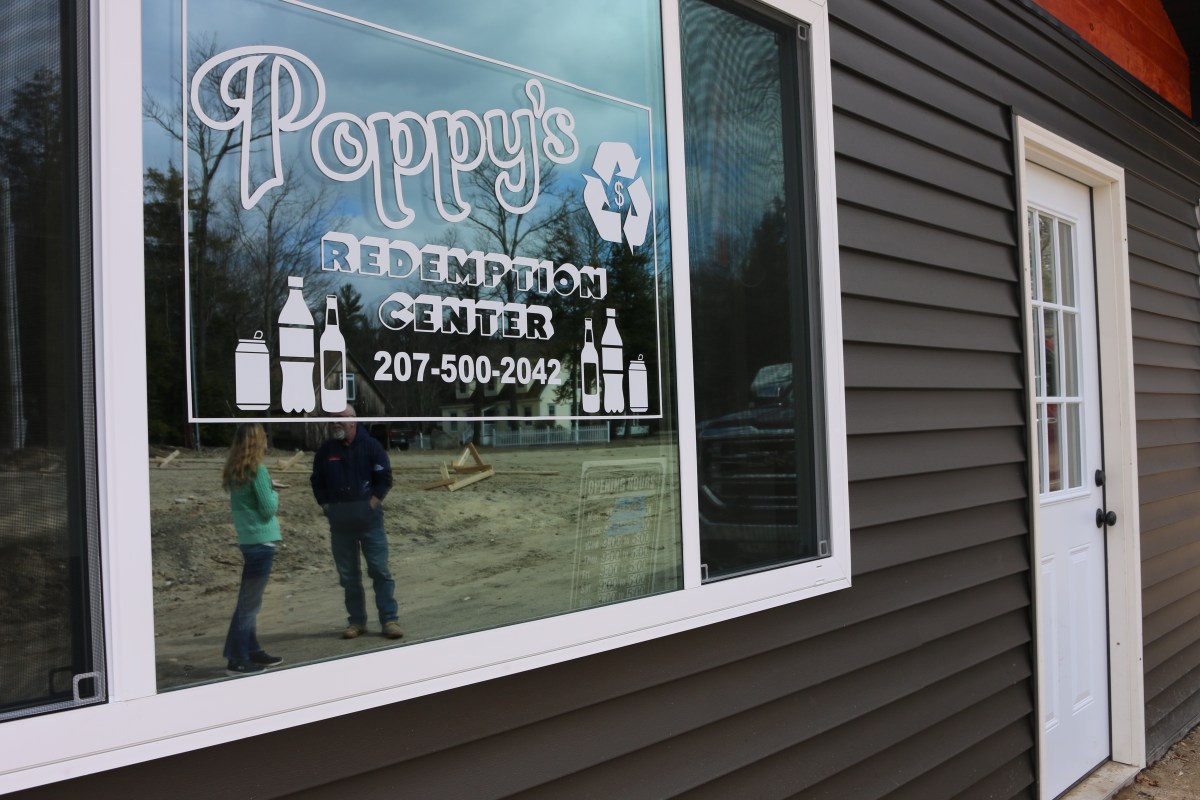
Developments in Franklin County illustrate the structural pressure building beneath that success. Poppy’s Redemption Center in Jay, owned by Arthur Vigue, closed after a state decision upheld licensing limits tied to population and proximity. The business relocated to Wilton and opened a second site in Livermore on March 21.
“We’ve had customers from all surrounding towns,” Vigue said. “We hope to be open seven days a week as we are in Wilton. The demand is showing us that is needed.”
Vigue declined to comment on pending legislation but was direct about the economics.
“We don’t offer 6 cents because we have to,” he said. “We do it to give back to the community. With everything happening today, we understand that every cent counts.”
Redemption centers receive a handling fee of about 6 cents per container, up from the 3-3.5 cents of earlier years, but operators say it still doesn’t cover rising minimum wage and energy costs.
“The people handling it were getting between 3 cents and 3.5 cents per container,” Saviello said. “You can’t run a business on that.”
His preferred fix bypasses the deposit question entirely.
“I don’t think the increase should be so much in the deposit,” he said. “I think it should be on the manufacturers or distributors to pay the redemption centers more.”
Not everyone believes a higher deposit would change behavior regardless of who pays.
“Nip returns have definitely helped,” said a representative from North Jay Redemption. “I don’t feel increasing the deposit will help. Either a customer will return their bottles or throw them away.”
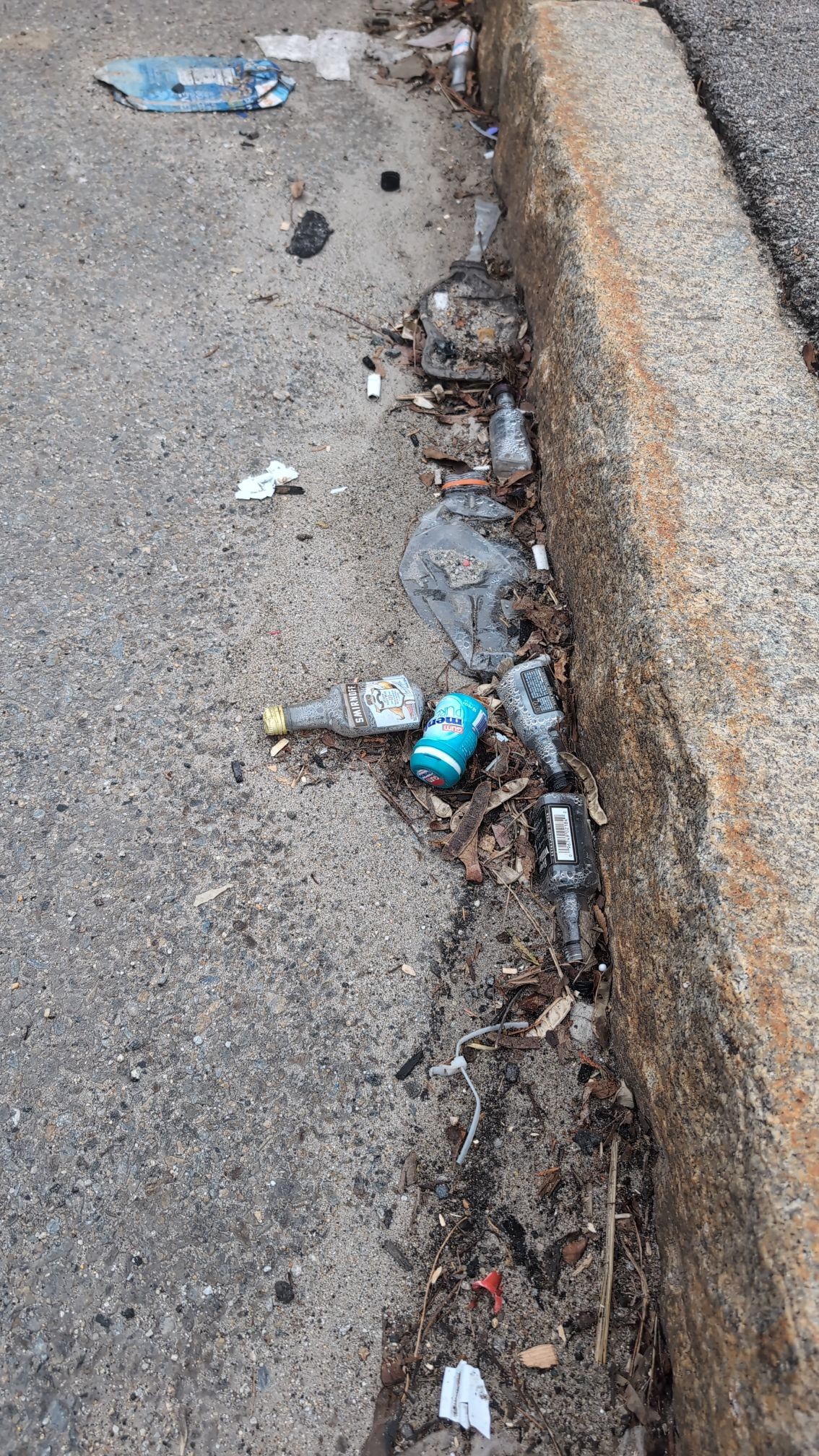
The contrast with neighboring states is visible from the road. In Meriden, Connecticut, a city of about 60,000, large numbers of discarded nip bottles are found along downtown streets and residential curbs. Connecticut applies a 5-cent surcharge on the bottles and directs revenue to municipalities; between April 1 and Sept. 30, 2025, Meriden recorded sales of 1,129,234 nip bottles, generating $56,462 in municipal revenue. The bottles carry no deposit and are not redeemable — and remain a routine litter problem.
The question before Maine lawmakers is whether the funding structure underneath the deposit and redemption system can be updated without dismantling the incentive that made it work.
“There’s a significant amount of unclaimed deposit money,” Saviello said. “Using that for environmental purposes makes sense to me.”
Workman said she would like to see the unclaimed deposit money stay in the state of Maine.
“I think it should somehow be returned to the program that creates the excess revenue,” Workman said. “We have to fight for raises that don’t even keep up with the inflation rate or Maine’s minimum wage yearly hikes. If we do need to up the deposit rate to say 10 cents we may need to use those funds to support that transition.”

Supporting Sponsor for Franklin Journal, Livermore Falls Advertiser, Rangeley Highlander and Rumford Falls Times.
Keeping communities informed by supporting local news. franklinsavings.bank

We invite you to add your comments. We encourage a thoughtful exchange of ideas and information on this website. By joining the conversation, you are agreeing to our commenting policy and terms of use. More information is found on our FAQs. You can update your screen name on the member's center.
Comments are managed by our staff during regular business hours Monday through Friday as well as limited hours on Saturday and Sunday. Comments held for moderation outside of those hours may take longer to approve.
Join the Conversation
Please sign into your Sun Journal account to participate in conversations below. If you do not have an account, you can register or subscribe. Questions? Please see our FAQs.