

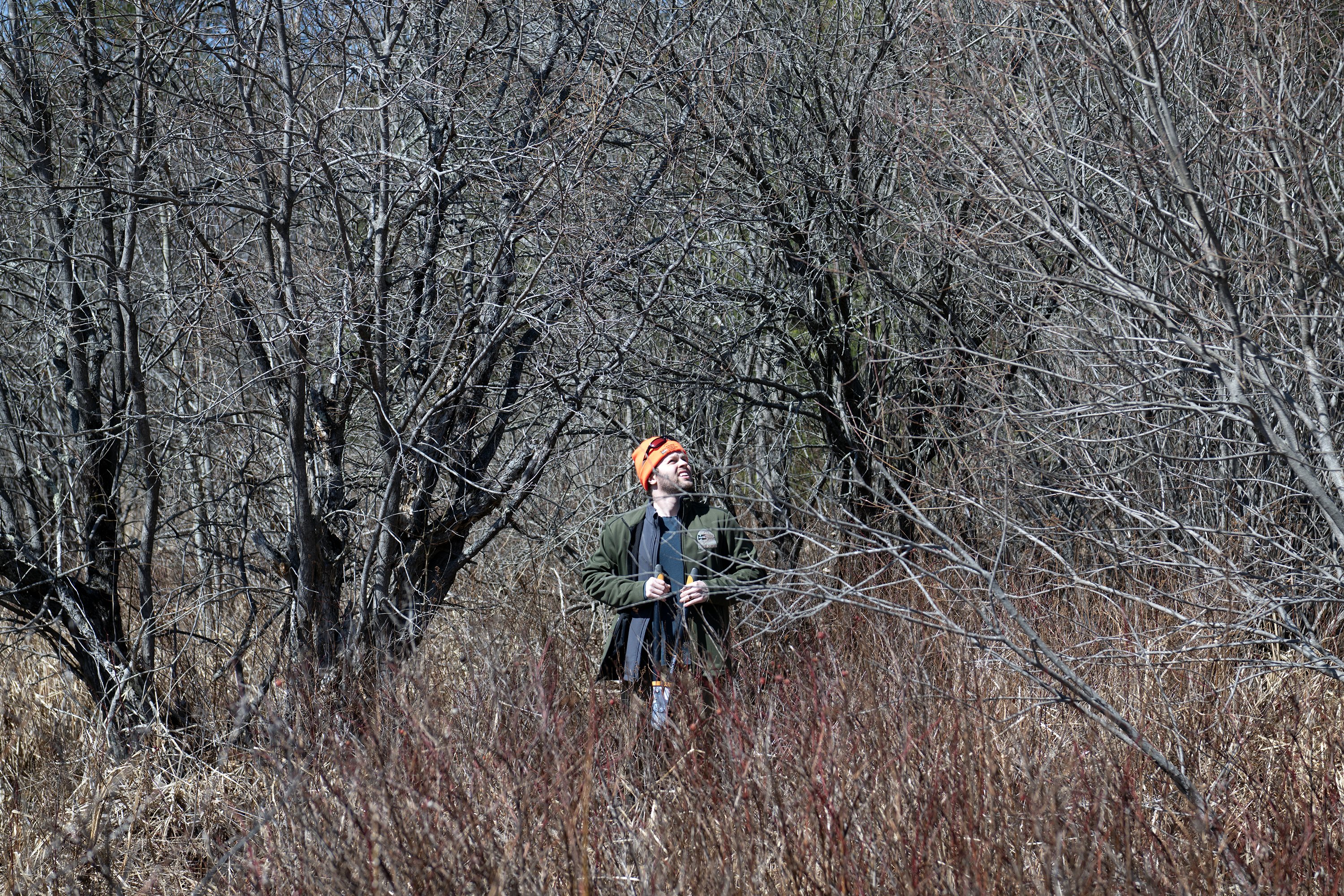
DAMARISCOTTA — On a brisk April afternoon at Salt Bay Farm, Jared Gregory gripped a thumb-thick length of dormant willow and drove it into thawing marshland with three quick strikes of a mallet.
“Huzzah!” Gregory, a district forester with the Maine Forest Service, said. “Sometimes it’s the little things that can make all the difference.”
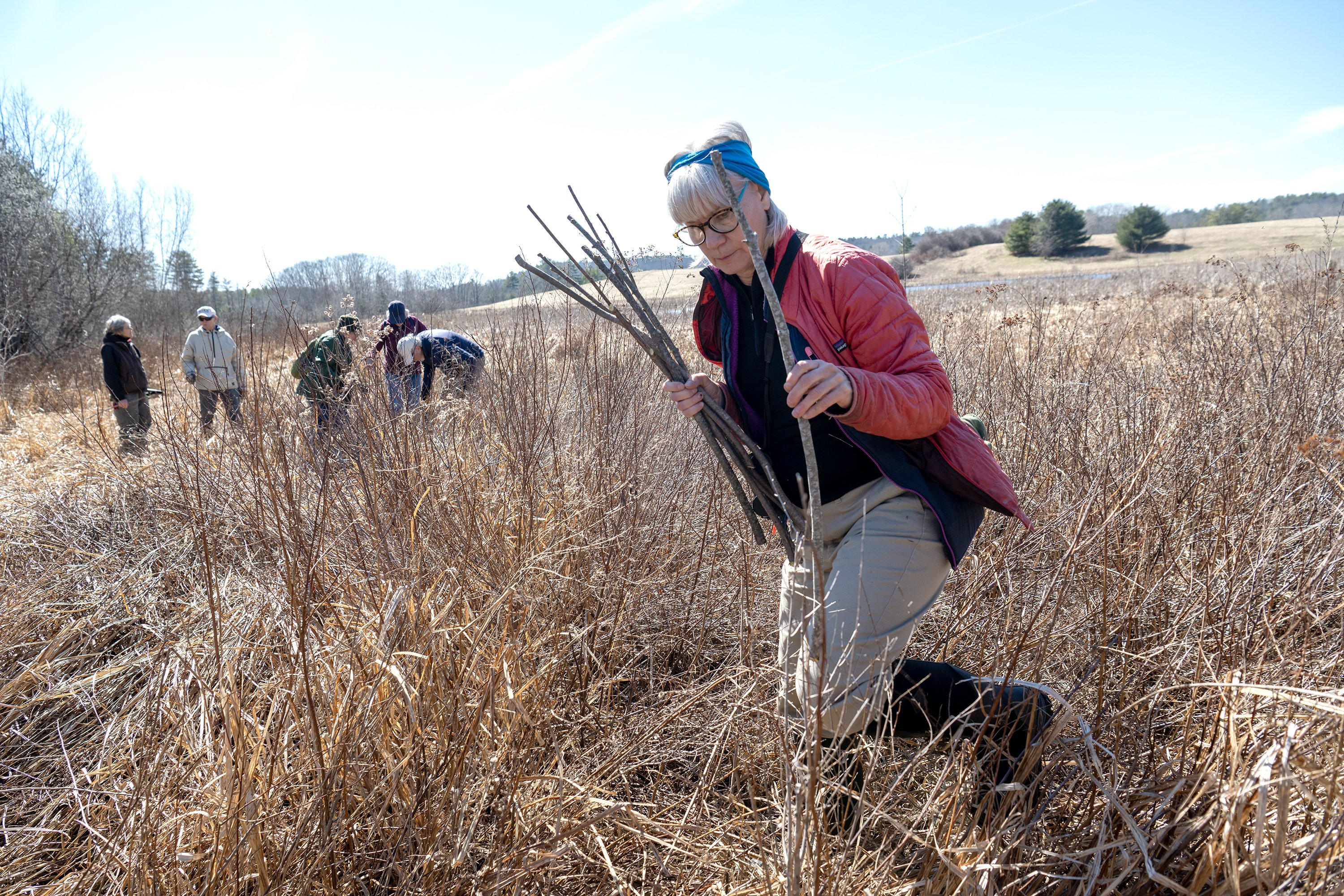
Two dozen boot-clad woodlot owners clapped. It was the first of dozens of willow and maple cuttings the group planted along the edges of the unnamed farm pond to protect it from fast-moving runoff from a nearby hill during increasingly common heavy rains.
The workshop was one of several being held by the Maine Forest Service to teach the low-tech art of live staking, a nature-based stabilization method using “living rebar” to prevent Maine rivers, lakes, and coastal dunes from washing away in a changing climate.
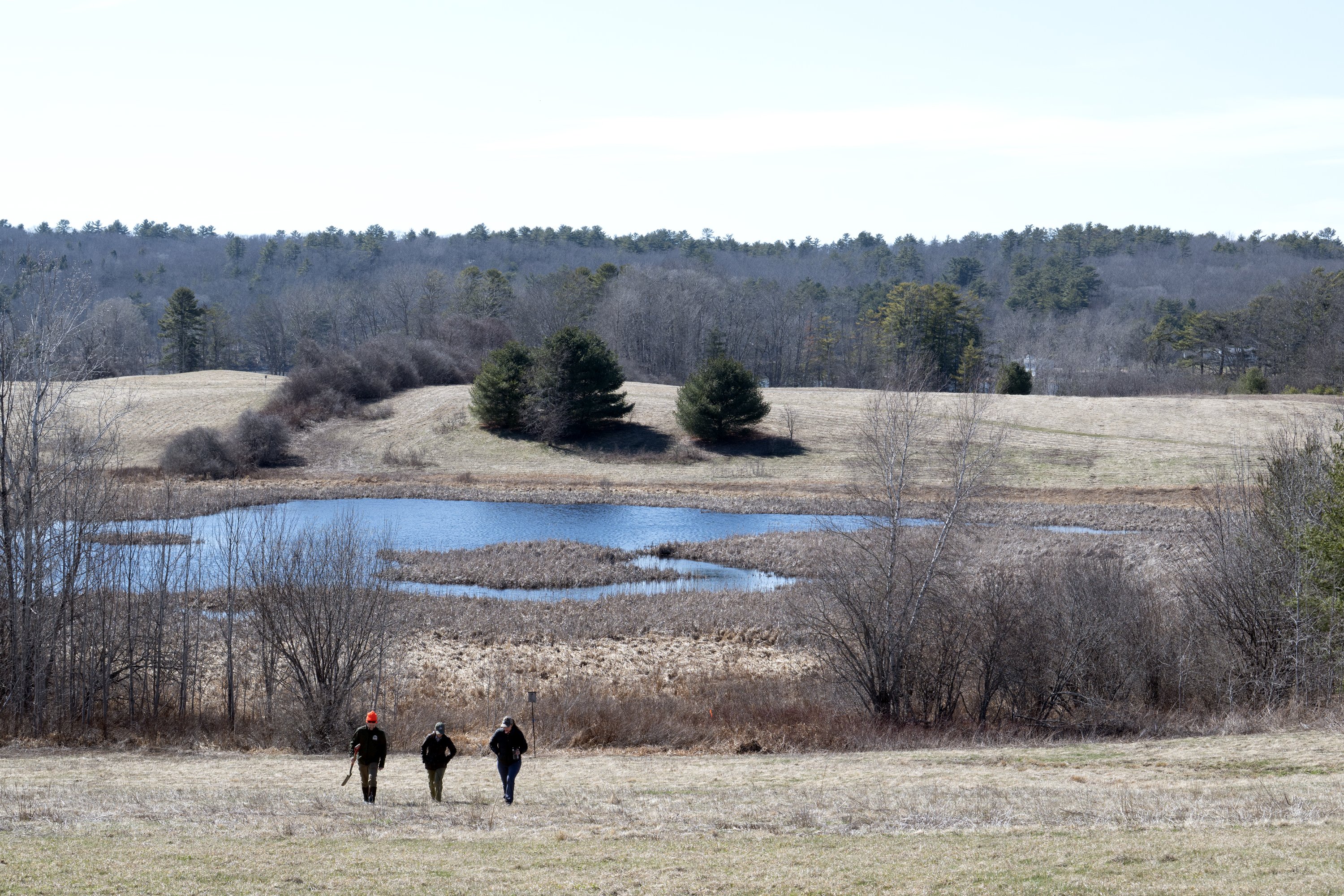
The series comes at a moment of reckoning for the state, with a rising number of droughts and floods disfiguring ponds and lakes and scouring riverbanks from the Kennebec to the St. Croix.
For years, the standard reaction to a crumbling shore was rip rap or a retaining wall. But state regulators now think hard armor can backfire, damaging neighboring lots, causing downstream erosion, and destroying the “living edge” that filters out pollutants before they reach the water.
Last May, the Maine Board of Environmental Protection overhauled the state’s shoreline rules. Under the new regulations, most landowners will have to prove nature-based solutions will not work before they are permitted to haul in stone or pour concrete.
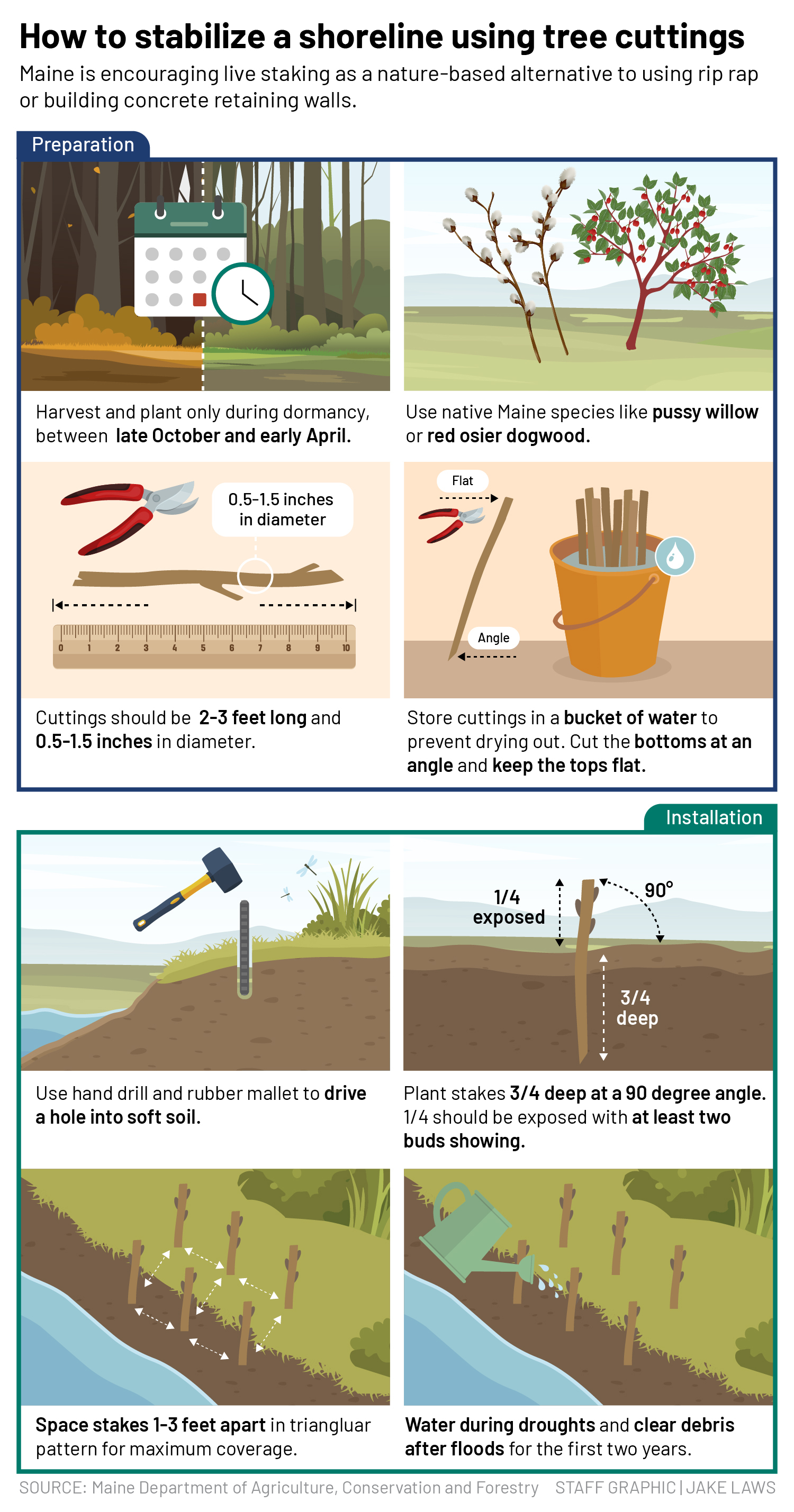
Live staking — pounding dormant cuttings of willow, dogwood or buttonbush into the mud to sprout roots — is the simplest of these nature-based stabilization methods. It is part of a broader toolkit of state-recommended “bioengineering.”
The transition is as much about economics and efficiency as ecology.
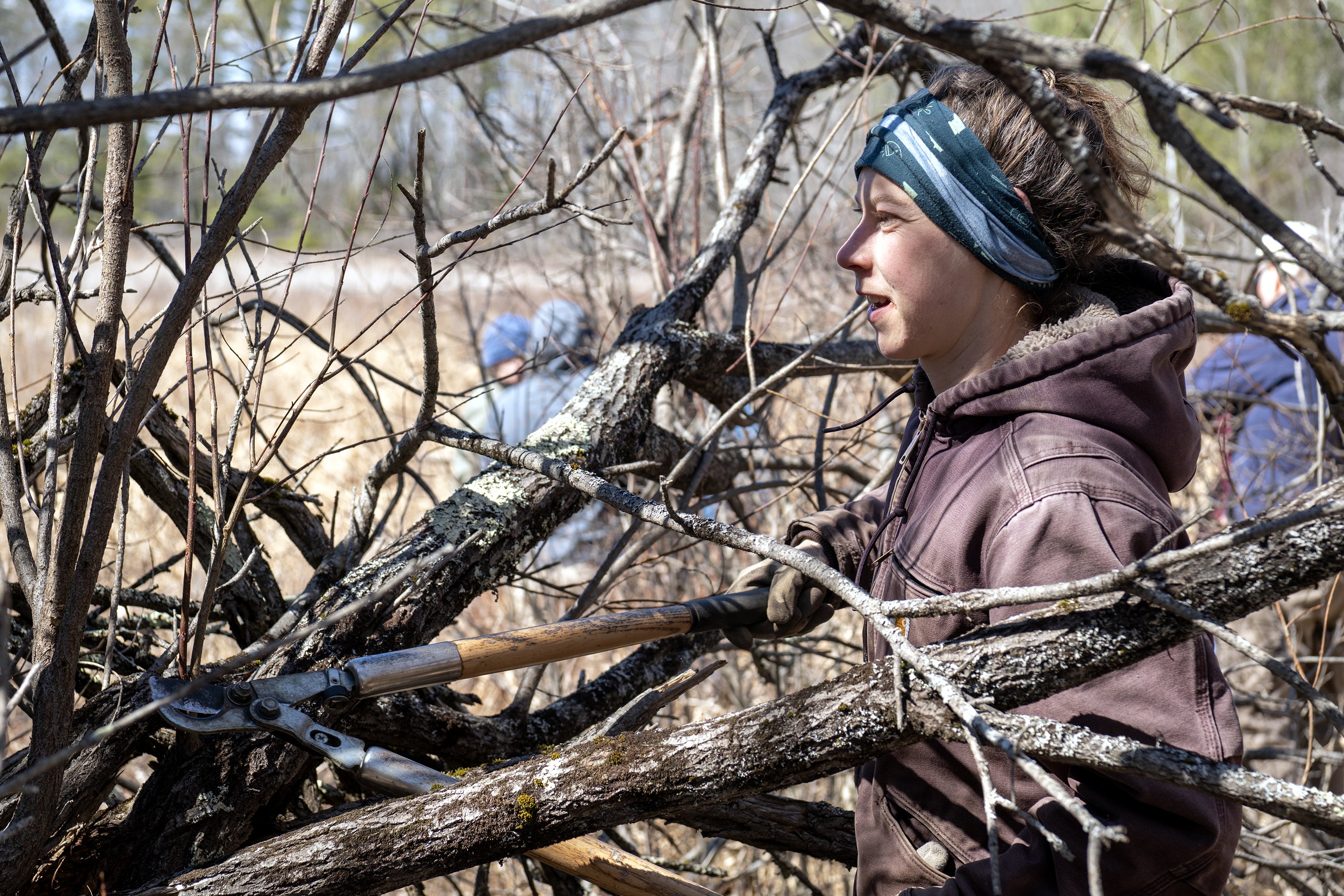
A rip-rap wall can cost a homeowner upwards of $20,000 and requires heavy machinery that can further destabilize a fragile bank. In contrast, homeowners can cut their own stakes, or purchase a bundle of 20 for about $40, and install them in a single afternoon. The only tools needed are hand shears or loppers and a mallet or hand-held drill.
Susan Springer has tried the hard-armoring approach on her wooded Union property, using an excavator to place big rocks near a stream to shore up its banks, but now she wants to use staked willow cuttings to fill in the gaps between the rocks.
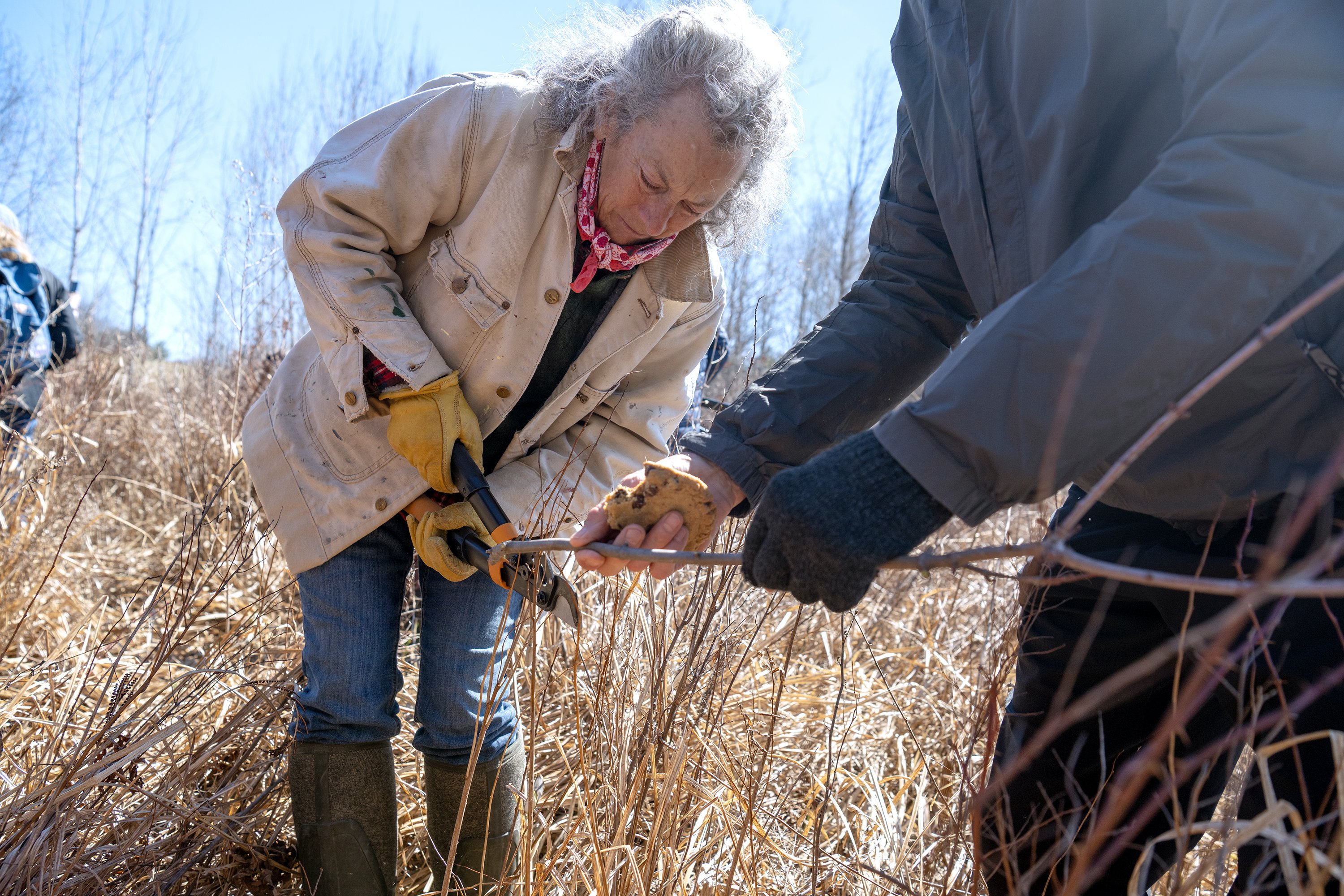
“The stream is running faster since the town widened a culvert upstream,” said Springer. “A bank of brightly colored willow would shore up the banks. It may keep out the Japanese knotweed. The birds would love it. So why not give it a try?”
With drill in hand, Springer dug holes in the soggy sedges for her classmates to plug. “It’s so fun!”
The state has made it a lot more convenient to pursue nature-based stabilization over traditional methods.
Under the Natural Resources Protection Act, a landowner seeking to build a concrete seawall faces a multi-month review by state regulators, requiring costly engineering plans and steep filing fees.
But many nature-based methods qualify for a permit-by-rule, a simple notification that costs $250 and carries a 14-day turnaround. Any live staking that occurs above the high-water line is exempt from permitting under legislation signed on March 23 by Gov. Janet Mills.
However, nature-based solutions can be risky. The failure rate for new stakes can be as high as 50%, according to Maine Forest Service forester Allyssa Gregory, depending on when and where they are planted and the weather during the first few months of planting.
Unlike a stone wall, which is finished the day the contractor leaves, the fledgling riparian buffer requires babysitting, including watering during Maine’s increasingly frequent summer droughts and using fencing or mats to keep hungry deer away from stakes’ tender tips.
While development is the biggest threat to Maine’s shorelines, the regulatory shift is also fueled by a sobering climate reality. As the planet gets warmer, climatologists say Maine will face more frequent and ferocious downpours. Simply put, warmer air can hold more water.
For a state defined by its 6,000 lakes and 30,000 miles of rivers, the implications are dire. Intense runoff and interior flooding are no longer anomalies; they are now the new baseline, threatening to turn pristine ponds and streams into turbid channels of silt and debris.
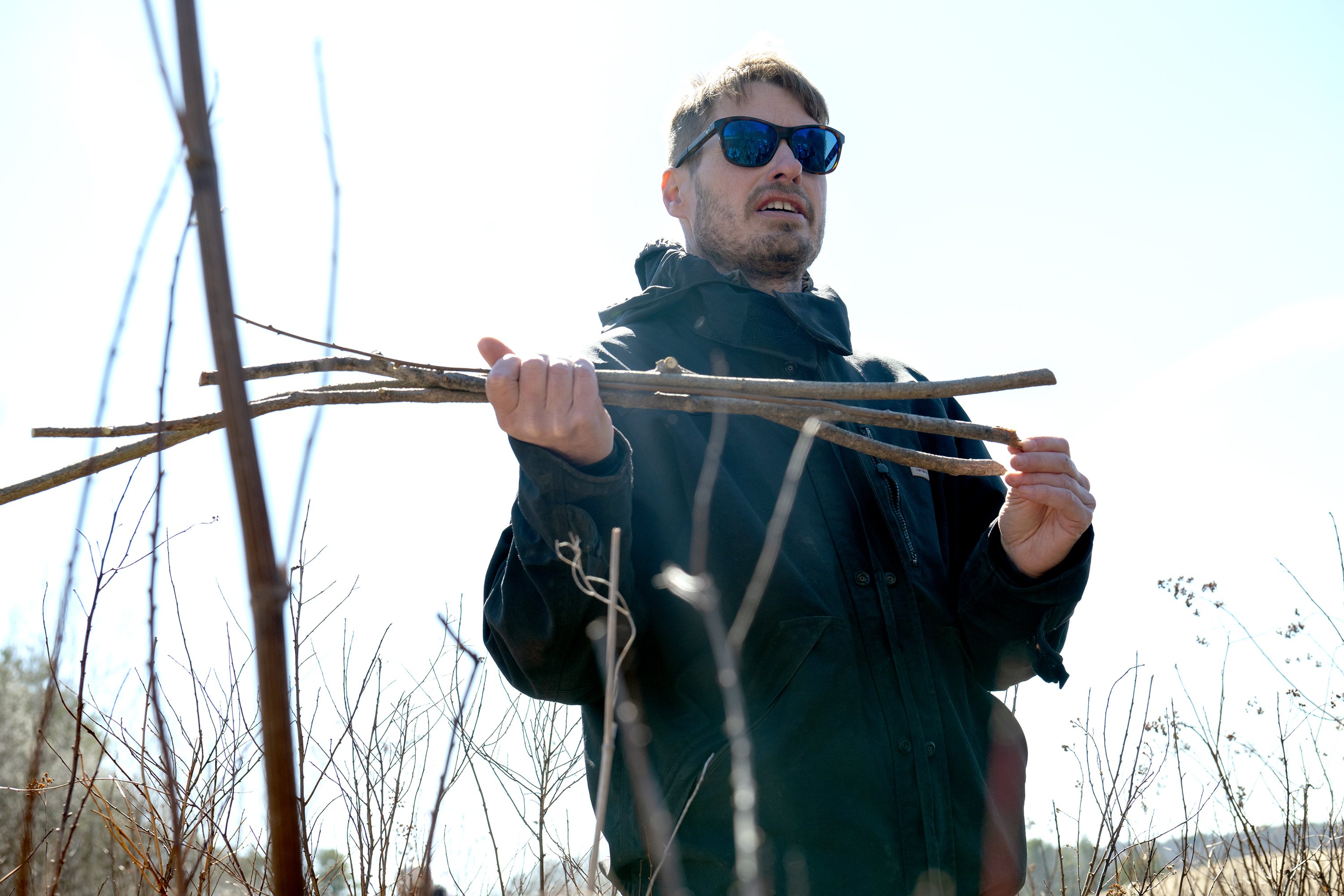
While live staking is primarily used as a shoreline stabilization tactic, Landis Hudson, the head of Maine Rivers, considers it another tool in the never-ending war with invasive species. Anywhere a native plant is growing is one where an invasive cannot, Hudson said.
“It’s so hard to get invasives out once they’ve taken root,” Hudson said. “Beat them to the punch.”
Live staking must be done when the ground is finally soft enough to plant but the buds have not yet broken. But there is risk: Ice jams caused by the winter drought could scour the brittle banks with the force of a bulldozer before the roots take hold. Spring rains could wash the stakes away.
Beyond creating structural stability, successful live staked areas become valuable wildlife habitat.
The early spring catkins of the willow will provide a critical first meal for emerging native bees, while the high-fat berries of the dogwood fuels migratory birds. The overhanging branches and root systems create “micro-habitats” that shade the water for trout and salmon.
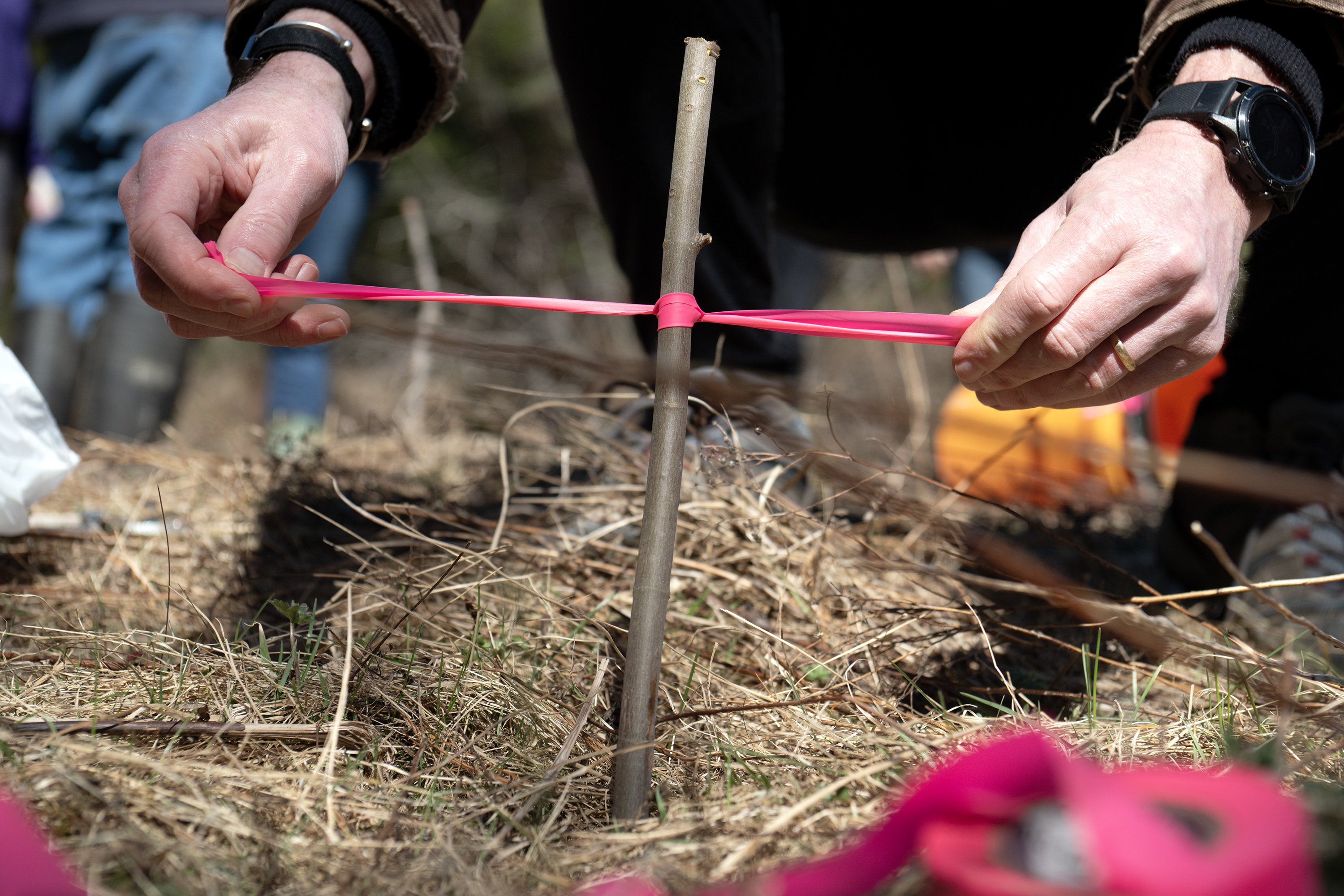
Back in the marsh at Salt Bay Farm, the woodlot owners spent the afternoon plunging cuttings deep into the muck as the first osprey of spring flew overhead. With just a few inches exposed to the April air, the stakes were difficult to spot among the yellowed-out sedges.
In a warming Maine, the most resilient defense may not be one made of concrete or stone, but the one that takes root and grows. And not every solution has to cost millions. Some can be done for free, using tools and materials the average Mainer already owns.
“We all value healthy, vibrant ecosystems,” said Luke Frankel, an environmental scientist who is the waters and woods team leader of Natural Resources Council of Maine. “It’s simple steps like this that help to preserve these critical shoreland habitats for this generation and the next.”

We invite you to add your comments. We encourage a thoughtful exchange of ideas and information on this website. By joining the conversation, you are agreeing to our commenting policy and terms of use. More information is found on our FAQs. You can update your screen name on the member's center.
Comments are managed by our staff during regular business hours Monday through Friday as well as limited hours on Saturday and Sunday. Comments held for moderation outside of those hours may take longer to approve.
Join the Conversation
Please sign into your Sun Journal account to participate in conversations below. If you do not have an account, you can register or subscribe. Questions? Please see our FAQs.