

Oxford Casino’s lawsuit challenging the Wabanaki Nations’ exclusive rights to operate internet gaming is threatening to turn longstanding legal doctrine on its head.
American laws have long considered Indigenous tribes to be political groups, not racial ones.
In seeking rights to operate iGaming, Oxford is challenging that doctrine.
U.S. Supreme Court Justice Brett Kavanaugh invited the argument in 2023, appended to the court’s decision not to hear a similar case. He seemed to suggest that a challenge on equal protections grounds — an argument that has been made, but not reexamined — might be more viable.
So that’s what lawyers for the casino did. Their lawsuit says the state created a discriminatory “race-based monopoly.”
Tribal lawyers argue the case could crumble the foundation of Indian law nationwide. It’s an argument that “does have some truth to it,” said Matthew Fletcher, an expert in federal Indian law who teaches at the University of Michigan law school.
Although lawyers have launched attacks on laws privileging tribes on those grounds before, the merits of that argument have never been litigated before the high court.
POLITICAL OR RACIAL DISTINCTION
Oxford’s lawsuit drafts off the momentum of recent conservative victories before the Supreme Court and argues that Maine’s law is discriminatory because it employs race to gatekeep access to internet gaming operations.
“Promoting iGaming through race-based preferences deals a gut-wrenching blow to Maine businesses like Oxford Casino that have heavily invested in the state and its people,” according to the casino’s complaint, filed in Maine’s U.S. District court on Jan. 23.
The equal protection clauses of the state and federal constitutions protect them against such discrimination — commonly referred to as “reverse discrimination” — Oxford argues.
Maine’s other brick-and-mortar gambling hall, in Bangor, has not joined the lawsuit. But the CEO of Penn Entertainment, which owns that casino, blasted the Maine law on an earnings call and said it deserved to be challenged.
“Conservative interests in colorblind constitutional work weren’t complaining about special treatments for Indians when it sucked.”
Elizabeth Hidalgo Reese, expert in Indian law and professor at Stanford Law School
The argument echoes the primary contention of the case in which the Supreme Court ruled that affirmative action — the process of considering race in college admissions — was unconstitutional.
But American law has long recognized that the equal protections clause, which bans laws that privilege one race over another, does not apply to tribal nations in many circumstances because of the unique political relationship Congress has with tribal governments.
The casino’s argument erodes tribal status from that of self-governing nations to mere racial groups, said Elizabeth Hidalgo Reese, an expert in Indian law and professor at Stanford Law School.
“It’s missing and dismissing the core point of tribal sovereignty, which is not race — it’s politics and governance,” Reese said.
There are thousands of state and federal laws, sovereignty advocates say, that apply only to tribes.
Those laws allow, for example, the delivery of health care and food distribution on Indian reservations, and they empower tribal governments to enforce environmental regulations and operate independent judicial systems.
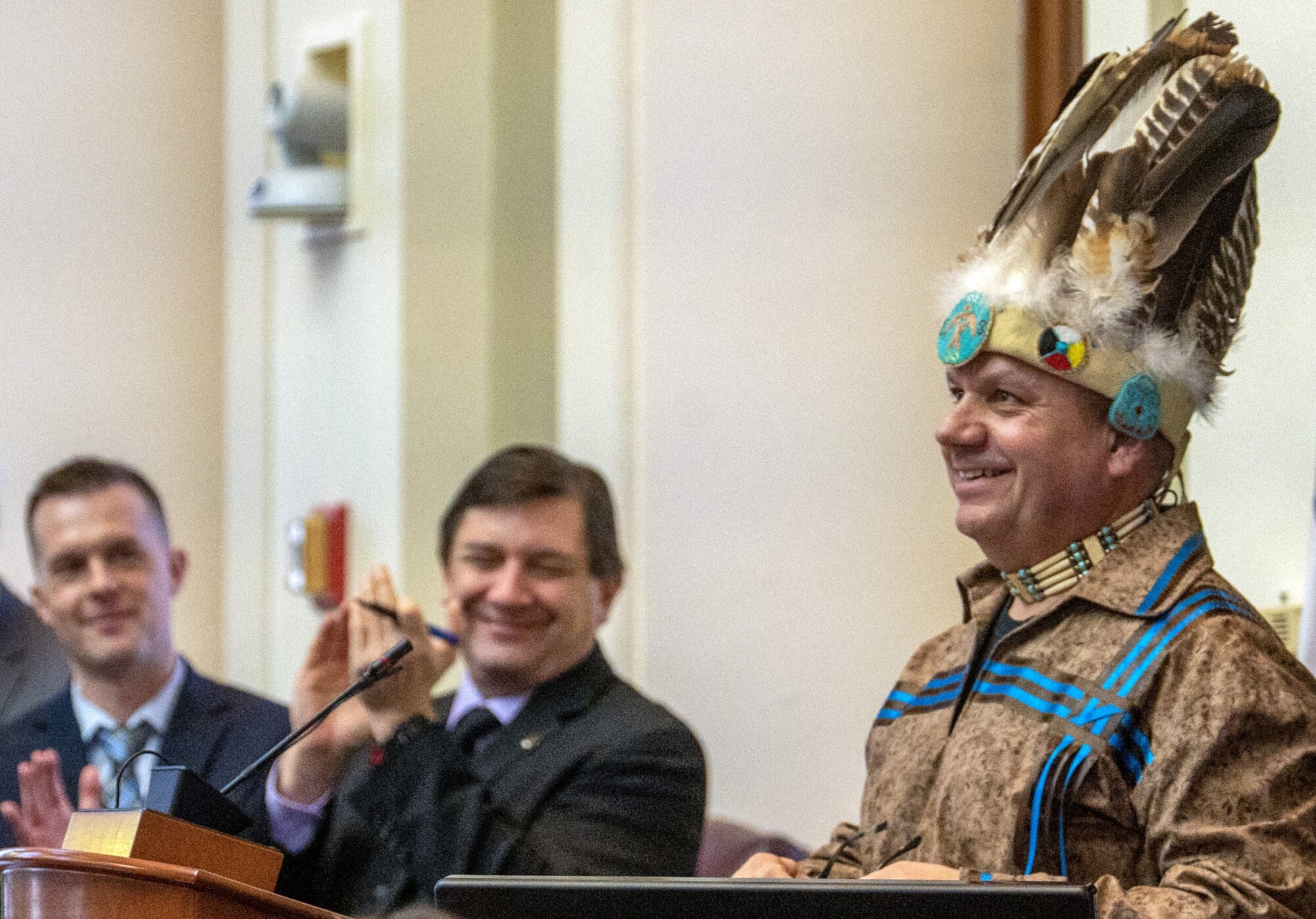
“Conservative interests in colorblind constitutional work weren’t complaining about special treatments for Indians when it sucked,” Reese said.
Now, it falls to the Wabanaki Nations to stave off the latest attempt to undermine federal Indian law. They’re ready to do so, said William Nicholas Sr., chief of the Passamaquoddy Tribe at Motahkomikuk (Indian Township).
All four tribes in Maine filed a successful motion to intervene in the case April 1, citing both an economic interest and a concern that the state’s defense of the law might be less than robust.
“Defending this law is defending our right to pursue self-determination,” said Amkuwiposohehs “Pos” Bassett, chief of the Passamaquoddy Tribe at Sipayik (Pleasant Point) in a statement made through the tribes’ attorney. “We are fighting for a brighter economic future for our future generations.”
CLAIMS MADE BEFORE, FAILED BEFORE
Oxford’s odds in the suit are narrow, according to experts who support tribal sovereignty.
But the case presents a threat that has nonetheless elicited involvement from the Native American Rights Fund. The high-profile national nonprofit representing the Wabanaki Nations has knocked down similar claims over the last decade.
“This attack represents an unfortunate effort to undermine Tribal-state partnership,” NARF attorney Leonard Powell said in a statement. “It seeks to undermine the legal basis for constructive government-to-government policy collaboration, despite decades of data showing that tribal and non-tribal communities alike are stronger when Tribal nations are empowered in their pursuit of self-determination.”
The case is another shot, albeit a long one, among a recent volley that have tried to crack the foundation of tribal sovereignty.
In 2023, the U.S. Supreme Court handed a victory to NARF and advocates of tribal sovereignty when it upheld the Indian Child Welfare Act, the federal law that gives tribes an interest in child custody cases and prioritizes placing Indigenous foster children with Indigenous families.
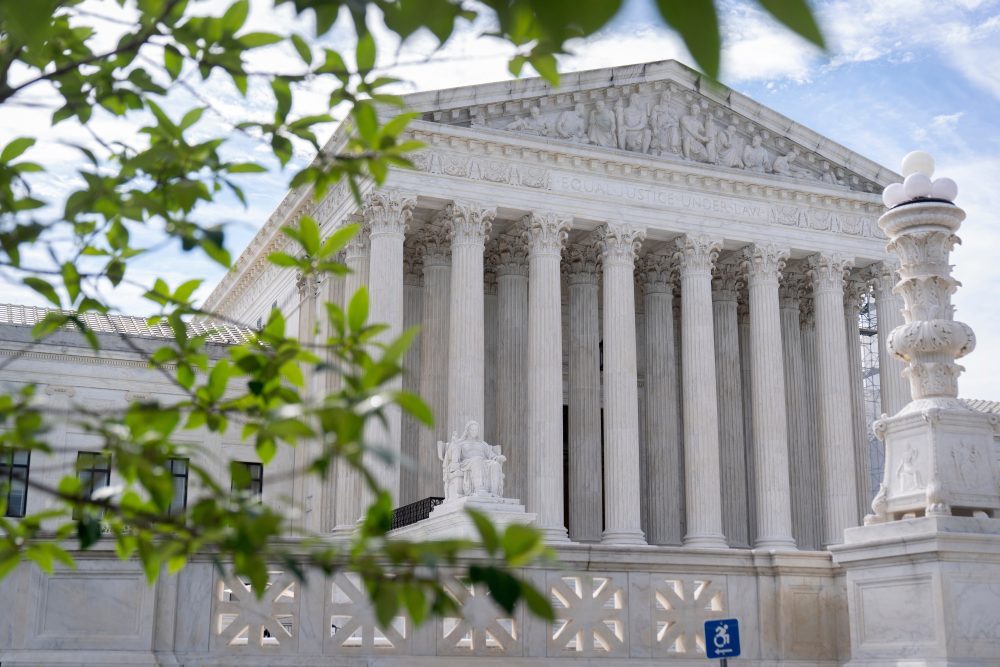
That same year, the Supreme Court opted not to hear a case out of Florida in which a casino challenged a state agreement with the Seminole Tribe that gave the nation exclusive access to run sports gambling in the state.
It was then that Kavanaugh seemed to offer an invitation.
To the extent that a Florida law authorized the tribe and only the tribe to conduct certain off-reservation operations, he wrote, “the state law raises serious equal protection issues.”
However, Kavanaugh seems to be the only justice who “thinks that there’s a there there,” said Fletcher, the Michigan law professor.
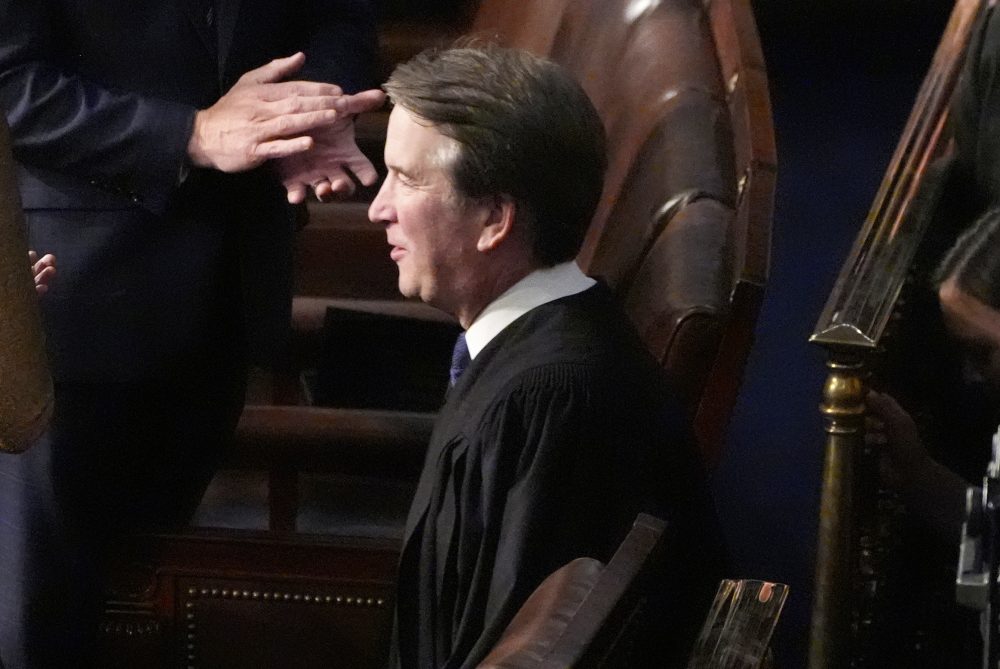
In October, the Supreme Court again declined to take up a case appealed by Maverick Gaming, a private casino operator challenging Washington state’s law granting sports betting access exclusively to tribal nations.
Gibson Dunn, an international law firm based in Los Angeles, represented plaintiffs in the ICWA and Maverick cases. The firm and one of the same attorneys helped write Oxford’s complaint, but withdrew from the case shortly after it was filed.
“We’ve seen this exact case from the same exact attorneys before. Just happens to be in a different circuit,” Fletcher said.
Two federal appeals courts sided with tribes in similar cases, and even if the courts did contemplate Oxford’s equal protections claims, Fletcher said, the casino would have “an incredibly steep hill to climb.”
“That’s the kind of thing that sells newspapers and gets you clicks,” he said. “It just doesn’t work in federal court.”
Gibson Dunn and Oxford’s corporate owner, Churchill Downs Inc., did not respond to requests for comment. The casino’s current counsel declined to comment.
Although the arguments have been made before, Reese warned, the stakes are nonetheless high.
“If they ever were to succeed, the best case scenarios is we would be drowning in litigation over a bunch of different aspects of federal Indian law for decades,” she said.
The worst-case scenario would be a “catastrophic” gutting of Indian programs.
Reuben M. Schafir is a Report for America corps member who writes about Indigenous communities for the Portland Press Herald.

We invite you to add your comments. We encourage a thoughtful exchange of ideas and information on this website. By joining the conversation, you are agreeing to our commenting policy and terms of use. More information is found on our FAQs. You can update your screen name on the member's center.
Comments are managed by our staff during regular business hours Monday through Friday as well as limited hours on Saturday and Sunday. Comments held for moderation outside of those hours may take longer to approve.
Join the Conversation
Please sign into your Sun Journal account to participate in conversations below. If you do not have an account, you can register or subscribe. Questions? Please see our FAQs.