


Across Maine, small municipal airports promise economic benefits — but in most towns, they don’t come close to paying for themselves, leaving taxpayers to decide whether the investment is worth it.
Federal Aviation Administration grants typically cover about 90% of airport capital costs, primarily for upgrades. Local revenue from hangar leases, tie-down fees and fuel sales helps offset expenses, but towns rarely generate enough to fully cover ongoing operations. Costs for snow removal, mowing, runway maintenance, insurance, staffing and utilities add up quickly.
Supporters say airports boost tourism, improve business access, support emergency services and bring federal dollars into rural communities. But whether those benefits translate into measurable economic gains remains unclear.
“This is not a metric that the town has yet quantified to my knowledge, but it is a good question,” said Joe Roach, town manager and airport manager in Rangeley.
Critics argue the airports primarily serve private pilots, out-of-state property owners and tourists, while local taxpayers shoulder the cost. They say limited municipal funds could be better spent on roads, schools or emergency services.
“The airport is not for Bethel,” said former Bethel Select Board Chair Meryl Kelly. “To have an entire airport that is of little useful nature to the majority of Bethel residents when we could have an ambulance barn there, which actually helps many people all the time — it just seems like the airport was a promise sold to the public but never delivered.”
WISCASSET’S SOLAR BOOST
Wiscasset has found a way to make its airport financially self-sustaining and may offer an example for similarly sized communities to follow.
Since 2023, when Wiscasset Airport Manager Rick Tetrev received FAA approval to build a 20.9-acre solar farm on airport property, it has operated without relying on local tax revenue. The facility generated $64,710 for the town through solar income, along with office rentals, fuel sales, hangar land leases and tie-down fees.
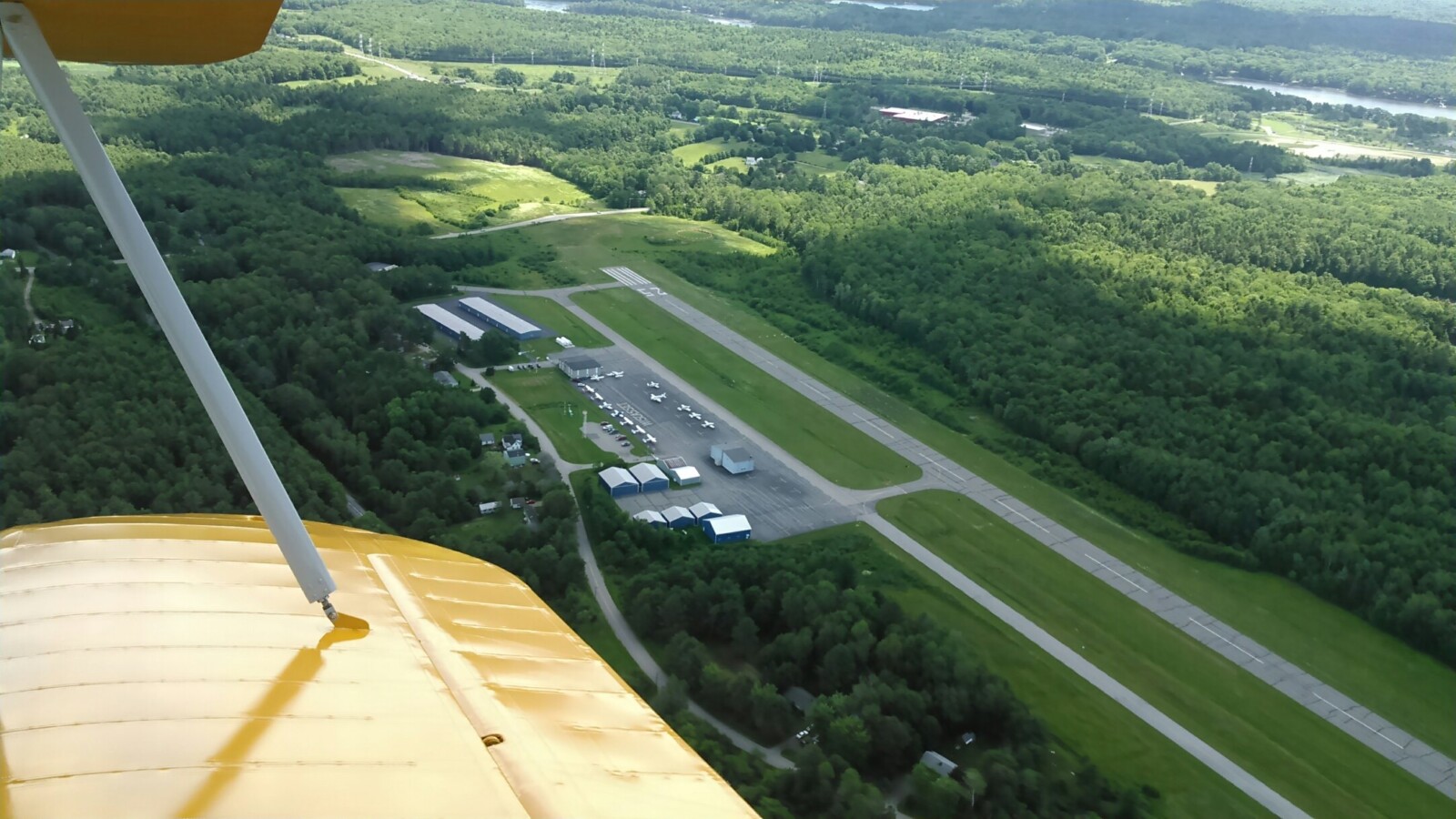
“We are committed to operating a financially efficient, environmentally responsible, self-supporting aviation facility that receives no general tax revenue for operations and maintenance,” Tetrev wrote in the town’s 2026 annual report.
Though relatively few Wiscasset residents are pilots, the airport’s 35 aircraft parking spaces fill up in July and August as visitors fly in to vacation in Boothbay Harbor or stop for a lobster roll at Red’s Eats on Route 1.
“A lot of people fly in for lunch or for supper,” Tetrev said.
Tetrev said the solar installation, which has an expected lifespan of about 35 years, is key to the airport’s long-term sustainability. The agreement includes provisions to renew the lease and to remove the equipment and restore the land at the end of its use.
Wiscasset’s model, however, may be difficult to replicate in smaller or less-trafficked communities.
COSTS WITHOUT CLEAR RETURNS
In western Maine, the financial picture looks different.
At airports in Bethel, Carrabassett Valley and Rangeley, visitors arrive by plane to ski, hike, build homes or are hobbyists. But without consistent tracking of visitor activity, the extent of their economic impact remains unclear.
At a March 18 town meeting, Carrabassett Valley voters approved $150,500 for airport operations and reserves — up from $86,000 in 2025 and $40,300 in 2024. The increase was driven in part by the town’s required 2.5% match for a $5 million runway reconstruction grant funded by the FAA and Maine Department of Transportation. If delayed, the local share would rise to 5%.
While some residents may feel the town has little choice but to move forward, Carrabassett Valley Town Manager Garrett Corbin said that public services, like an airport, are “driven by providing quality services desired by residents and taxpayers, not necessarily return on investment like in the private sector.”
“While it may be difficult to assign a direct value, the town’s voters, elected leaders and business community continue to support it much more for its importance to the regional economy than to local hobbyists,” Corbin said. “I’ve been in this position just shy of two years and know of at least one couple who has moved full-time to the area in that timeframe specifically because of the airport.”
Some towns also feel locked into long-term commitments after accepting federal funding. FAA grant agreements can require airports to remain open and maintained for 20 years or more.
“It is important to note that the airport cannot close or it will be liable to pay back every penny FAA has provided for all projects since day one,” said Sharon Jackson, Bethel’s town and airport manager.

Corbin said that all FAA grants come with a caveat that the FAA may seek to recoup all funds if an airport closes.
“In other words, FAA grants tend to require the airport remain open indefinitely as a condition of the grant,” Corbin said. “I’m not in favor of this policy personally, but that’s been their general position for a good half-century nationwide.”
In Rangeley, population 1,222, the town spent $40,170 on airport operations in 2024 and $42,118 in 2025. Hangar lease revenue, projected at $9,990 in 2026, offsets only a portion of those costs.
In Bethel, population 2,600, the town spent $196,033 on airport operations in 2025, plus an additional $100,000 for a snowplow approved at a special town meeting. Revenue totaled $145,000, leaving taxpayers to cover the remaining $151,033. The year before, total operating costs reached $243,220, with $76,876 generated through fuel sales.
Across Maine, at least 10 municipal airports are located in towns with fewer than 5,000 residents, including facilities in Jackman, Isleboro, Stonington, Millinocket, Machias, Princeton, Dexter, Norridgewock, Pittsfield and Fryeburg.
While some airports generate higher traffic through flight training or seasonal tourism, most small-town facilities operate at a deficit.
For now, many communities continue to fund their airports without a clear accounting of the economic return — leaving residents to weigh intangible benefits against the very real cost of keeping them open.

Supporting Sponsor for Franklin Journal, Livermore Falls Advertiser, Rangeley Highlander and Rumford Falls Times.
Keeping communities informed by supporting local news. franklinsavings.bank

We invite you to add your comments. We encourage a thoughtful exchange of ideas and information on this website. By joining the conversation, you are agreeing to our commenting policy and terms of use. More information is found on our FAQs. You can update your screen name on the member's center.
Comments are managed by our staff during regular business hours Monday through Friday as well as limited hours on Saturday and Sunday. Comments held for moderation outside of those hours may take longer to approve.
Join the Conversation
Please sign into your Sun Journal account to participate in conversations below. If you do not have an account, you can register or subscribe. Questions? Please see our FAQs.