


A year and a half ago, Christy Crocker was working with an enthusiastic school district to help test for radon in its building when all of a sudden, administrators called it off.
Her nonprofit organization had received money to help schools cover the cost of testing for the naturally occurring radioactive gas that is abundant in the state’s bedrock and is the second-leading cause of lung cancer in the U.S.
Even though radon poses a known threat in Maine — and can be especially harmful to young children — Crocker, who is the director of the Maine Indoor Air Quality Council, said it’s common for districts, especially small rural ones with other financial and safety challenges, to overlook the issue.
That was the case for the district she was working with. Administrators became concerned Crocker’s program, which also equips students with tools to test their own homes, would uncover issues that the community couldn’t afford to fix.
“To say we were surprised is an understatement,” she said.
But she understood that for the small district, it likely wasn’t a priority. Something that can’t be seen, smelled or tasted doesn’t feel real, Crocker said, and school districts facing numerous financial pressures have to pick their battles.
Maine passed a law in 2019 encouraging schools to test for radon, after scaling back the original version that sought to mandate testing without providing state funds.
In March, the Maine Department of Health and Human Services and Center for Disease Control and Prevention released the first progress report detailing five years of school testing data.
Elevated radon levels existed in at least one room in nearly a quarter of buildings tested. In some, levels were much higher than the point where the U.S. Environmental Protection Agency recommends taking action, including Sanford Middle School, where 36 rooms had elevated levels. Administrators later discovered that a previously installed mitigation system had been mistakenly disconnected.
However, only 70, or 12% of all Maine schools, have been tested since that 2019 law passed, even as estimates suggest there is elevated radon in one in three Maine homes, and perhaps even more in the state’s southernmost counties. That’s four and a half times higher than the national average.
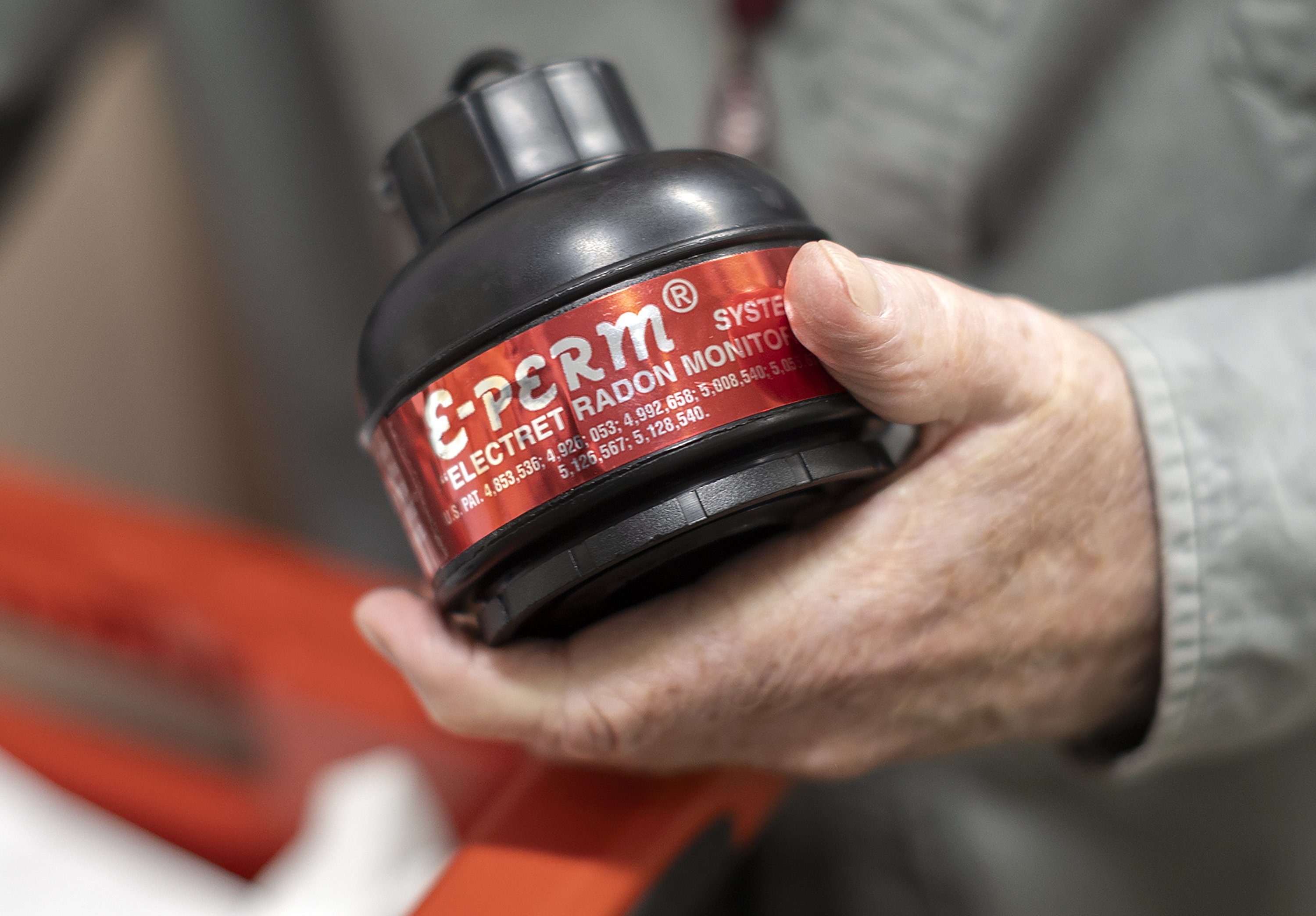
Dr. Anne Coates, a MaineHealth pediatric pulmonologist, said radon is an invisible danger, but long-term exposure can be as dangerous as smoking.
“You have this colorless, tasteless and odorless gas, and it’s ubiquitous,” she said.
Radon issues in schools can be reduced through improving ventilation, installing a pipe system or sealing off a space, and most districts cited in the March report said they have taken action to improve the situation, if needed.
But the only way to know if there is an issue is to conduct testing, which involves individually assessing every single ground-floor room in a building and can cost anywhere from $2,000 to $20,000 per school. And then, they’ll potentially spend thousands or tens of thousands more to fix it.
The majority of schools tested between 2019 and 2025 received funding through the EPA, which might not be available going forward. Schools are allowed to test on their own dime, but could fear the costs if they discover a problem.
Ten states, including many that have lower risk levels than Maine, require schools to be tested for radon. The EPA recommends that all schools test, but estimates that only 1 in 5 nationwide have done so.
WHAT IS RADON?
Radon is a natural decay product of uranium found in bedrock that gets inside through gaps around pipes or cracks in walls and floors. The risk of exposure in Maine is among the top 15% in the U.S., according to Petros Koutrakis, a Harvard University professor of environmental health.
The state’s geology, which has high levels of uranium-rich granite, is to blame. Maine’s cold climate also means people are indoors longer, and seal their houses better, which traps radon gases. During warmer months, when people are more likely to open windows, radon can dissipate.
Radon causes cancer because the gas breaks down into radioactive elements that are inhaled into the lungs, damaging DNA in the body’s cells, according to the American Cancer Society.
Long-term exposure at 4 picocuries per liter (pCi/L) — the level at which the EPA recommends taking action — is equivalent to smoking eight cigarettes a day, according to the state’s report. Among non-smokers, the EPA reports, the risk of contracting lung cancer from lifetime exposure to elevated radon is greater than the risk of dying from drowning, a fall or home fire.
Maine ranks third in the nation for radon-induced lung cancer cases, where approximately 310 people develop radon-caused lung cancer each year, and 165 die from it, according to EPA estimates.
Although it is relatively common to test for radon in homes — 33% of Mainers reported testing their household air for radon in a 2023 survey, and a law first passed in 2009 required all residential rental buildings to be tested — most school buildings haven’t been, even though young people are likely at higher risk.
“Children have smaller lungs, they breathe faster and are closer to the ground. Every breath they draw in brings the radon deeper into their lungs,” said Coates from MaineHealth. However, she said, symptoms of radon exposure may not develop until decades later.
AN ACT TO TEST
In 2019, then-Rep. Charlotte Warren, a Democrat from Hallowell, sponsored a bill to require every school district in the state to test for radon every five years.
“Maine law requires young people to attend school. If they attend public school, they will spend a lot of time in a specific building,” she testified at the time. “Given this situation, we have a special duty to assure that the air they breathe in public school buildings does not threaten their health.”
During a work session, lawmakers on the Health and Human Services Committee had strong hesitations about imposing an additional unfunded mandate on districts (the Legislature had just passed a bill to require schools to test for lead). So, Rep. Michele Meyer, D-Eliot, proposed amending the bill to encourage testing, rather than requiring it.
“Just because we don’t test doesn’t mean it’s not there,” she said at the time. “I’m not sure we can look away, fully.”
The law also mandated that all new school buildings “shall use radon-resistant new construction techniques,” a standard that was already in Department of Education guidance.
Crocker with the Air Quality Council was a vocal supporter of the original bill, but she understands why it didn’t succeed. The cost to test would be massive if mandated for all of Maine’s 595 schools. The cost of fixing or preventing elevated radon, which the bill would not have required, would be even bigger.
“How do you get them to do the right thing from the indoor environment perspective, but at the same time recognize the burden that they bear for their communities, in a whole lot of other ways, outside of the radon issue?” she said.
The same thing happens for homeowners. Crocker shared an anecdote about a Maine mother who discovered extremely elevated radon in her home at the same time that she was dealing with tight finances, and had to choose between putting food on the table for her family or fixing her house’s radon problem.
Prior to the passage of Warren’s bill, Maine had not conducted widespread school testing in 30 years. The Bangor Daily News did an investigation in 2020 and found that of nearly 270 public schools in the state that enroll preschoolers or kindergarteners, just one had been tested in the past five years, which is how often the EPA recommends retesting, because radon levels can change over time.
Some states, including Vermont, require it. That state passed a law in 2021 mandating testing for all schools by 2024, but extended that deadline by a year. A report from the state’s auditor released in January found that 218 schools (73%) had met the requirement. Of those, 20 had elevated radon levels, according to reporting by the Rutland Herald.
THE LAST FIVE YEARS
Maine’s 2019 law requires state health officials to deliver a report on results from the schools that do opt to test every five years. The first was released in March. Across 29 towns and 70 buildings tested between 2019 and 2025, 16 schools, or 23%, had at least one room with elevated radon.
District leaders interviewed said they didn’t have any reason to think their schools had problems. They just wanted to take advantage of funding (almost all of the schools covered the cost with State Indoor Radon Grants from the EPA) and get out ahead of possible requirements.
Sanford had the highest number of spaces with elevated radon — 47 rooms across four schools. Superintendent Matt Nelson said he was perplexed when they got back those results. The district sought guidance from the state, and brought in a contractor to work on a removal system for the middle school, where 36 rooms returned elevated rates of radon.
But the contractor uncovered something surprising: the building already had a mitigation system. Nelson and the district’s facilities director did some digging, and discovered that it had been disconnected when the building was renovated from the high school in 2018, likely due to the builders working from outdated architectural plans.
Once they got that system back up and running, Nelson said, all of the levels have come down to below the action threshold.
“We breathed a sigh of relief,” Nelson said.
The district took other actions in response to the results, like operating its HVAC system on nights and weekends to improve ventilation and placing digital radon monitors to track progress. At Sanford Pride Elementary School, which had six rooms with elevated radon, the district installed two new mitigation systems at the cost of about $2,500 each. Nelson said the district also moved up the timeline of renovating the HVAC systems at both schools, and has plans to retest once those upgrades are made to confirm their efficacy.
But for many of those 16 schools, the solution was simpler.
Out of hundreds of tests, schools in Kennebunk, Rockland and Eastport all had just one, non-learning room, like a custodial closet, unused boiler room or cellar storage space, with results that needed addressing. District leaders said those rooms have since been caulked, sealed off, or otherwise handled.
Districts that opted in to testing are encouraged to do so every five years. Bangor, which found elevated levels in a pipe room at the high school, is coming up on the five-year mark and will begin testing again soon, at the cost of about $4,000 to $6,000 per building, spokesperson Ray Phinney said.
According to the state progress report, 76 additional schools indicated interest in testing and currently sit on a waitlist amid uncertainty over the future of the EPA funding. Sixteen schools have been tested during the 2025-26 year, but a spokesperson for Maine DHHS said the state has not yet received any notice from the federal government about what, if any, funding will be provided going forward.
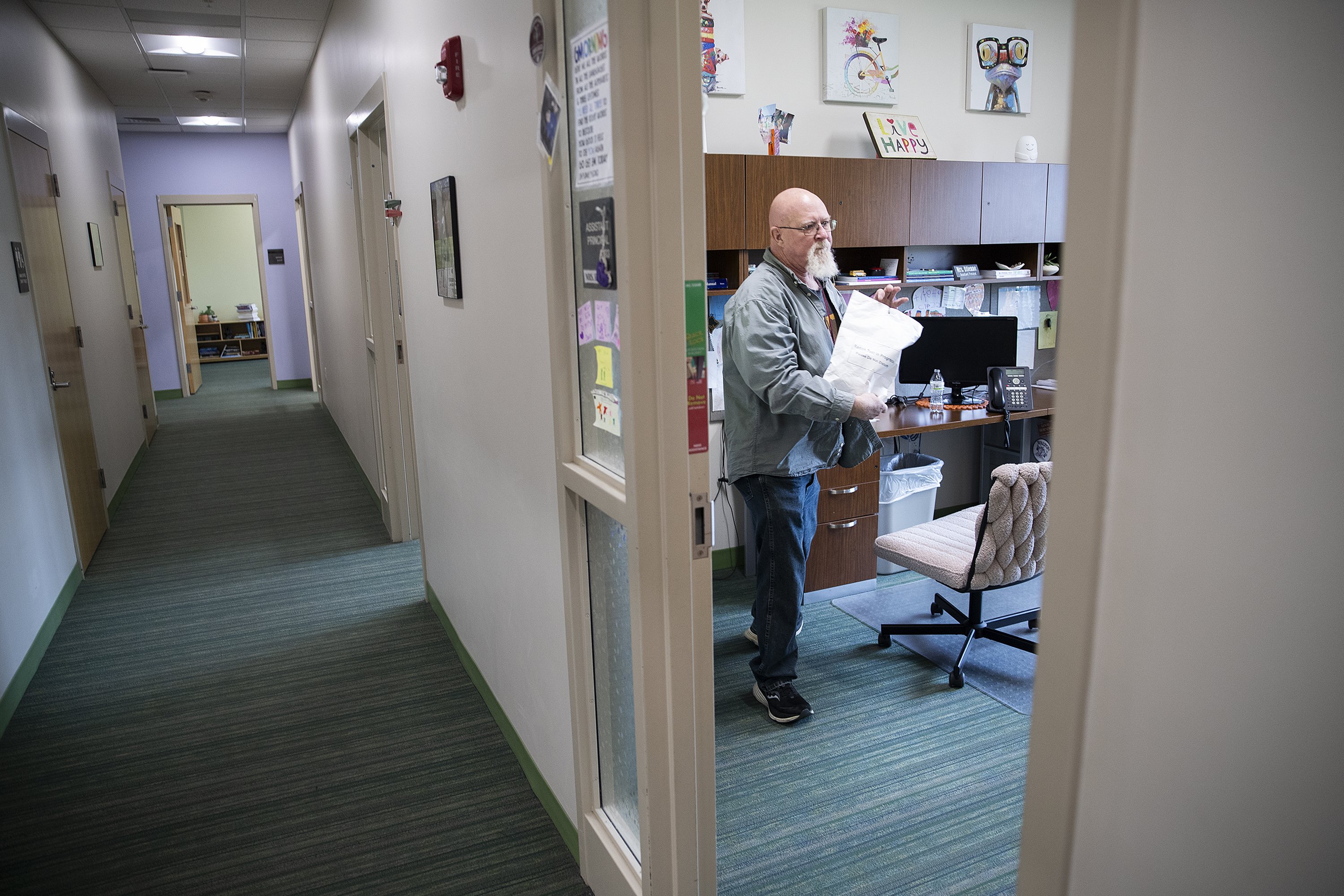
At the current rate, it would take 37 years and cost $3.6 million to test every school, the report concluded.
Eric Waddell, director of the Maine School Management Association, said the health risks of radon on students and staff “are certainly a concern for schools across Maine” but said testing is expensive and funding is limited. The report, he said, clearly demonstrated the demand for testing and need for greater funding.
AWARENESS REMAINS LOW
Despite the health effects and legislation, public awareness of radon or its risks remains low, according to local health leaders, testing advocates and contractors. Various state nonprofit leaders and other officials said they’d never gotten an inquiry from a parent about radon testing in schools.
Coates, the pediatric pulmonologist, said she advises families to test for radon in their homes, and she looks for signs of possible radon exposure in children when they have family members with lung cancer or other lung diseases who aren’t smokers.
“Whenever I bring it up, it’s the first time they’ve heard about radon, and they’ve never thought about it before,” she said.
Matt Wellington, associate director of the Maine Public Health Association, said it’s a “top priority” of theirs to raise awareness and improve state laws regarding radon. He said the association advocates for more funding, and to require radon testing in real estate transactions.
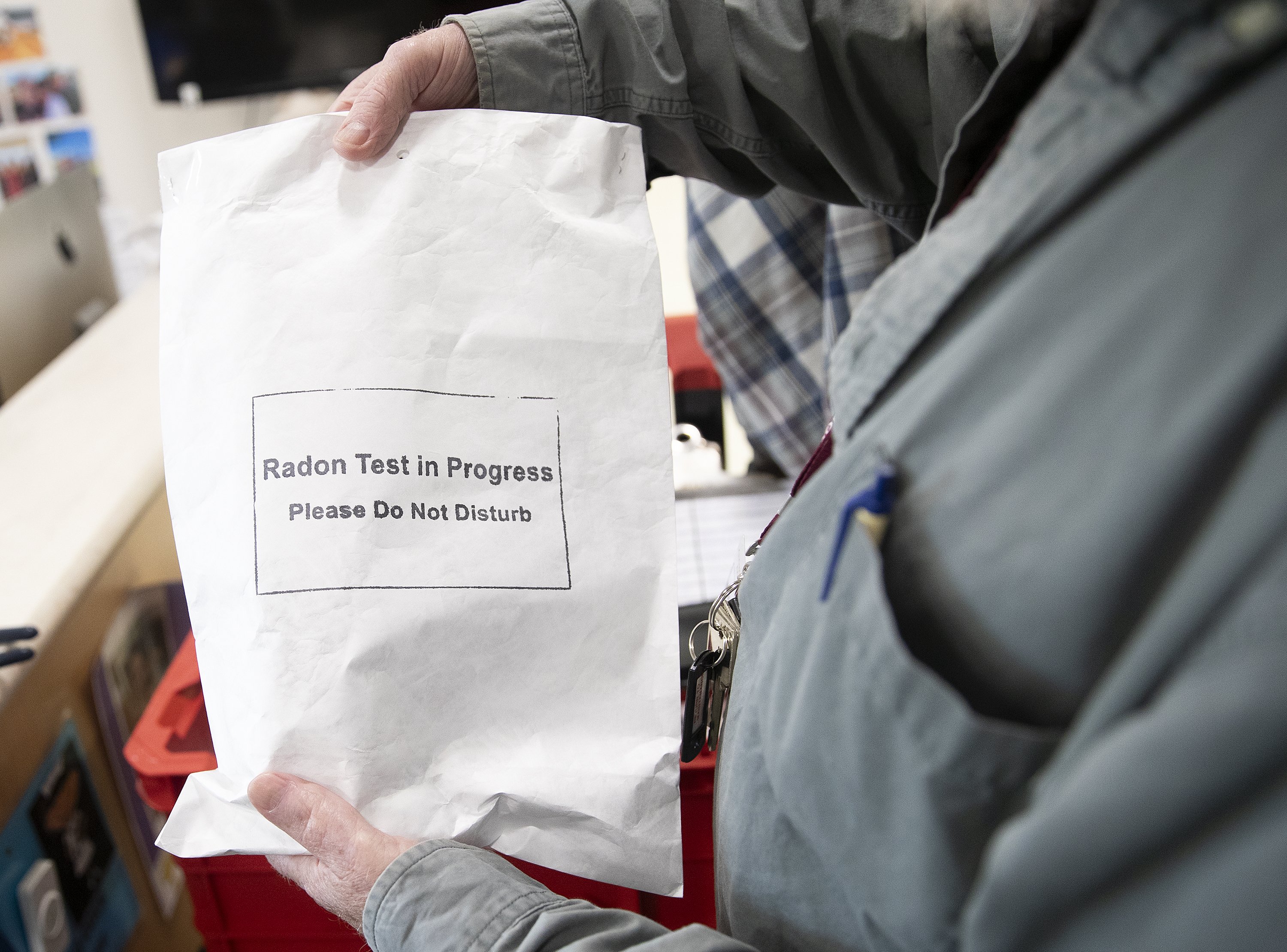
Deb Violette founded the nonprofit Free ME from Lung Cancer after developing the disease herself. Now, her organization provides financial assistance for low-income families to test their homes for radon and purchase abatement systems. But she said the general population still has little knowledge of the risks. She was once in that position herself.
“I didn’t know my home was killing me, until I got sick,” Violette said.
Skowhegan Area High School chemistry teacher Kate Drummond advises the science club Eco Team, and worked with her students in 2023 to test the school for radon. Drummond said she learned about the risks in Maine around the time she started teaching in Skowhegan 22 years ago, and does a lesson on it during her radioactivity unit.
But the school had never been tested.
“I did wonder, so I was really excited when the kids wanted to test,” Drummond said. “Because it meant someone was going to do that work.”
She got in touch with the Department of Environmental Protection and got the go-ahead, but said school administrators were nervous it might uncover a big, expensive problem. Everyone was relieved when it returned safe results.


We invite you to add your comments. We encourage a thoughtful exchange of ideas and information on this website. By joining the conversation, you are agreeing to our commenting policy and terms of use. More information is found on our FAQs. You can update your screen name on the member's center.
Comments are managed by our staff during regular business hours Monday through Friday as well as limited hours on Saturday and Sunday. Comments held for moderation outside of those hours may take longer to approve.
Join the Conversation
Please sign into your Sun Journal account to participate in conversations below. If you do not have an account, you can register or subscribe. Questions? Please see our FAQs.