

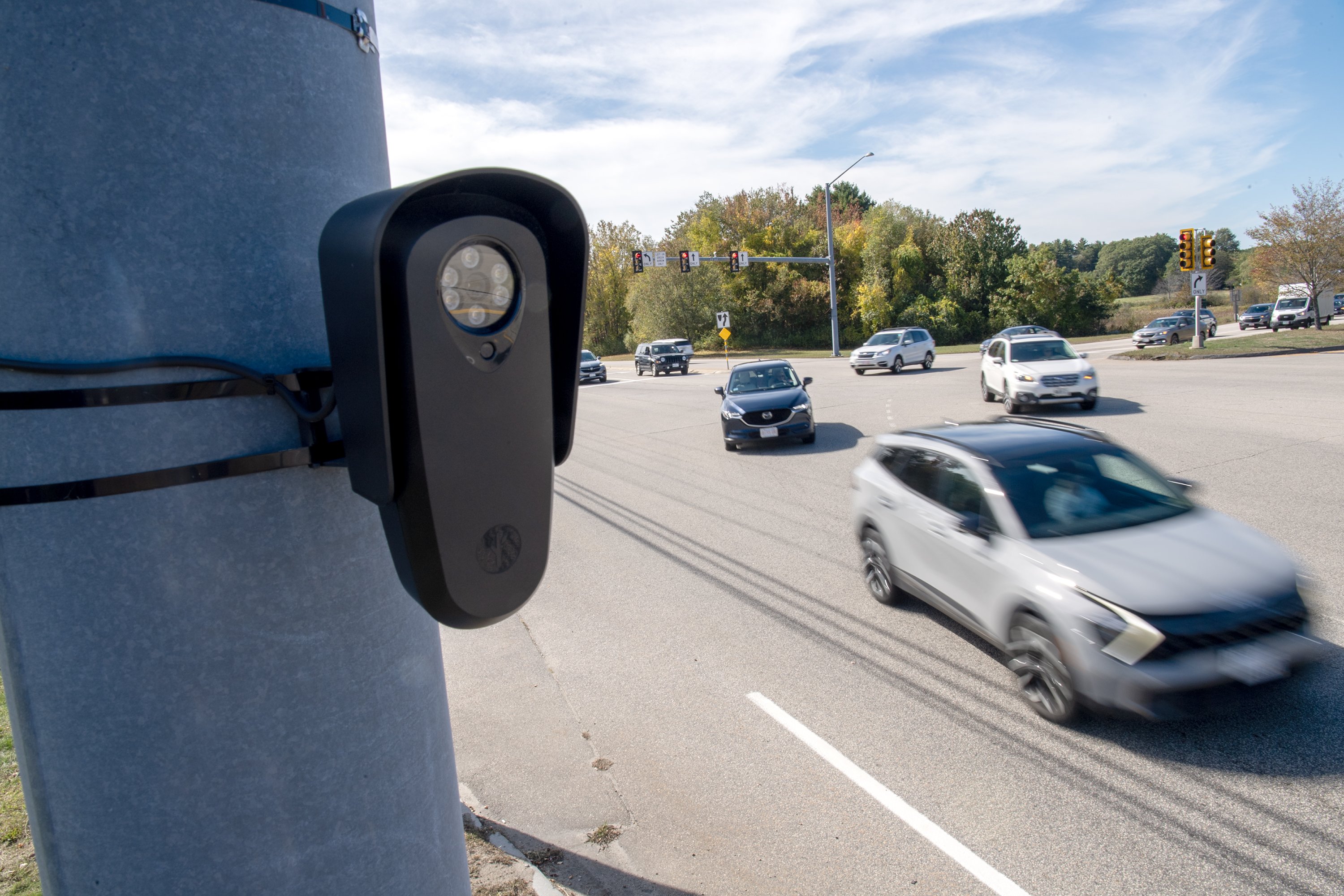
The Lewiston Police Department has begun a 60-day trial of AI-enabled license plate reading surveillance cameras, and so far has installed seven at undisclosed locations.
Police said the Flock Safety cameras have already shown value, recently helping to quickly identify a shooting suspect’s vehicle, leading to an arrest. But, some city officials and members of the public this week questioned how the data will be used and who it will be shared with.
A City Council discussion Tuesday turned testy as councilors debated the merits and concerns surrounding the surveillance technology and how it works.
Lewiston police Sgt. Joey Brown, who has been leading the rollout, said the cameras capture pictures of license plates as vehicles pass by and the data is uploaded to a secure, searchable database. He said they do not use facial recognition, and that Lewiston police decide who the information is shared with.
Brown said in order to search the database, officers need to have a reason — a crime or case number.
Councilor Scott Harriman, who asked Brown dozens of questions about the program, pointed to privacy concerns that have been raised nationally and in other Maine communities about Flock cameras and the potential for data to be used by federal immigration and border authorities, or to track people rather than vehicles.
Sanford police Maj. Mark Dyer said last month that Sanford’s cameras would have the ability to identify passersby based on their clothes; however Brown said he hasn’t seen anything on the search capabilities other than vehicle descriptors.
“The system we currently have and are looking to purchase, there’s nothing about people,” he said. “There’s a lot that’s been published about the brand that’s inaccurate. I’ve used it.”
According to WGME, Sanford officials ended the town’s trial of the cameras this month after receiving concerns from the public.
‘SIGNIFICANTLY’ FASTER
If Lewiston decides to retain the cameras following the trial, it will pay Flock a roughly $70,000 annual subscription fee for 14 cameras, which would be funded the first year with a grant awarded in June.
At the time the grant was secured, police officials were hopeful that camera technology could make it easier to track suspects and allow integration with camera networks from neighboring agencies as the city contends with gun violence often related to drug trafficking.
Brown said the cameras have led to suspect vehicles being found “significantly” faster, and that the system is tied to Amber and Silver alerts for missing people.
“There are cases out there where these cameras have helped locate missing children (and) vulnerable people in the community, pretty quickly,” he said.
Lewiston would like to reach agreements with police agencies in Massachusetts and other New England states that have large camera networks in order to better identify drug activity coming to and from Lewiston, Brown said.
While Brown told councilors that Lewiston is not sharing its Flock data with any federal authorities, an investigation by technology-focused publication 404 Media in August found that Flock cameras across the country have been accessed by U.S. Immigration and Customs Enforcement and Border Patrol agents, sometimes without the knowledge of local police.
In response to questions from Harriman regarding how data is shared, Brown said Lewiston can grant and remove access from its cameras, and is sharing data only with local agencies “that we’re comfortable with.” All data is kept for 21 days before it is expunged.
Brown told the council that police officials are working on an internal policy for the use of the cameras.
Harriman questioned why the policy didn’t come first before police began using the new technology.
TRANSPARENCY
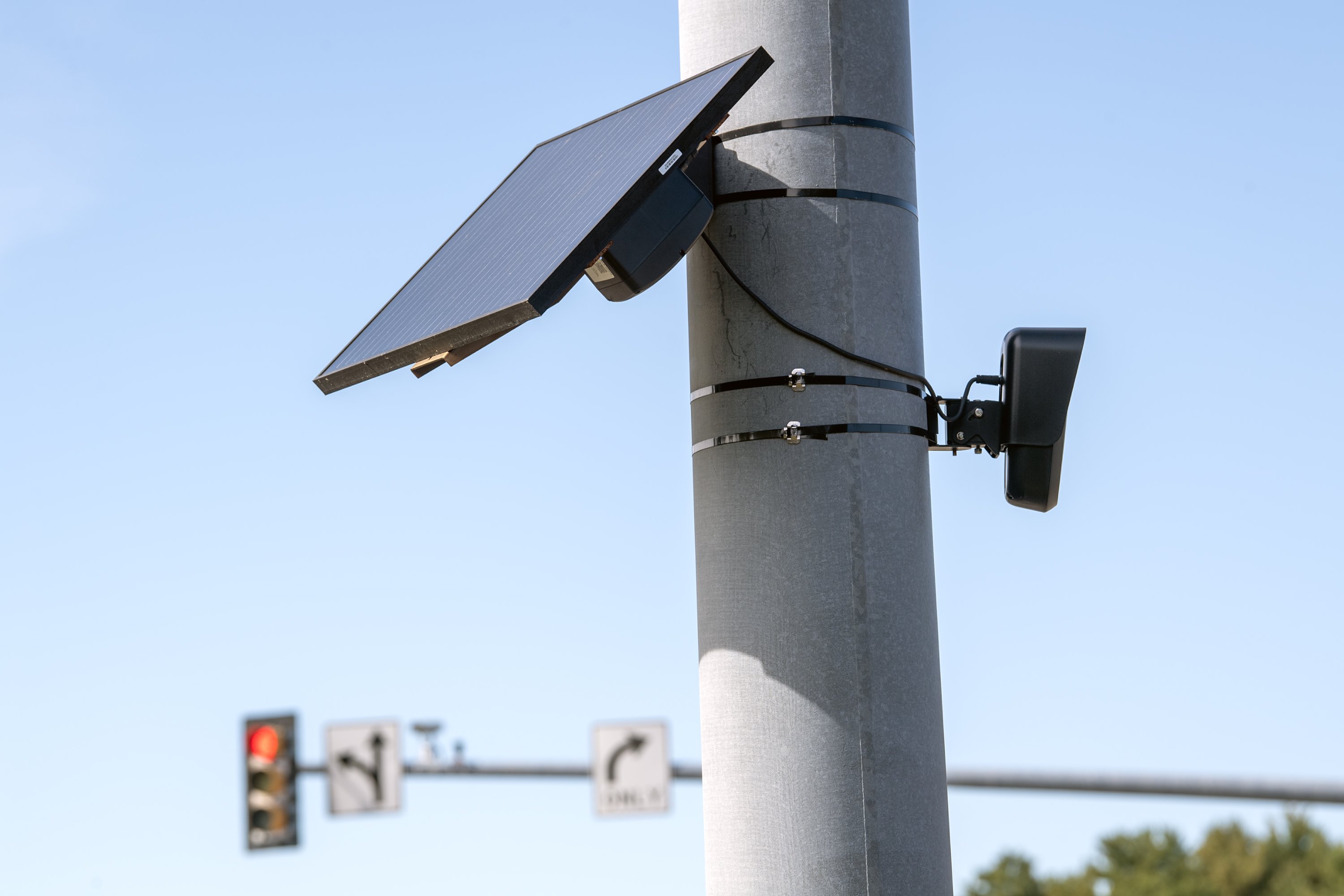
Other councilors were largely in support of using the new technology, especially with heightened public pressure to solve shooting cases that have proven difficult.
Councilor Susan Longchamps urged police to place cameras in the Tree Streets neighborhood, which has experienced the large majority of recent gun violence.
“I want to help fight crime, I don’t want to be part of the problem,” she said. “If it’s used for that purpose and that purpose only I think it’s a great tool.”
Councilor Josh Nagine said that while he understands the concern about “warrantless mass surveillance,” the cameras are in public locations where “there’s no expectation of privacy.”
Councilor Tim Gallant went further, stating he hopes the use of surveillance gets to the point of using facial recognition, which is currently prohibited by state law.
“I know people up here are going to cry like little babies,” he said. “You’re worried about license plates, we should be looking at the next level. That’s how we’re going to take back control in Lewiston. If you go through a toll they take a photo both ways, front and back. This is not like they’re going to fingerprint you.”
During public comment, residents said they’re concerned about a lack of transparency about who is using it and who has access.
Melissa Dunn, who lives on Blake Street, called on the department to stop using the seven cameras it has installed.
Matt Agren said he’s concerned for surveillance technology like Flock to be used for political means, and that the public should be more informed.
“We the public need to know how it’s being used,” he said.
Harriman continued questioning on the process followed by police, stating he was under the impression that the grant received in June would be used for a one-time purchase. He also said questions he’s sent to police officials have gone unanswered or he’s received conflicting responses.
“I feel like we’re getting things out of order,” he said. “We’re using the cameras but don’t have a policy on how to use them.”
In response to Harriman’s questioning, and as the discussion rolled on past 11 p.m., other councilors became frustrated.
“They’re not watching where someone is going for lunch,” Longchamps said to Harriman. “If they’re watching, there’s a crime that has occurred. I think it’s ridiculous you’re being so petty about it.”
Reached Friday, Lt. Derrick St. Laurent said police are using the 60-day trial period to develop the best policy possible in case the department decides to move forward with the annual subscription.
He said as officers are learning how to use the system and if any issues arise, the department can “get ahead of that with our policy.”
Mayor Carl Sheline argued that in order to develop an accurate city policy, police need to use the trial period to “figure out how the cameras work.”
“It can be a really great tool to combat crime and also needs appropriate guardrails,” he said.

We invite you to add your comments. We encourage a thoughtful exchange of ideas and information on this website. By joining the conversation, you are agreeing to our commenting policy and terms of use. More information is found on our FAQs. You can modify your screen name here.
Comments are managed by our staff during regular business hours Monday through Friday as well as limited hours on Saturday and Sunday. Comments held for moderation outside of those hours may take longer to approve.
Join the Conversation
Please sign into your Sun Journal account to participate in conversations below. If you do not have an account, you can register or subscribe. Questions? Please see our FAQs.