
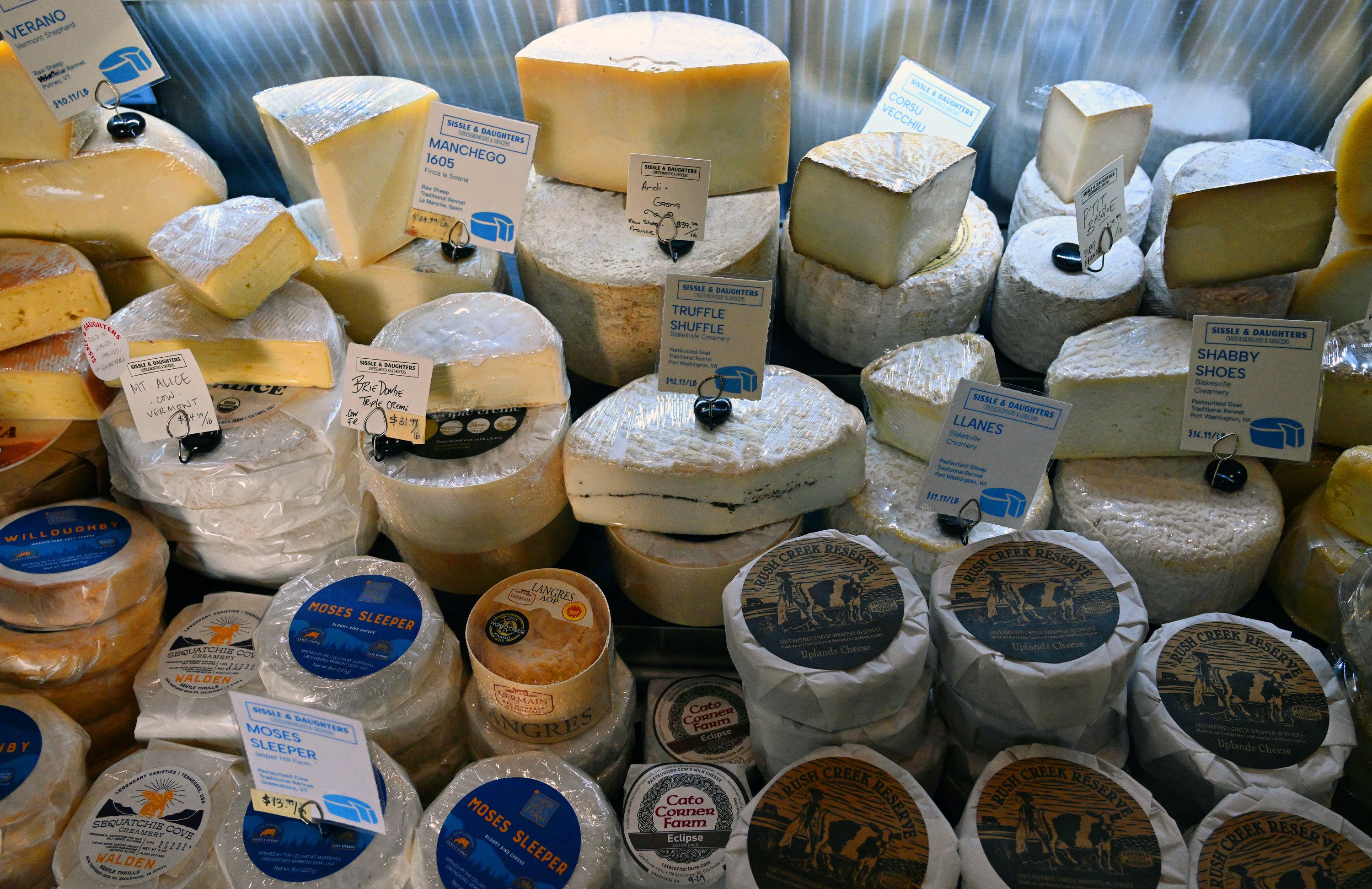
One of the easiest (and most delicious) ways to kick off a Thanksgiving celebration is a bountiful cheeseboard. After all, cheese lovers in Maine certainly have a lot to be thankful for.
Finding lovely hunks of cheese in Maine is a lot easier than it used to be. According to the Maine Cheese Guild there were fewer than 10 licensed cheesemakers in the 1990s and now we have over 80. Many of those makers sell their products directly to customers at farmers markets while others wholesale them to independently owned and locally minded health food stores and fine cheese shops, which offer them alongside celebrated cheeses from around the world.
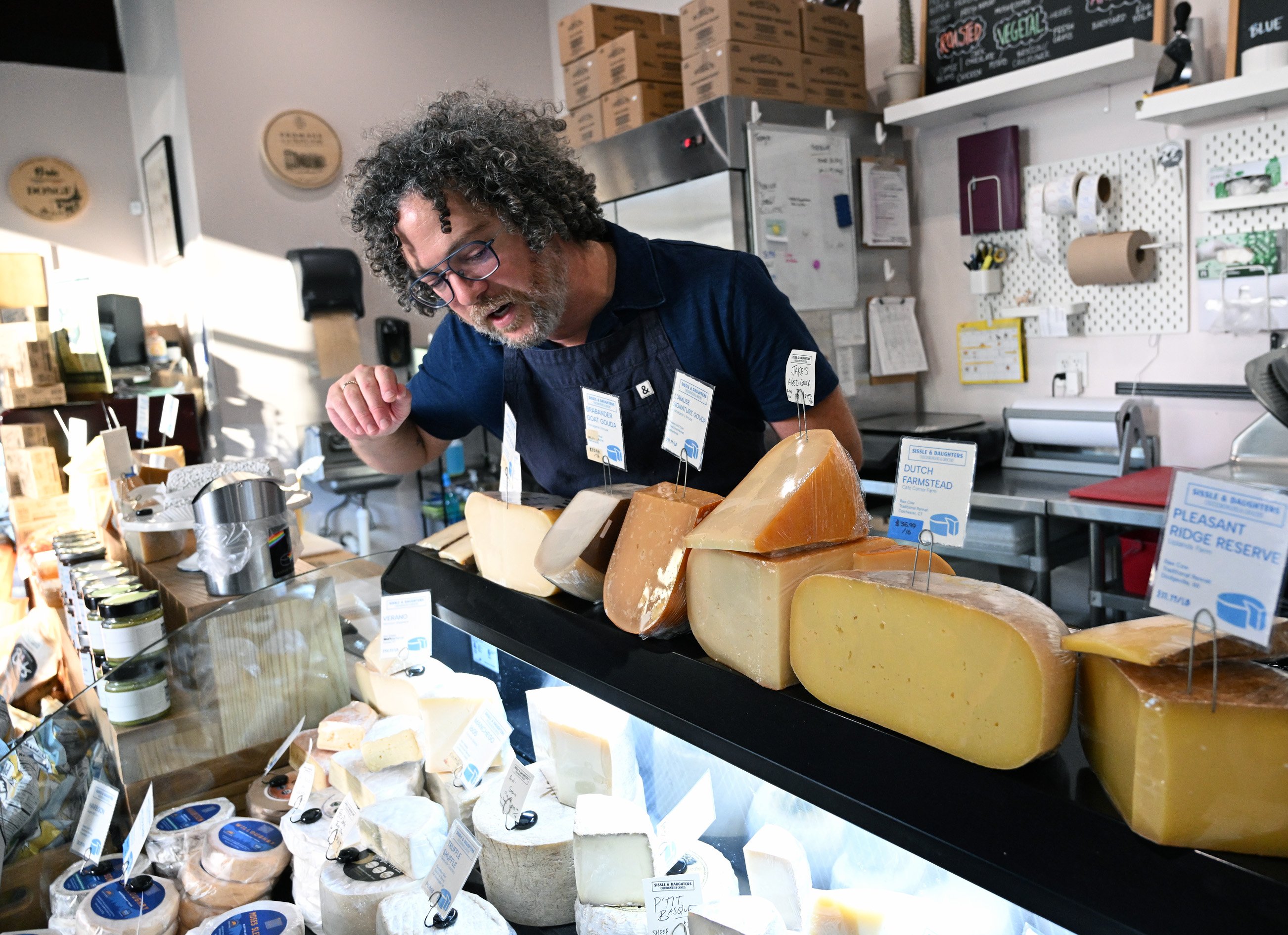
Of course, any cheese you buy comes in some sort of packaging. But the best type is reusable paper that’s coated with parafin, cellulose or food-grade polyethylene, a breathable plastic. Popular brands sold in cheese shops, kitchen supply stores and online are New York-based Fomaticum and Italian-based Ovtene. Almost all the cheese sold at Sissle & Daughters Cheese Shop on Washington Avenue in Portland is cut and wrapped to order in two-ply paper from Canadian-based FromageX.
“Cheese is a living, breathing organism that ripens and changes until the day you decide to eat it. Caring for it in the right way lets it live longer,” Will Sissle says.
If you think about it holistically, cheese care is, in fact, a kind of self-care, because it ensures you get to eat every last bite. Sissle, who practices serious cheese care seven days a week, tells customers to reuse the paper the cheese came home in to store any leftovers. If that paper gets discarded by accident, wax paper is a decent substitute.
Wrapping cheese in plastic wrap doesn’t let it breathe. Sissle admits he wraps sections of large wheels of cheese in his case in plastic so customers can see the paste (the inside of the cheese as opposed to the rind). But if cheese is wrapped in the same plastic for a long time (his team rewraps them daily), the paste touching the plastic can develop an off taste. Though you can remedy that by using a sharp knife to scrape off the tiniest wisp of a layer, why waste even a wisp?
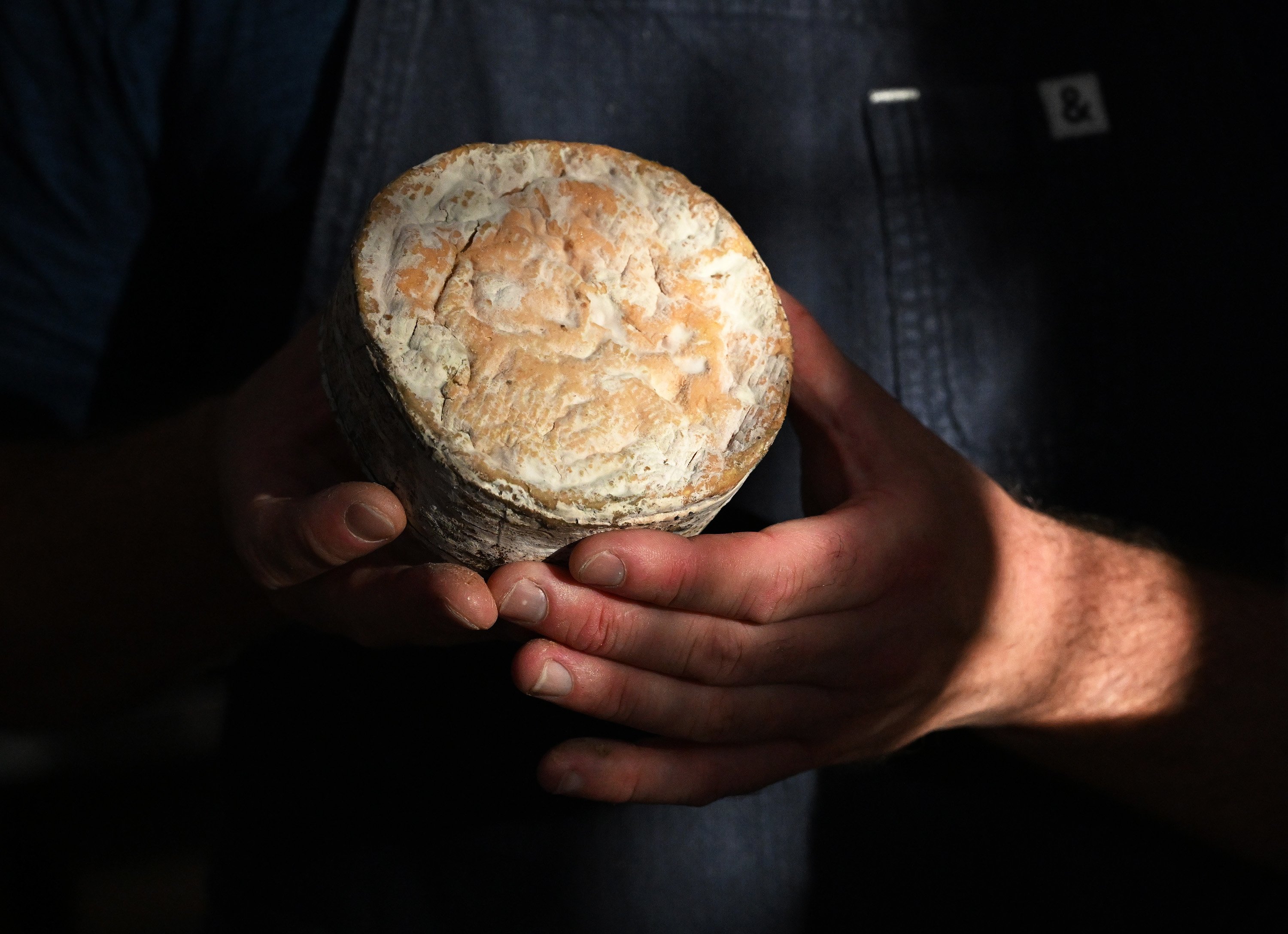
What about the slew of specialty storage containers advertisers suggest are the perfect gift for cheese lovers in your life? “Those are fun,” Sissle said, but not all that practical if you need to store different kinds of cheese. To test how one popular model with two storage compartments worked, he ran an experiment, putting a cut piece of Valencay (a French, bloomy rind goat cheese) on one side and a piece of aged Vermont cheddar on the other. “I checked it every day to see if the interaction was affecting the taste of either,” Sissle said. “And after about a week, the cheddar started to get a slight fuzzy bloom and a goaty taste.”
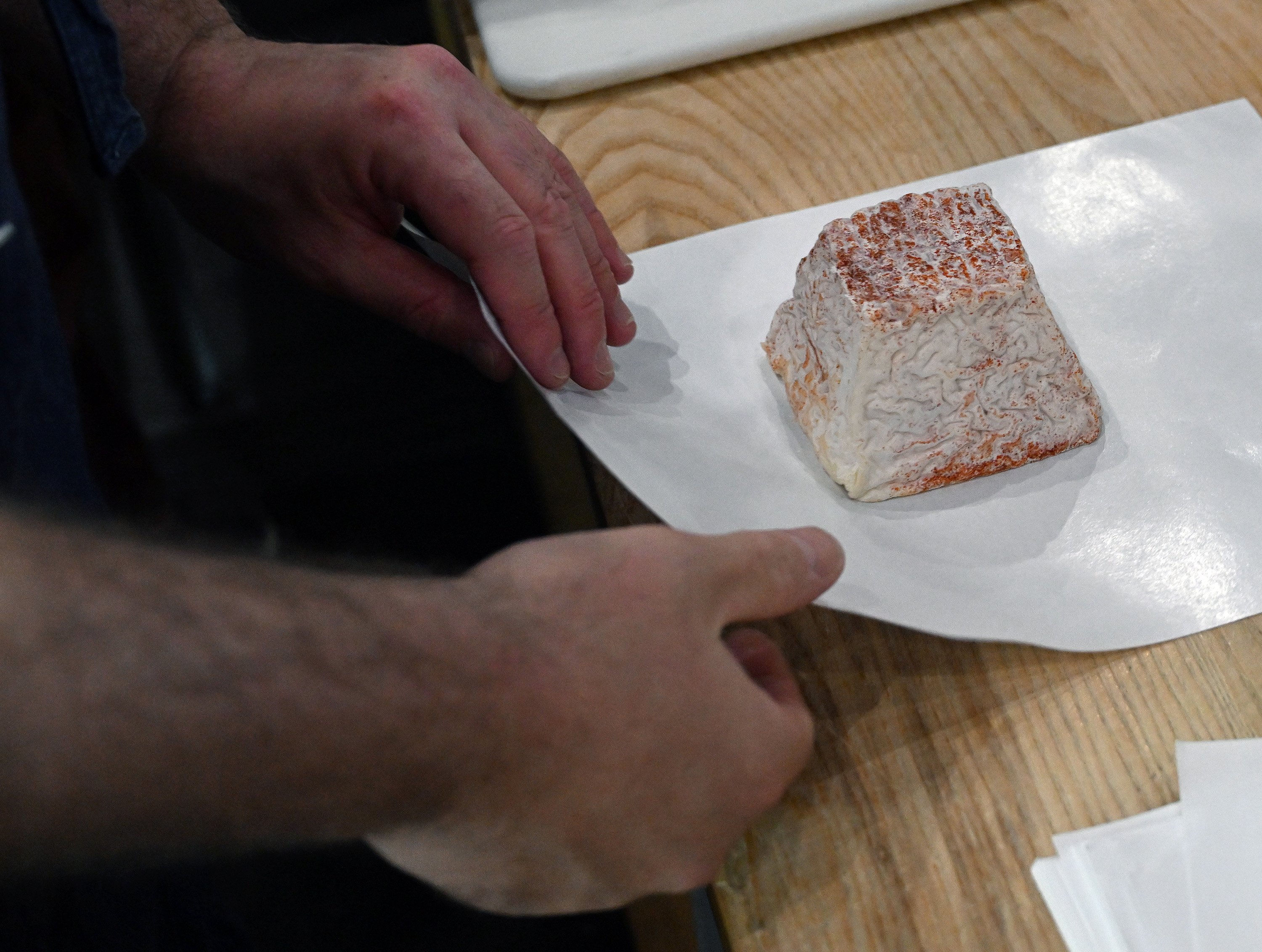
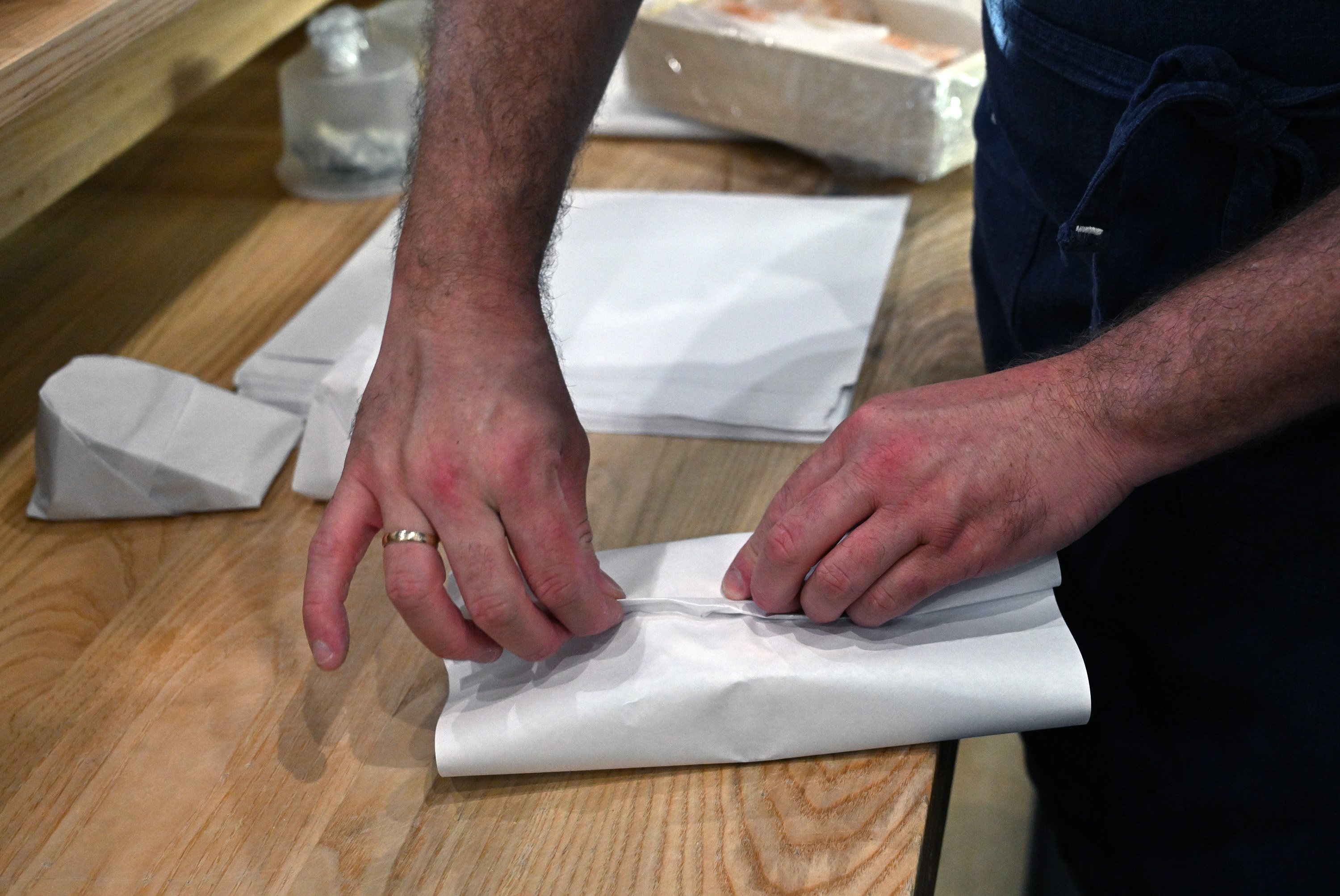
Since he’s worked in the cheese industry for decades, Sissle is a master of the French pleated, a technique of uber-tidy, snug wrapping that can be adapted to all shapes of cheese. He puts a right-sized piece of FromageX paper shiny-side up on the counter and places a piece of cheese cut-side down in the center of it. He then pulls the two long sides of the paper up over the cheese, so the ends align directly over it. He creates an initial fold about a half inch down by tightly creasing it and subsequently rolls the fold downward until it’s nestled tightly against the surface of the cheese. Sissle pushes the open sides tight to the shape of the cheese and makes an envelope crease just as if he were wrapping a present. He tucks both flaps under the cheese and uses a label with the name of the cheese and the date to secure the flaps.
The day I visited his shop, he demonstrated his skill by wrapping up a Capriole Piper’s Pyramide (a goat cheese from Indiana with a dusting of smoked paprika ), a round of Uplands Cheese’s Rush Creek Reserve (a raw milk, spruce bark-bound beauty from Wisconsin), and a wedge of Vermont Shepherd Verano (an aged sheep’s cheese made with summertime milk in Vermont). He wrapped each cheese in five seconds or less.
Store any cheese you bring home to retain the same amount of moisture it had when it was cut, no less, and no more. That means storing it in the coated paper as discussed already, but also storing it in a part of the fridge that is not subject to cold or warm drafts, as changes in temperature can make your cheese pick up moisture. If your fridge has a little cubby on the door labeled “cheese,” don’t use it to store cheese! Put something less sensitive to sweating – like jars of mustard or pickles – in there.
Instead, store cheese in one of the vegetable bins in the bottom of the fridge, which holds a steady temperature between 38 and 42 degrees F. The firmer the cheese, the longer it will last. Aged types like Parmesan and cheddar will last months in the fridge, while soft cheeses, once cut, will last less than two weeks.
I have written this column from the perspective of a cheese romanticist. But there is a practical side as well. Cheese doesn’t come cheap. The raw materials are expensive. It takes days of a cheesemaker’s time to produce, and a lot of time and energy to age. Therefore, your attentive cheese care becomes a waste not, want not act that shows gratitude for all the effort it’s taken to get that local Bradbury Mountain Blue, say, or Smokey Ghost Cheddar to your plate.
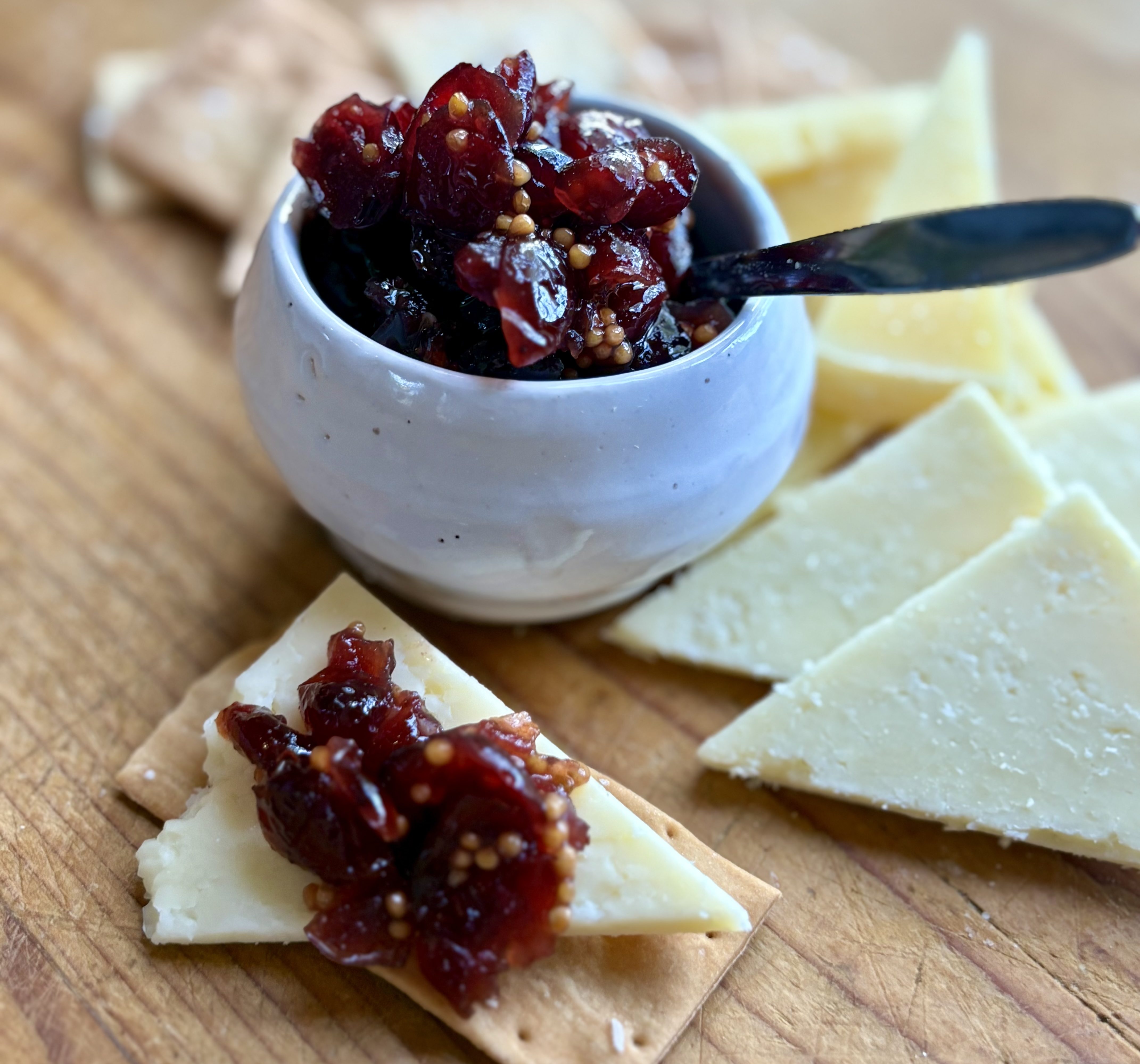
Cranberry Mostarda
With the holiday season fast approaching, having a couple of well-wrapped cheeses in the fridge is a quick and easy answer to the question of what to serve alongside your holiday cheer. Having homemade crackers, and a sweet and sour cheese condiment in the fridge like this one will round out any cheese plate.
Makes about 2 ½ cups
3 tablespoons yellow mustard seeds
3/4 cup dry white wine
1 small cinnamon stick
One 1/2-inch slice of fresh ginger
5 whole cloves
1½ cups sugar
1 cup red wine vinegar
3/4 cup fresh orange juice
2 cups dried cranberries
1 tablespoon mustard powder
Salt
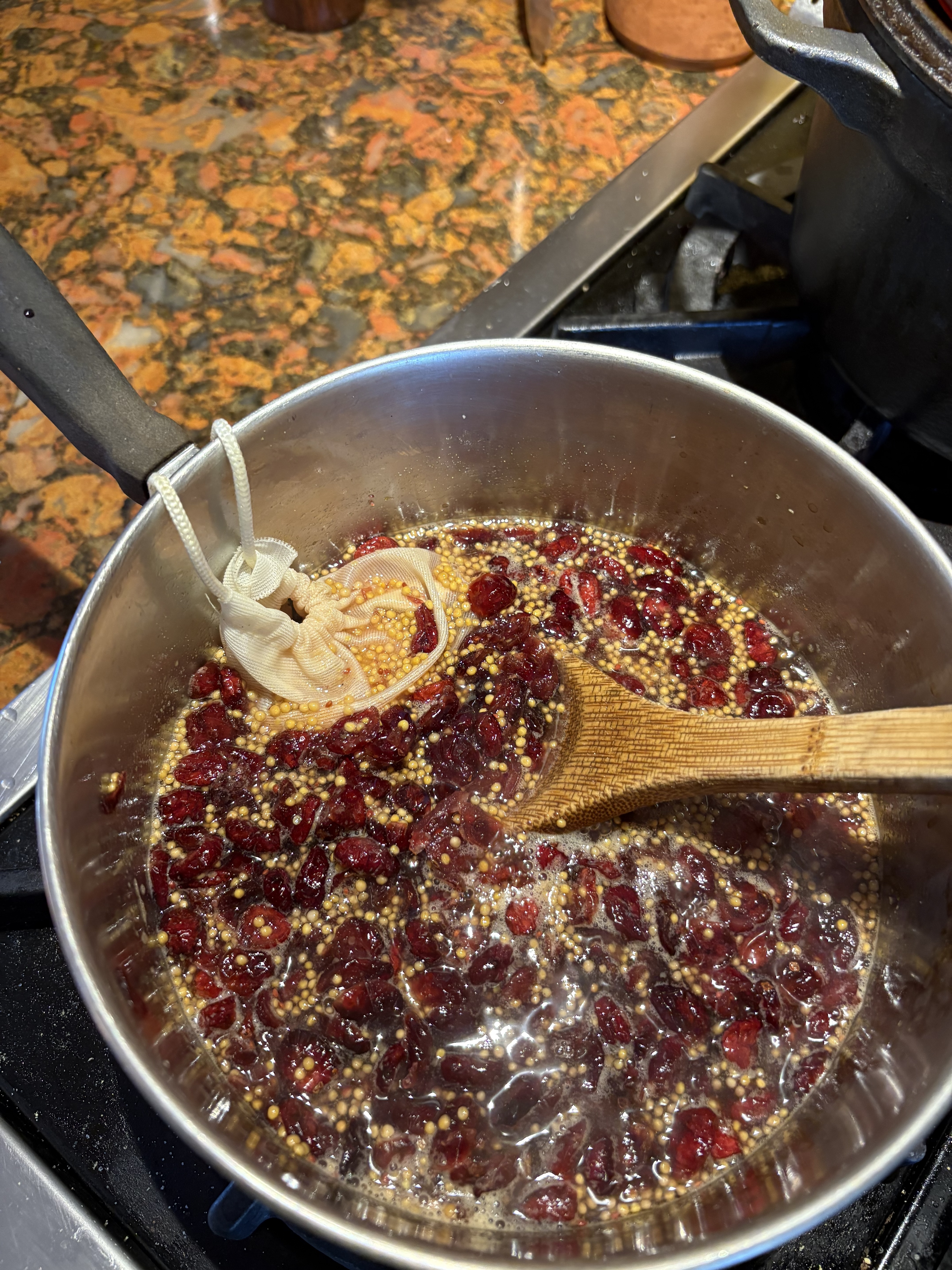
Combine the mustard seeds and wine in a medium saucepan. Place over low heat. Simmer until the wine has evaporated and the seeds have plumped, 5-6 minutes. Place the cinnamon stick, ginger and cloves in a spice sack and add it to the pan with the sugar, vinegar and orange juice. Increase the heat to medium and simmer until the sugar has dissolved and then the syrup is thick enough to just start coating the back of a spoon, 7-8 minutes. Stir in the cranberries and mustard powder. Simmer for 3 minutes, then turn off the heat. Once the mostarda cools to room temperature, taste it and add salt according to your taste.
Store in a clean jar in the refrigerator for up to three weeks.
Local foods advocate Christine Burns Rudalevige is the former editor of Edible Maine magazine and the author of “Green Plate Special,” both a column about eating sustainably in the Portland Press Herald and the name of her 2017 cookbook. She can be contacted at: [email protected].
We invite you to add your comments. We encourage a thoughtful exchange of ideas and information on this website. By joining the conversation, you are agreeing to our commenting policy and terms of use. More information is found on our FAQs. You can modify your screen name here.
Comments are managed by our staff during regular business hours Monday through Friday as well as limited hours on Saturday and Sunday. Comments held for moderation outside of those hours may take longer to approve.
Join the Conversation
Please sign into your Sun Journal account to participate in conversations below. If you do not have an account, you can register or subscribe. Questions? Please see our FAQs.