


Our Communities. Our Teams. Our Future.
We’re proud to make high school sports coverage free for everyone—because these moments matter. At Maine State Credit Union, we’re here for the people and places that make Maine strong. Let’s Go! Learn more at mainestatecu.org.
It’s new.
Unless you’re someone of a certain age. Like high school boys basketball coaches.
Then it’s old. And they like it.
This season’s Class A boys and girls basketball classification bears a striking resemblance to the four-class system that defined Maine hoops until the 2015-16 season.
The most impactful change is at the top of the enrollment ladder. The too-small Class AA is gone. Class A once again has a robust 28 schools — 16 SMAA schools in the South and 12 in the North in a mostly traditional grouping.
Some boys basketball coaches believe it will bring back raucous crowds for midweek regular-season games. That remains to be seen. However, almost all are certain that the heightened nightly competitiveness, with playoff qualification once again at stake, is good for Maine high school basketball in general, and especially good for their larger-enrollment schools.
“It’s not a new look. It’s an old look,” said South Portland coach Kevin Millington. “It’s the way it was, and I’ve always been in favor of this.”
Millington contends more teams in a league means more competition. Unlike the nine-season run of Class AA, when (usually) every team made the tournament regardless of their record, players will be scrapping for playoff qualification. The best eight teams in the North and South will end up at the neutral-site regional quarterfinals, and “you’re going to have great games,” Millington said.
“I remember when I was coaching at Windham and we were an 8 seed and we were playing Cheverus, the 1 seed,” Millington said. “Our fans couldn’t even get into the gym because Portland and Deering had the first game.”
Scarborough reached the AA South semifinals last season. The Red Storm, with eight seniors on the roster, could make a return trip to Cross Insurance Arena. But it will be a lot tougher to get back to the regional semifinals.
“It’s going to be a battle. Whoever comes out of the South and the North, they’re going to earn it,” said Scarborough coach Phil Conley. “It’s two fantastic leagues with competitive basketball. That’s what you want to see.”
NOT EVERYONE AGREES
Of course there are differences of opinion, particularly from the smaller schools in Class A.
With two-time reigning Class AA champ Windham, Portland and Cheverus moving over to A South, the league has 11 former AA schools. Four of the other teams — Biddeford, Falmouth, Kennebunk and Westbrook — were in the second-largest division since 2015-16 (Noble started in AA but played the past two seasons in A).
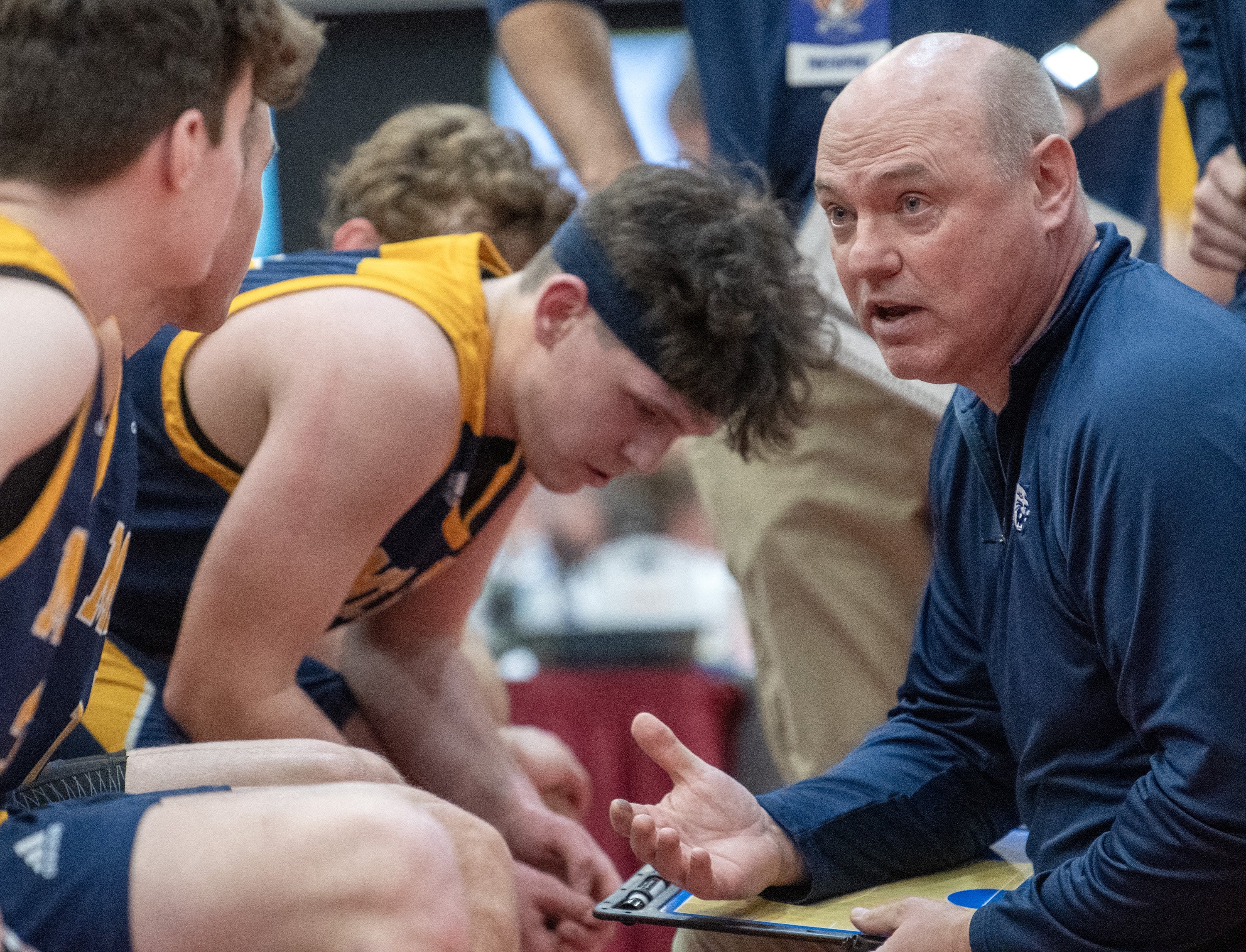
“We are not fans of it,” said Biddeford coach Justin Tardif.
Biddeford hasn’t traditionally had a strong boys basketball team (its current girls team is a different story) and last year was 9-9 — an improvement over recent seasons. With 689 students, Biddeford is the smallest of all Class A schools.
“The Class A enrollment range is too wide to be able to compete on a year-to-year basis, especially when compared to other classes,” Tardif said.
(Joe Phelan/Staff Photographer)
In the North, Mt. Blue coach Troy Norton said he’s happy his 694-student school in Farmington is grouped with 1,655-student Lewiston and 1,000-plus student schools Oxford Hills, Bangor, and Edward Little. It reminds him of when he played at Mt. Blue, graduating in 1992.
Norton says this year’s Cougars team, which is young, might take their lumps, but they’ll be better for it the following season.
“These are the schools we want to play. I wouldn’t want to be in B. There’s no historical connection,” Norton said. “Short term, our program has been at a level where we can compete. Long term, it would be an extreme challenge.”
Norton said it’s not just the enrollment disparity — although that’s the major piece. The rural nature of his 12-town school district makes it hard for players to casually get together to hoop it up at someone’s house or a neighborhood court. The relative isolation also makes top club programs less accessible.
REASONS TO BE EXCITED
At its most basic, the 2025-26 configuration returns a realistic Us-vs.-Them regional division. When Portland, Cheverus, Windham and Deering were in AA North, the alignment felt false.
The largest schools now have to actually qualify for the postseason. For some programs, that could now be a noteworthy achievement, and a program building block.
Some coaches would prefer an open tournament. But those end-of-season games with a tourney berth on the line can make for compelling action.
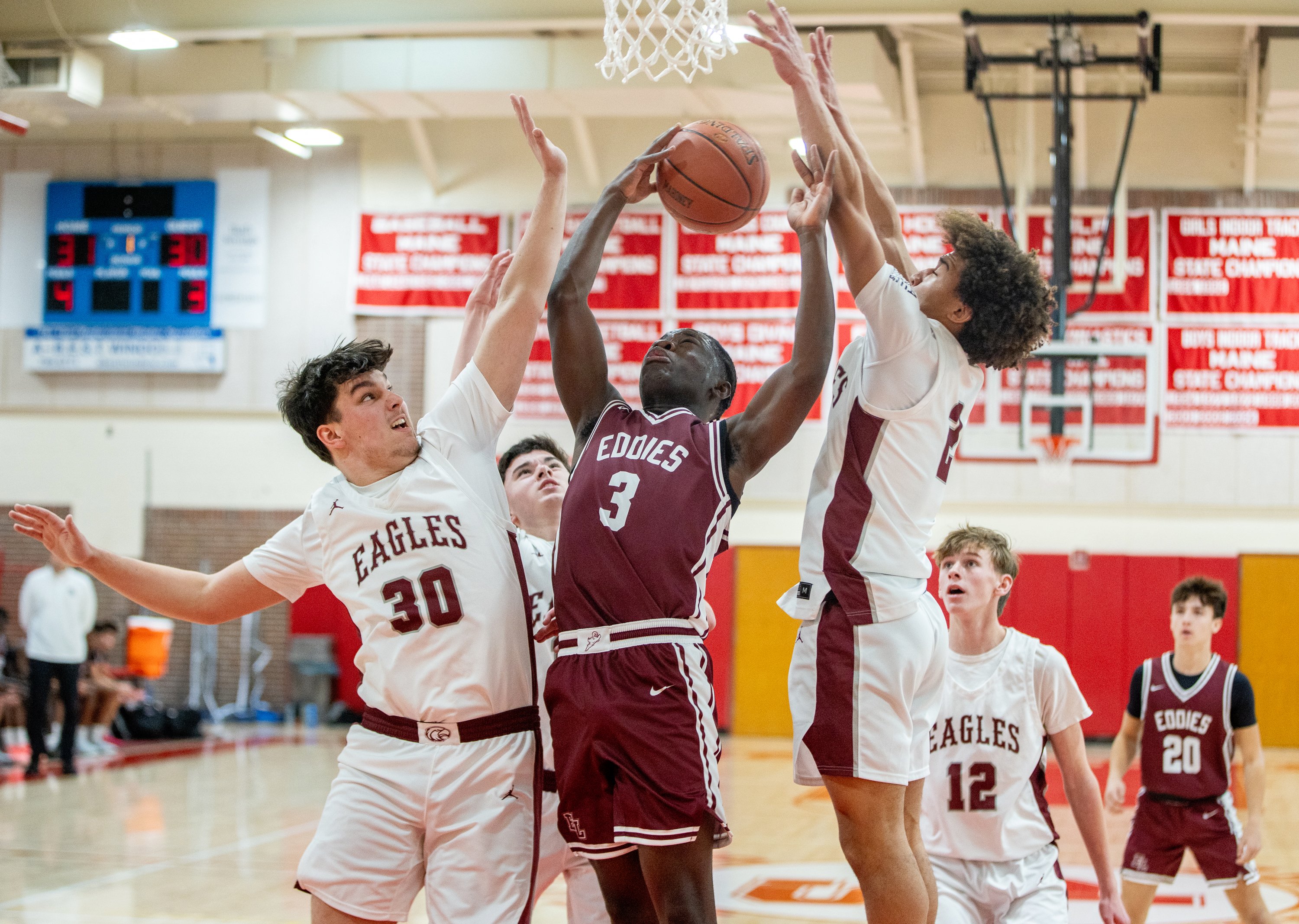
“It’s going to be competitive, night-in and night-out,” said first-year Westbrook coach Jim Seavey, who coached girls basketball champions at Greely (2004) and Scarborough (2010). “You have to come to play from opening tip to final buzzer. And our kids will do that.”

We invite you to add your comments. We encourage a thoughtful exchange of ideas and information on this website. By joining the conversation, you are agreeing to our commenting policy and terms of use. More information is found on our FAQs. You can modify your screen name here.
Comments are managed by our staff during regular business hours Monday through Friday as well as limited hours on Saturday and Sunday. Comments held for moderation outside of those hours may take longer to approve.
Join the Conversation
Please sign into your Sun Journal account to participate in conversations below. If you do not have an account, you can register or subscribe. Questions? Please see our FAQs.