

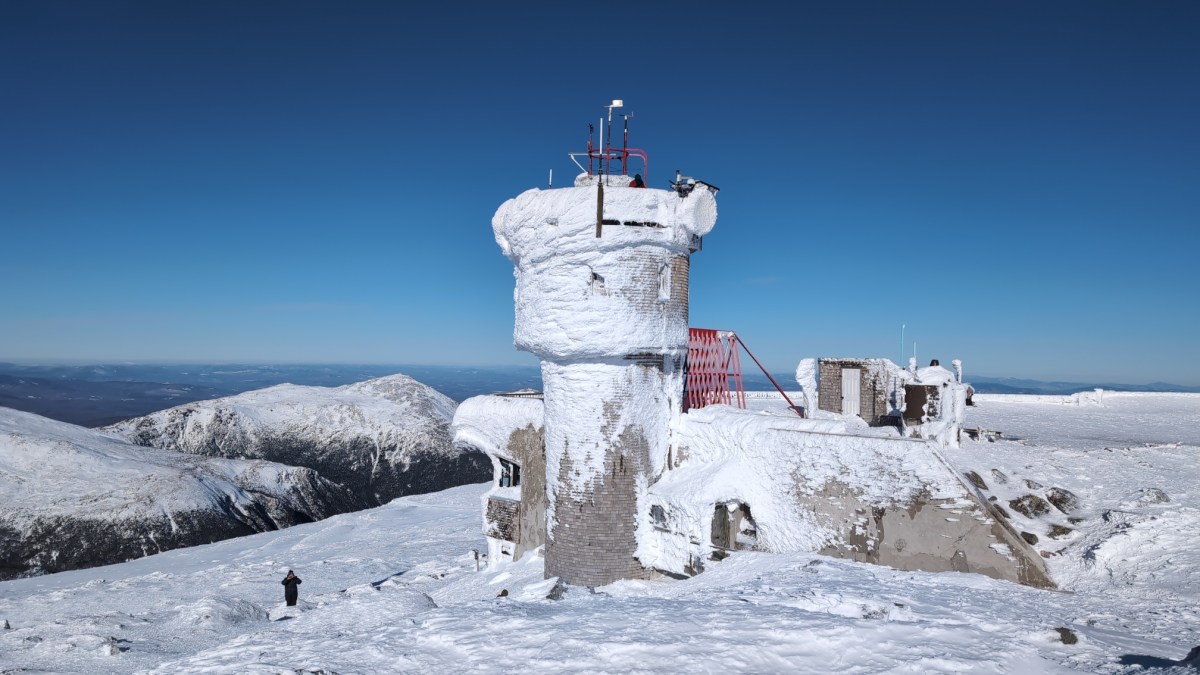
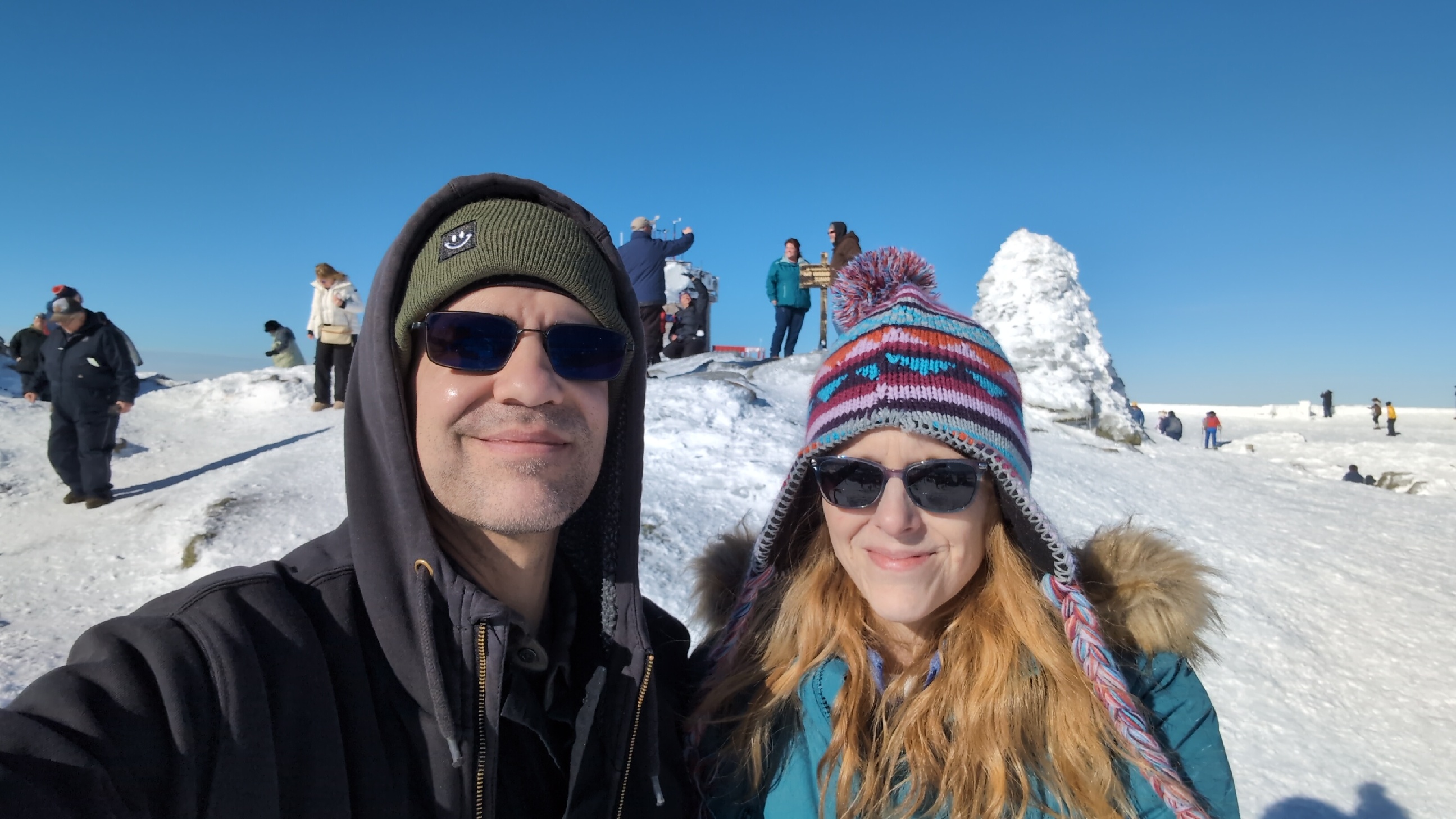
PINKHAM NOTCH, N.H. — Clear skies, bright sunshine and light wind on a recent day earlier this month created perfect conditions for visitors to Mount Washington who were hoping to reach the summit.
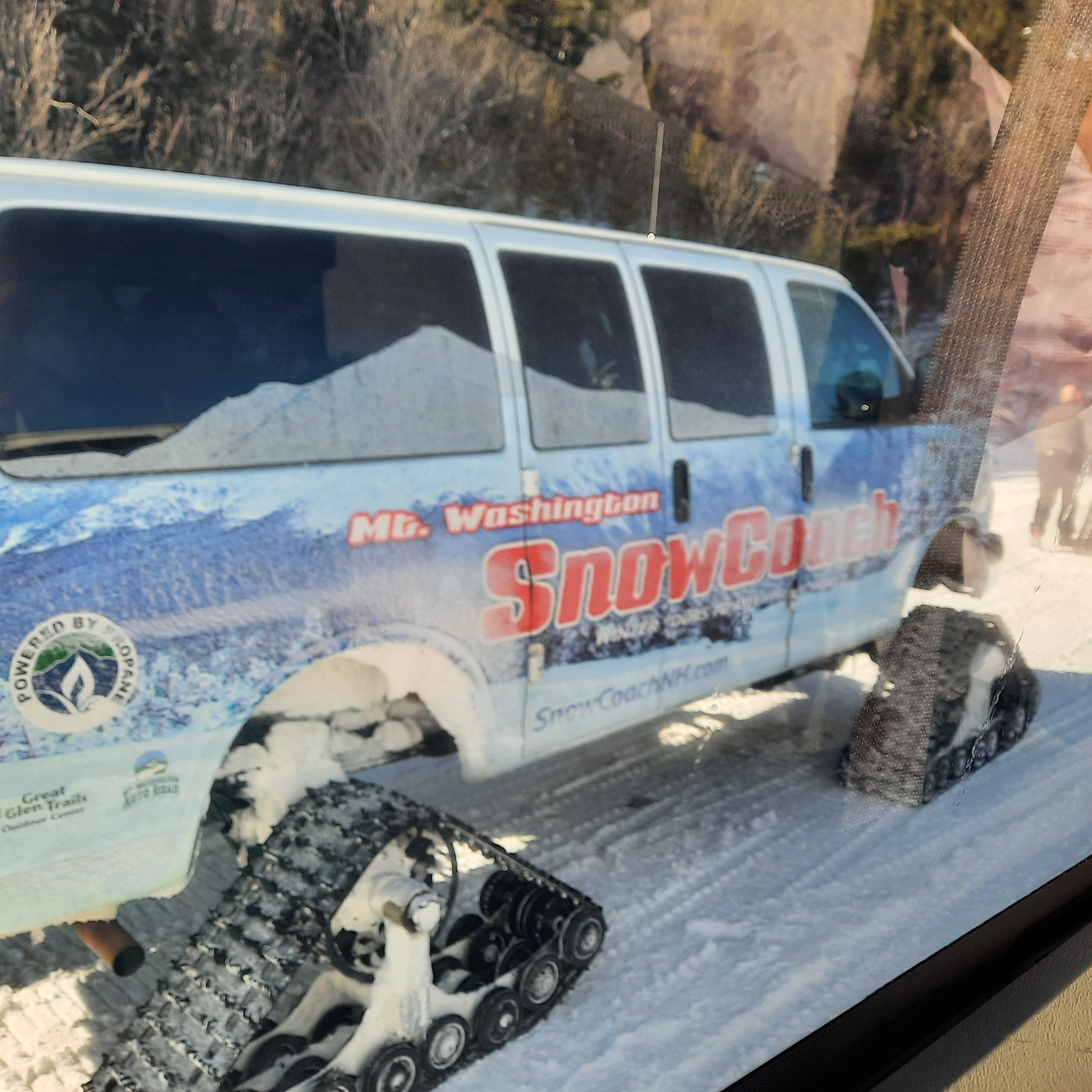
On the “bluebird day,” what mountaineers say is ideal high-elevation weather with exceptional visibility, passengers boarded tracked SnowCoach vehicles at the Great Glen Trails Outdoor Center at the base of the Mount Washington Auto Road, before crossing Route 16 and beginning the climb.
Mount Washington, at 6,288 feet, is the tallest peak in New England and one of the most visited summits in North America. Its elevation and exposed location make it famous for extreme weather, while its visibility across western Maine makes it a constant presence on the horizon for communities including Bethel, Rangeley and and many other locations around Maine.
Such a calm winter weather window is unusual, experts say.
Winter trips on the Mount Washington Auto Road typically stop at treeline, about 4,200 feet above sea level, where stronger winds, drifting snow and changing visibility can make summit travel unsafe. But on Feb. 3, the combination of sunshine and low winds allowed vehicles to climb the full 6,288 feet to the summit.
“This is a pretty rare occurrence on the Auto Road,” said Don Bilger, events manager for the Mount Washington Auto Road. “… Well worth the trip when you get a clear blue sky day on the summit.”
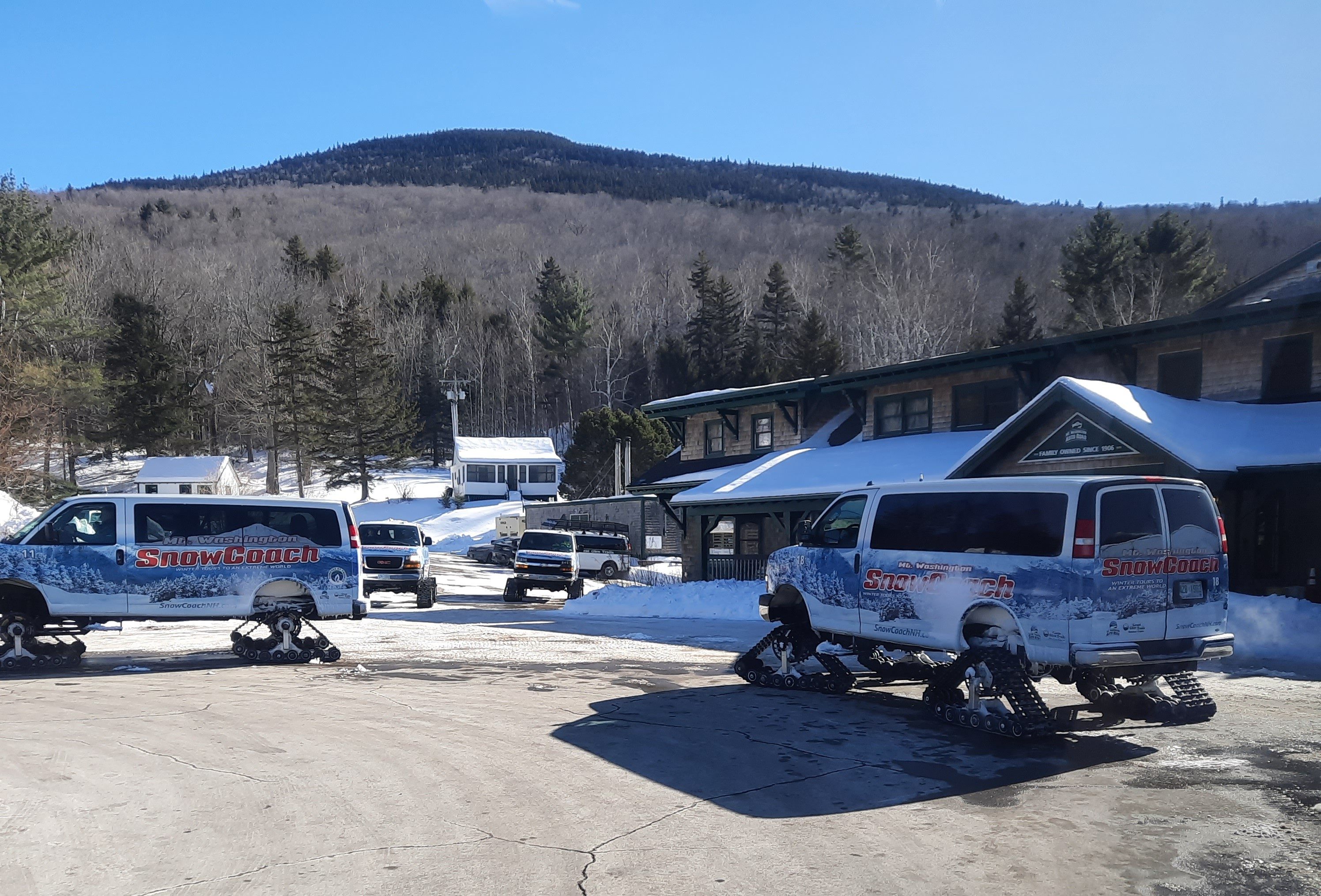
Bilger said full-summit winter trips happen only when conditions align and can generally be announced only a few days in advance because the mountain’s weather changes quickly.
“The weather at the Auto Road, especially at the summit, is very unpredictable, so three to four days out is probably the maximum advanced notice we can give for these trips,” Bilger said.
During the climb, drivers provide a narrated tour of the Auto Road’s history, describing early summit travel, weather extremes and the vehicles that first conquered the mountain.
The commentary blends historical facts with humor. On tight switchbacks, the driver added playful remarks while carefully navigating the turns, helping passengers appreciate both the steep terrain and the unusual winter access to the summit. Approaching one sharp turn, he quipped that he liked to take it at “50 mph,” calling it “the highlight of the trip.”
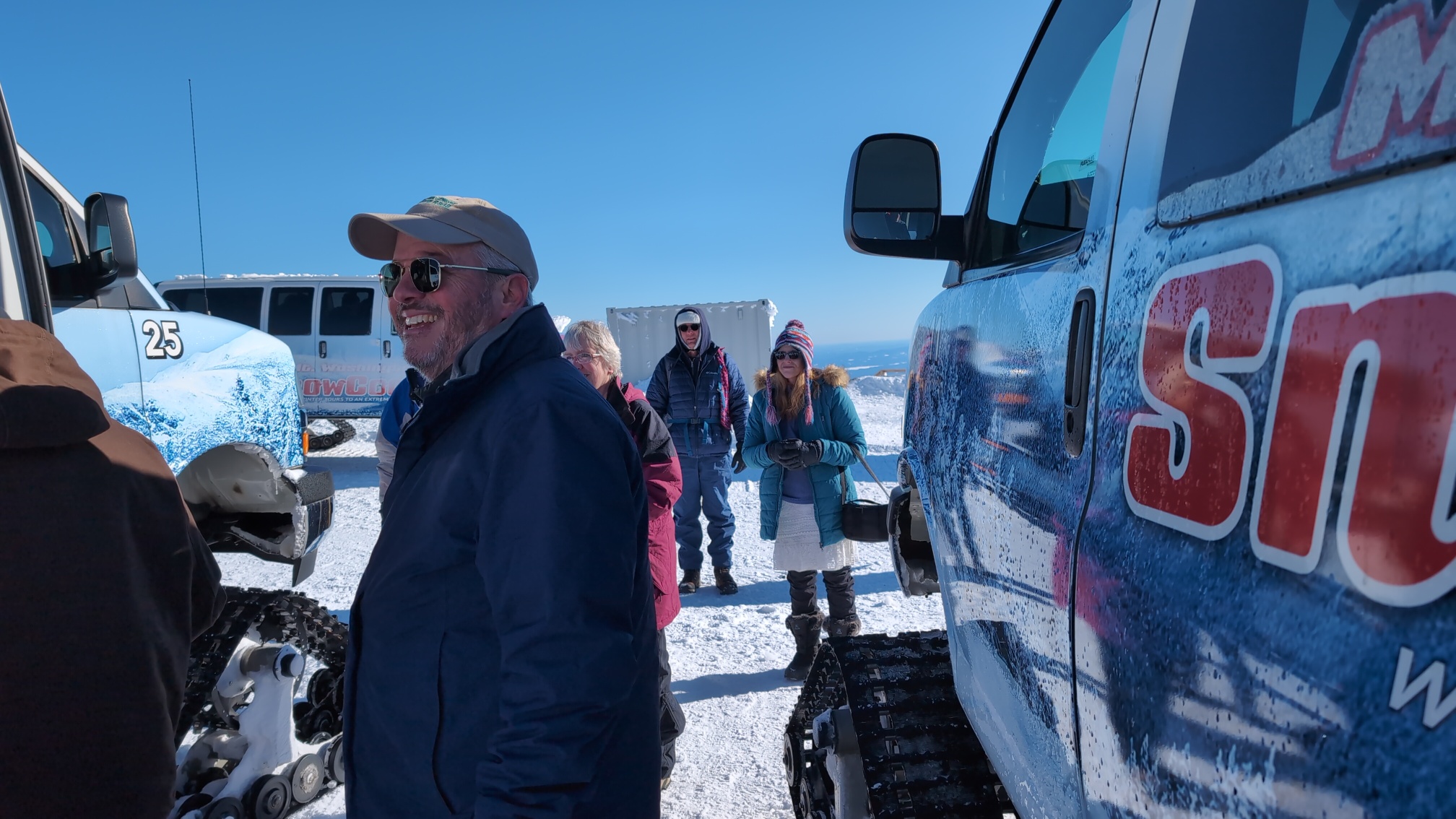
The ride is part of the experience. The tracked vehicle climbs steadily through forest and into alpine terrain, revealing increasingly expansive views of the Presidential Range and valleys below. Passengers seated in the rear feel every contour of the road, lifted slightly from their seats at times, as the vehicle rose into the open, wind-shaped landscape near treeline.
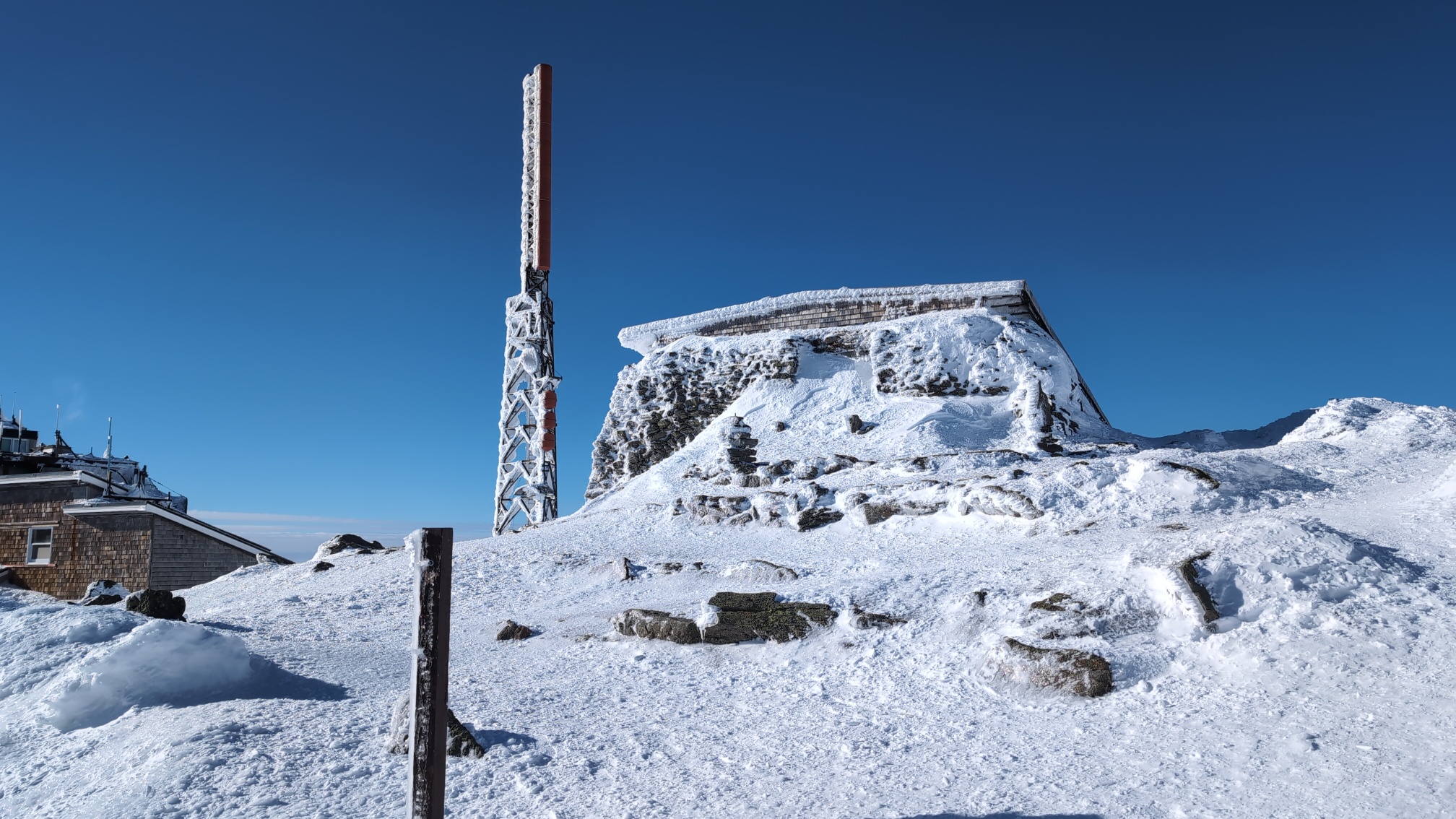
At the summit, the world looked almost entirely white. Structures and equipment were coated in thick layers of rime ice, frozen into sculpted shapes against a deep blue sky. Visitors stepped off the vehicle into bright sunlight and got in line at the iconic summit sign marking Mount Washington’s elevation.
WICKED WEATHER
Mount Washington Observatory meteorologist Karl Philippoff said the combination of weather conditions on Feb. 3 stood out.
“The combination of conditions was quite unusual for early February,” Philippoff said. He noted that those conditions occur only about once every 2½ years during February, based on historical records.
By comparison, Mount Washington’s average February wind speed is about 45 mph, with hurricane-force gusts exceeding 74 mph occurring regularly. The summit is also in fog more than 60% of the time during winter. A wind speed of 2.6 mph was noted Feb. 3 after arriving on the summit.
University of Maine at Farmington Associate Professor of Biology Rachel Hovel said the calm conditions likely resulted from regional atmospheric patterns.
“In my reading of the regional forecast discussions over the last week or so, I seem to remember that the stillness that day was from a weak gradient of high-low pressure, which doesn’t frequently occur but isn’t unusual,” Hovel said.
Sean Birkel, Maine’s state climatologist, said Mount Washington’s elevation influences weather across the region, including western Maine.
“It is notable that when there is strong northwest wind following the passage of a cold front, high-resolution forecast models often show distinct parallel bands of wind downstream of Mount Washington and surrounding high terrain,” Birkel said. “These forecast features can extend across counties in southwestern Maine.”
AN IMPORTANT HISTORY
Mount Washington’s summit was once home to full-service hotels that hosted overnight guests during the late 19th and early 20th centuries. The Tip-Top House, built in 1853 and still standing today, is the oldest surviving summit building. A larger hotel, known as the Summit House, was first constructed in 1852 and rebuilt several times before being removed in 1968 after decades of exposure to the mountain’s extreme weather.
Unlike the wooden Summit House, the Tip-Top House survived because its thick stone construction allowed it to withstand Mount Washington’s harsh summit conditions.
Mount Washington has long been closely connected to Maine, especially through the work of Francis Edgar Stanley and Freelan Oscar Stanley, twin brothers born in 1849. The Stanley brothers were inventors, photographers and entrepreneurs who founded the Stanley Motor Carriage Company and became pioneers of steam-powered automobiles.
Before their success in automobiles, the brothers operated a dry plate photography business in Lewiston, and later built steam cars in Newton, Massachusetts. Their steam automobiles became known for reliability, quiet operation and power, making them capable of climbing steep grades that challenged early gasoline vehicles.
On Aug. 31, 1899, Freelan Stanley drove a steam-powered automobile up the Mount Washington Auto Road, reaching the summit with his wife, Flora Stanley, and demonstrating the capability of early automobiles on one of North America’s steepest mountain roads. The ascent helped establish Mount Washington as an early proving ground for automotive innovation.
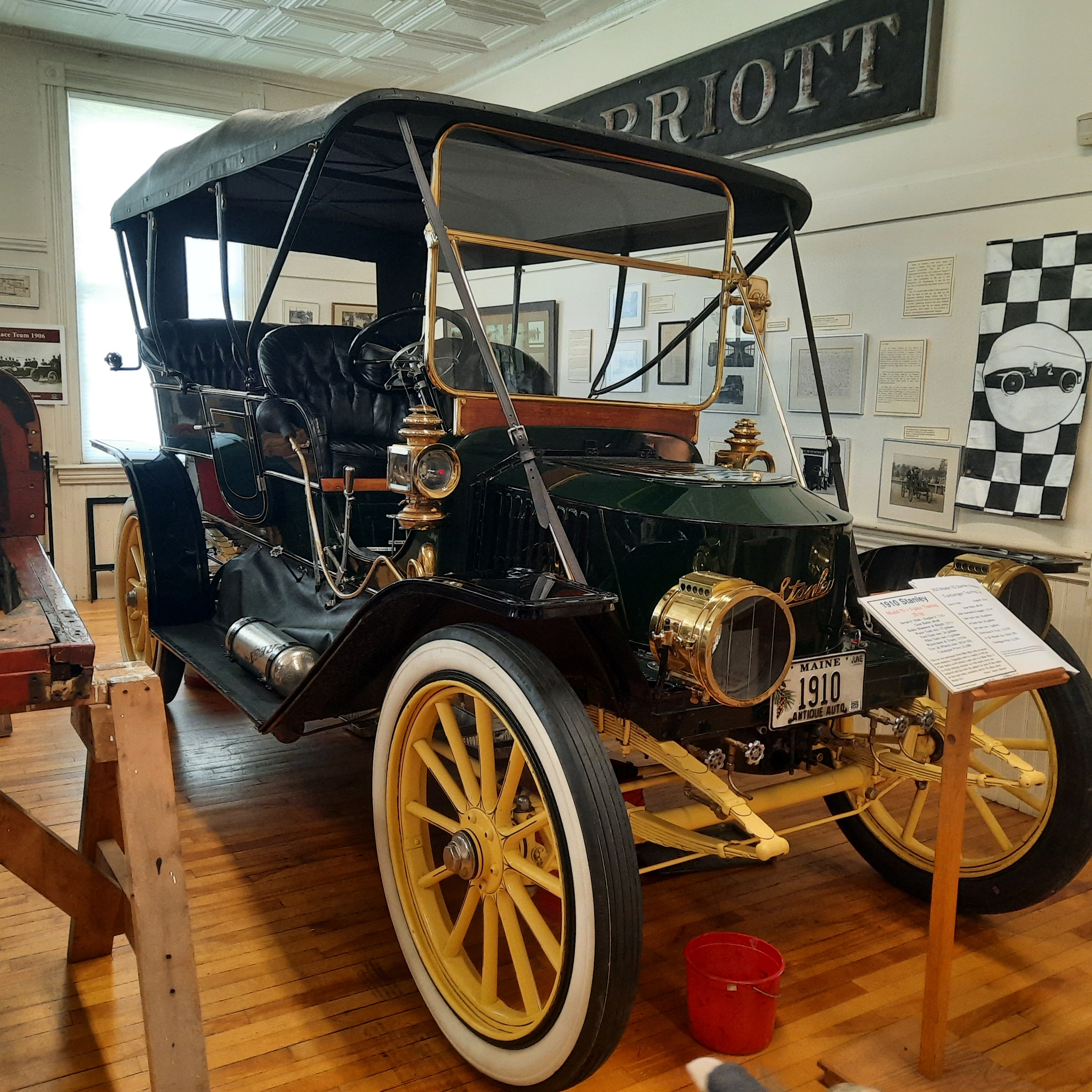
Historic Stanley steam automobiles are preserved at the Mount Washington Auto Road museum and the Stanley Museum in Kingfield, which is in the Stanley brothers’ former workshop building and preserves vehicles, tools and exhibits documenting their work and legacy in western Maine.
Mount Washington also became an important broadcasting site serving Maine and New Hampshire. In the 1950s, WMTW-TV established transmission facilities on the summit, allowing its signal to reach across western Maine and much of northern New England. The mountain’s elevation made it ideal for broadcasting, and its summit became home to multiple communications structures, including the WHOM radio tower, which continues to transmit from Mount Washington.
Automotive enthusiasm for Mount Washington continues into the present day. In July 2017, comedian and automotive collector Jay Leno drove a Stanley steam-powered car up the Mount Washington Auto Road while filming a segment for his show, “Jay Leno’s Garage,” retracing the route made famous by the early steam climbs and highlighting the mountain’s ongoing pull for vehicle history and engineering.
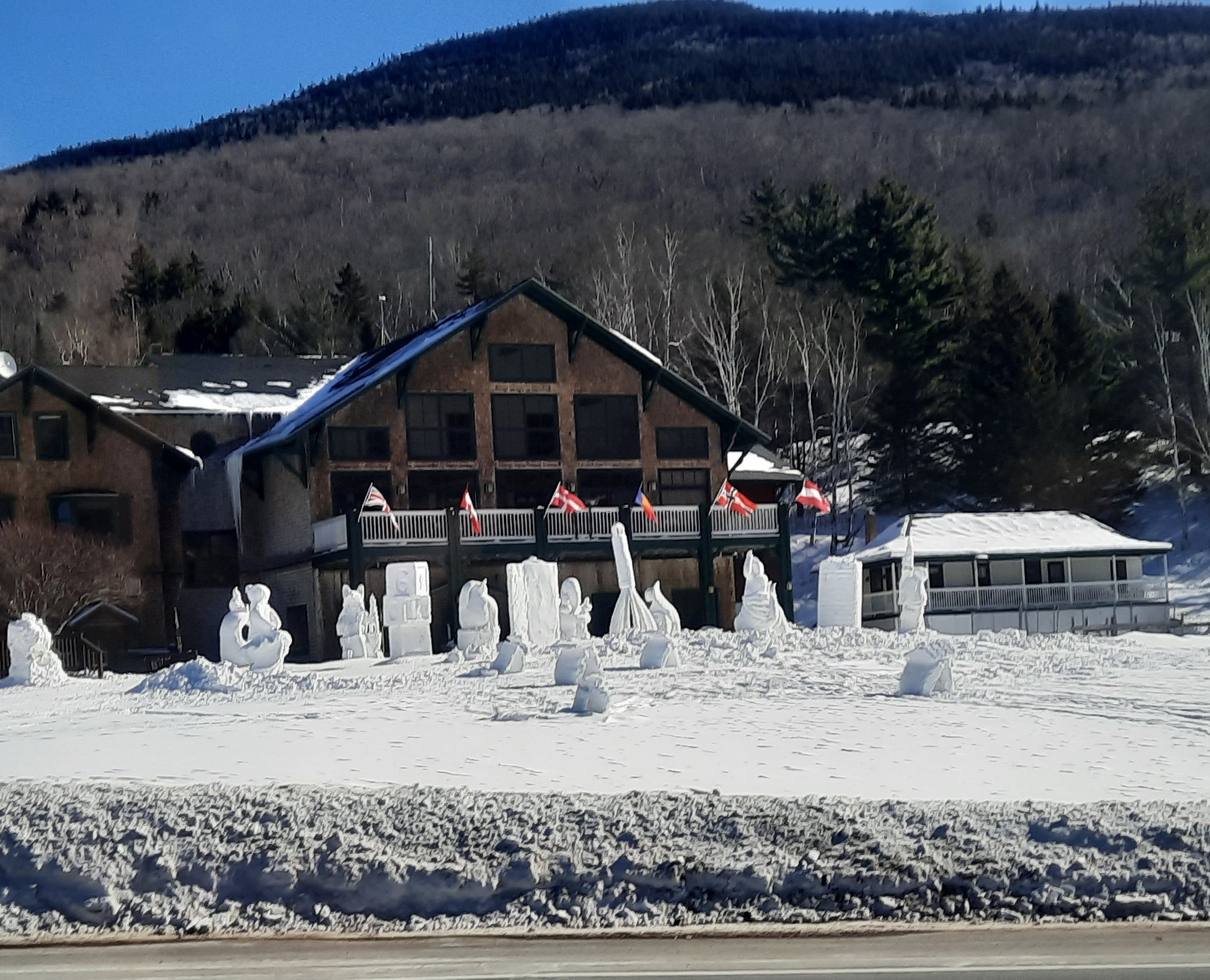
The Auto Road itself, completed in 1861, was the first mountain-climbing road built specifically for public use in North America. Today, along with the Mount Washington Cog Railway and numerous hiking trails, it remains one of the primary ways visitors experience the mountain.
The Mount Washington Auto Road’s next major public event is Alton Weagle Day, scheduled for May 23 and held in conjunction with the road’s Memorial Day weekend opening. The event honors Alton Weagle, a local adventurer known as “Mr. Mount Washington” for his unusual ascents in the 1950s. Weagle climbed the Auto Road barefoot, blindfolded and walking backward, and famously pushed a wheelbarrow carrying a 100-pound sack of sugar to the summit without setting it down.
As with all Auto Road operations, the event and opening are weather permitting.

We invite you to add your comments. We encourage a thoughtful exchange of ideas and information on this website. By joining the conversation, you are agreeing to our commenting policy and terms of use. More information is found on our FAQs. You can modify your screen name here.
Comments are managed by our staff during regular business hours Monday through Friday as well as limited hours on Saturday and Sunday. Comments held for moderation outside of those hours may take longer to approve.
Join the Conversation
Please sign into your Sun Journal account to participate in conversations below. If you do not have an account, you can register or subscribe. Questions? Please see our FAQs.