


Jon Duke feels like he’s watching the Rockport he grew up in slip away.
School enrollment is declining. Police officers and nurses at the local hospital can’t afford to live within 20 minutes of town. His own kids will likely be priced out when they leave home.
Like so many towns across Maine, this Midcoast community is at a critical junction. In order to survive, housing experts say the state needs to embrace higher-density workforce housing and shed the longstanding tradition of building only single-family homes.
Rockport has ample land. Town officials have updated the zoning ordinances. Residents, for the most part, understand there’s a need.
But all that means nothing without reliable, affordable access to sewer infrastructure, Duke said.
Rockport doesn’t have it.
For the last several years, lawmakers and municipal officials have largely focused on tackling Maine’s zoning reform to alleviate the housing crisis. But while they’ve squabbled over accessory dwelling units and hashed out lot-size minimums and density bonuses, pressure has been mounting underground, beneath the town halls and legislative chambers, threatening to lay waste to what progress has been made.
Maine’s sewer infrastructure — aged, overtaxed and in some cases, nonexistent — is one of the greatest barriers to the state’s ability to meet its ambitious housing production goals.
Towns across Maine are now grappling with how to balance the need to build their share of the 84,000 new homes the state says it needs by 2030 with a sewer system that is nearing the end of its useful life and at risk of overflowing.
And some towns are consciously avoiding sewer upgrades or extensions to slow down growth.

Many of Maine’s wastewater treatment systems were built in the 1970s following the passage of the Clean Water Act. Those systems are now approaching 50 years old. Some towns don’t have public water and sewer systems at all — roughly half of Maine homes are on private septic systems, according to Environmental Protection Agency estimates, compared to about 16% nationally, per U.S. Census data.
“It’s become more important for there to be the adequate infrastructure to support more homes on a smaller amount of land,” said Kristina Egan, executive director of the Greater Portland Council of Governments, a nonprofit group of municipalities that work together on policies, including housing.
It’s a problem that takes years and millions of dollars to solve, yet both time and money are in short supply.
Yarmouth, Windham, Gorham, Saco and Freeport — all towns that are attractive for growth — are wrestling with how to solve it.
“You can’t snap your fingers and have new sewer capacity come online overnight,” said Tyler Norod, development director for Westbrook Development Corporation. “And because it takes so long to do these projects …we can’t wait till the last second to figure this out.”
‘AN INCREDIBLE IMPEDIMENT’
Two years ago, Rockport officials approached voters with a request: Pay $34 million to fund the construction of the town’s own wastewater treatment facility and extend the sewer lines out to Route 90 to allow for the creation of more workforce housing.
The town currently pumps its wastewater to Camden and Rockland for treatment, a system that worked well enough for decades but is getting expensive. Rockport residents pay between 50% to 80% more for sewer than those in surrounding communities.
Camden’s plant also has capacity issues, limiting Rockport’s ability to grow as long as they share a facility, Duke said.
Voters rejected the proposal and town officials last year signed a five-year contract extension with Camden.
Now, Duke and other town officials are working to lower the rates while they work out the next steps.
The “no” vote stalled movement on a 200-acre development planned for Route 90 called Ingraham Corner, first proposed in 1989, that promised to recreate West Rockport’s historic village center and add hundreds of housing units. According to Duke, sewer has consistently been the primary road block for the project.
“It’s an incredible impediment,” he said.
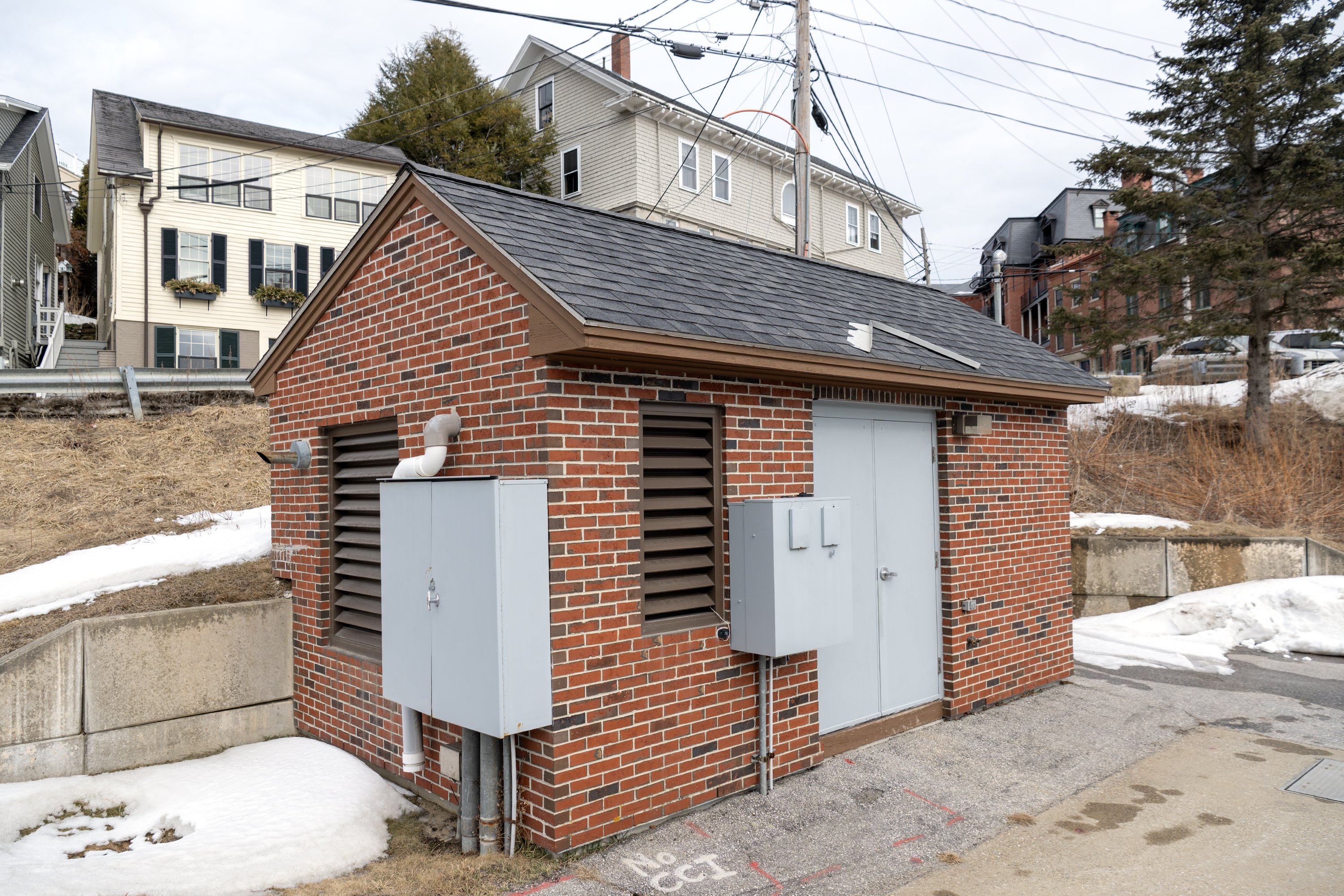
Another project to turn an old medical building into 18 affordable units nearly fell apart because Rockport’s sewage rates were higher than MaineHousing was willing to accept. Ultimately, they were able to abate some of the costs to make the project work, but it was an eye-opener, Duke said.
“People are crying out for (housing) to be able to live and work in Rockport, and we can’t meet that need unless we resolve these issues,” he said.
‘I DON’T THINK WE WANT IT’
However, not every community wants to grow.
In Scarborough, the lack of sewer access on the west side of the turnpike is keeping further development at bay. And that suits some residents just fine.
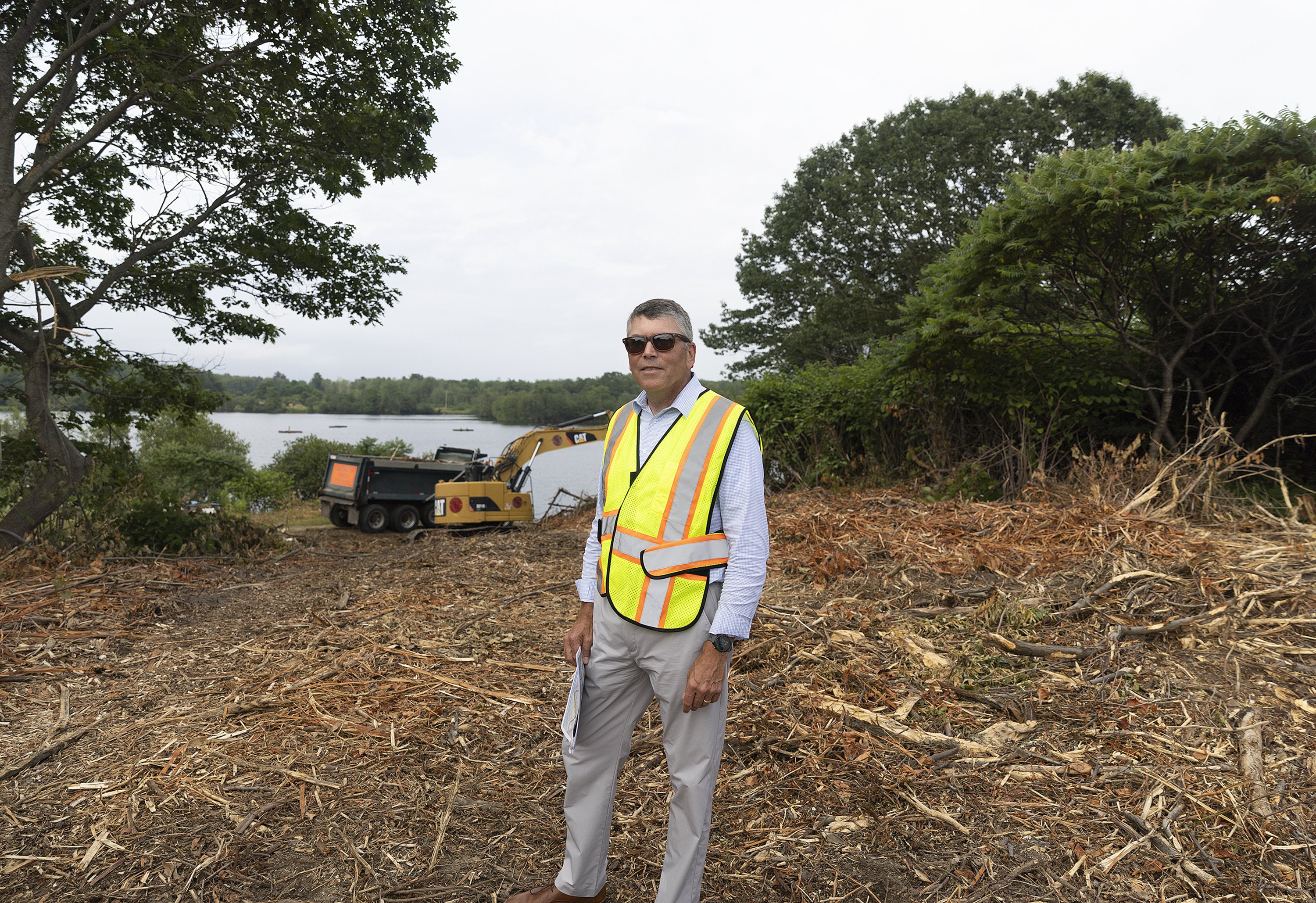
Scarborough has seen a flurry of building activity in recent years and residents and officials feel they’ve done their part, according to Tom Hall, the town manager. They’ve pushed back against the provisions outlined in the latest state law, concerned about the rate at which the town is growing.
“Sewer would be the key to more development. I’m just saying, I don’t think we want it,” he said at a recent infrastructure summit hosted by GPCOG.
Scarborough has been up front about its reluctance to keep growing, but other towns with similar sewer limitations are using it as an excuse, said Jason Levesque, a developer and former Auburn mayor.
Expanding sewer and water is expensive, often prohibitively so, and it’s one of the few “Not In My Backyard” or NIMBY arguments that actually passes the “straight face test,” Levesque said.
Without sewer capacity, it doesn’t matter how many units are legally allowed on a lot. High-density housing won’t work.
‘DISPROPORTIONATE IMPACT’
To support more housing, there are myriad other infrastructure needs to consider. Hundreds of Maine schools are in disrepair. Bridges and roads are in shambles. The power grid is unreliable. Broadband access is inconsistent.
What to prioritize is a problem being wrestled with across Maine, and wastewater often doesn’t top the list — it’s underground, out of sight. Until it fails.
And while it’s a problem across the state, the situation is particularly acute in southern coastal Maine and Cumberland County, where the population centers are, according to Egan, at GPCOG.

Almost two years after a Yarmouth pump station overflowed and dumped gallons of raw sewage into the river, officials in September put a six-month freeze on new development to buy time for a $7.5 million upgrade to the Royal River Pump Station.
The system isn’t equipped to handle present-day Yarmouth, Town Manager Scott LaFlamme said, and that pump station collects from two-thirds of the town’s growth area.
Windham is nearing completion of a roughly $50 million wastewater treatment facility designed in part to address the lack of a community wastewater disposal system in the town’s commercial sector, which has deterred businesses from locating or expanding along the Route 302 corridor.
Freeport is in the midst of a yearslong revisioning process that aims to add up to 700 new housing units over the next decade. Simultaneously, it just kicked off a roughly $22 million sewer expansion project that will help accommodate the new residents.
In Saco, capacity has not been a problem. The city spent decades working to separate the stormwater runoff from the wastewater, which dropped flow by about a third, according to Howard Carter, director of Saco’s water resource recovery department.
When sea levels started to rise, officials realized they needed to act. The city is now about three-quarters of the way through the construction of a roughly $64 million wastewater treatment facility.
But Saco has been growing rapidly over the last few years. They’ve tried to budget enough capacity in the new facility for continued growth.
“Now, does that capacity last 50 years, or is it 30 years? We don’t know … without a crystal ball, but I think, at least, we are set up better than most communities,” Carter said.
A PRIORITY FOR DEVELOPERS
The first thing developers Chris Marshall and Nate Green of GreenMars Real Estate look for when deciding whether to move forward with a project is zoning. The second is whether the location has sewer and water.
“It’s very limited what you can do if you don’t already have those in place,” he said.
Infrastructure upgrades aren’t a nonstarter, necessarily, but can be a hurdle.
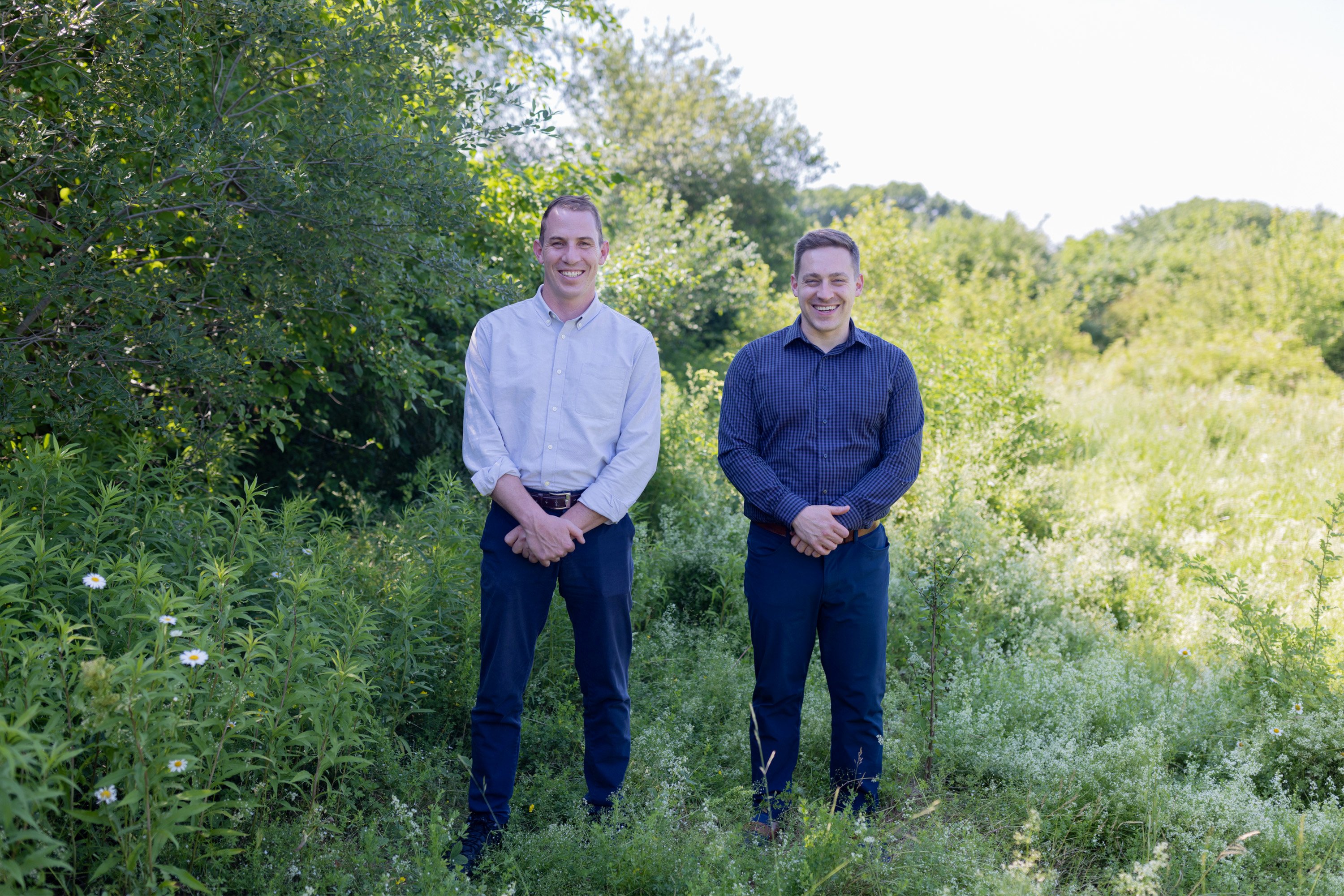
On a recent project in Sanford, the team had to replace a section of sewer line in order to rehab three former Nasson College dormitories into 83 apartments. It was only financially possible through local tax incentives, Marshall said.
That was an abandoned, blighted property that the town wanted to see revitalized, but it required infrastructure investment Marshall said most cities won’t take on for more run-of-the-mill projects.
“Those improvements are going to be on you,” he said.
Septic systems aren’t any more affordable.
Maine subdivision law requires 20,000 square feet per dwelling unit for a septic system – that’s about two-units per acre. GreenMars projects are typically at least around 30 units.
With such large lot size minimums, developers are primarily limited to single-family homes that are being priced between $600,000 to $800,000 just to make the project financially feasible.
“Once you’re off sewer and water, even if you’re in a lower land cost area, your land costs are still adding up to be significantly more,” Marshall said.
‘NIBBLING AROUND THE EDGES’
Last year, the Legislature passed LD 1829, an expansion of the landmark 2022 bill LD 2003 which removed barriers to housing production by preempting local zoning restrictions.
Access to public water and sewer is a crucial component of the newer law, which allows for at least three units on any single-family lot. That increases to four units in growth areas or areas connected to sewer and water. That provision may be removed, however, as part of a “fix it” bill working its way through the Legislature that would correct some of the unintended consequences of the new law after feedback from communities.
Some municipalities either don’t have public sewer systems at all, or have large sections of town that aren’t connected.
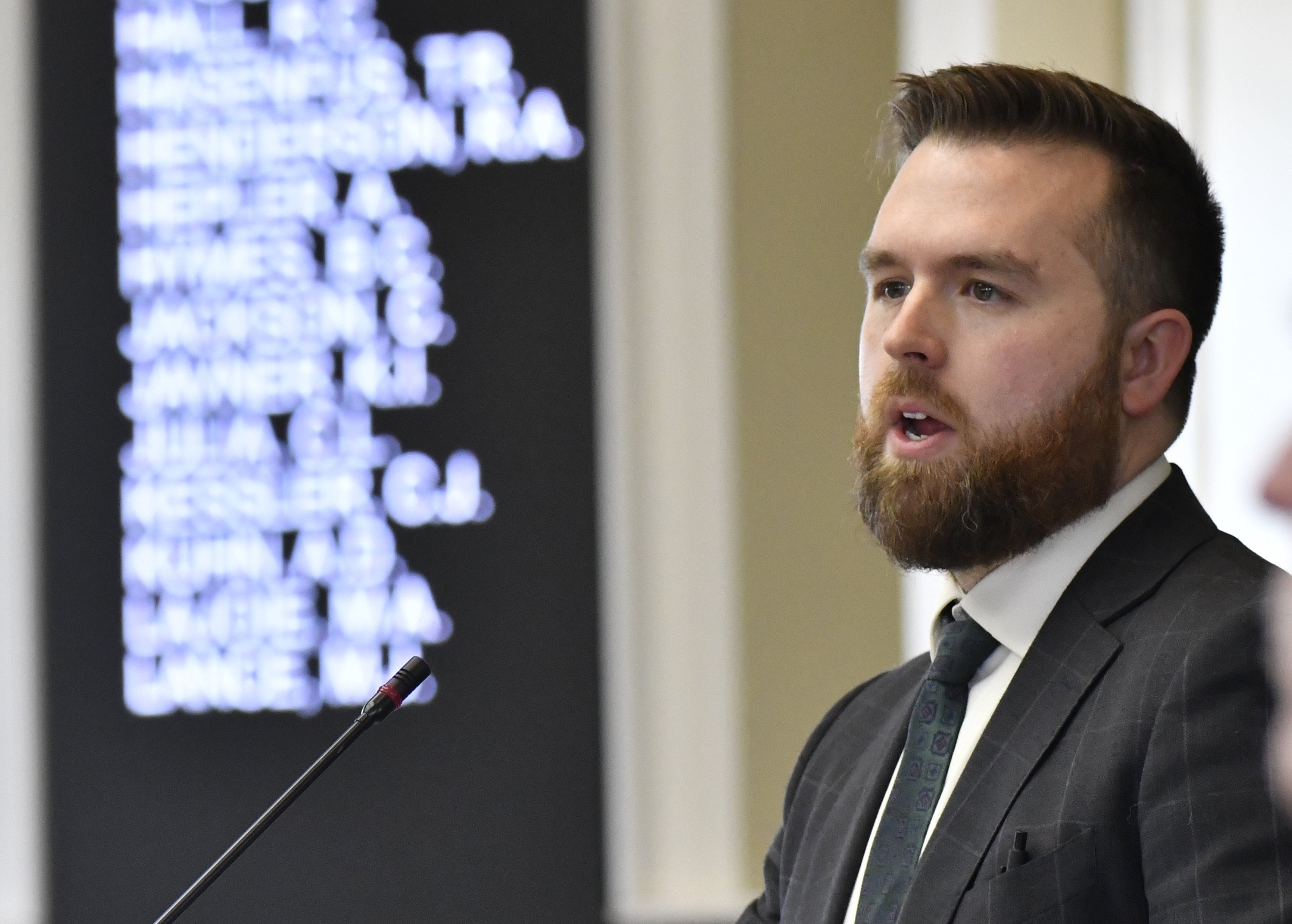
In those areas, “growth is going to remain low density because we just can’t afford to pay the multimillion dollars that it would cost to bring water and sewer out to that part of town. That’s a problem,” House Speaker Ryan Fecteau, D-Biddeford, said during the January infrastructure summit.
The state has a Clean Water State Revolving Fund, which annually provides low-interest loans to municipalities and quasi-municipal corporations for wastewater infrastructure projects. This year, the fund, which is supplemented with federal money, is projected to have just over of $77 million to spend.
Duke, in Rockport, called the fund “a godsend,” but there are so many projects that need money, and $77 million only goes so far, considering Rockport’s proposal for a small facility and expansion was estimated to cost nearly $34 million.
“The need for support from the state level and the federal level is just absolutely crucial,” Duke said.
Fecteau last session proposed a $75 million water and sewer bond for municipalities looking to upgrade or expand their systems with the intent to support more housing. It would require a 50% match from the community. The money is part of a larger $300 million funding request focused on expanding housing and child care access that is awaiting action from the appropriations committee.
The money has the power to make “a real transformative difference,” he said, adding that lawmakers have a tendency to “nibble around the edges,” only giving a little bit of money here and a little there.
He’s growing impatient with that approach.
“We cannot solve the housing crisis if we don’t have the infrastructure that supports the development that needs to happen here in our state,” Fecteau said.

We invite you to add your comments. We encourage a thoughtful exchange of ideas and information on this website. By joining the conversation, you are agreeing to our commenting policy and terms of use. More information is found on our FAQs. You can modify your screen name here.
Comments are managed by our staff during regular business hours Monday through Friday as well as limited hours on Saturday and Sunday. Comments held for moderation outside of those hours may take longer to approve.
Join the Conversation
Please sign into your Sun Journal account to participate in conversations below. If you do not have an account, you can register or subscribe. Questions? Please see our FAQs.