

Winter in Franklin County brings frozen ponds and lakes back into everyday use, transforming hiking landscapes with open views, quieter trails and ice-covered water. As more people head out on winter hikes that cross icy trails and frozen ponds, residents and outdoor safety officials are reminding people that cold temperatures alone aren’t enough to guarantee safe ice.
From walking and skating to ice fishing, winter activity across Franklin County depends on more than appearances. Ice strength varies widely by location and conditions, and officials emphasize that thickness, consistency, water movement and recent weather all matter when deciding whether it’s safe to step out.
Community contributions to the Lake Stewards of Maine Ice-In & Ice-Out Tracking Map show when individual lakes and ponds have frozen over this season, with volunteers across the state submitting observations of ice cover and dates. Ice-in dates show when ponds and lakes freeze over, but they do not indicate whether ice is thick or safe for recreation. Users can view current ice coverage and reported ice-in dates on the map, and submit observations as conditions change.
Statewide, colder temperatures bring frozen lakes and ponds, prompting state officials to remind the public that early ice may not yet be safe for fishing, skating or other activities.
The Maine Appalachian Trail Club notes that winter hikers often encounter ice near water crossings and low-lying trail sections, where conditions can change quickly. Winter safety guidance explains that clear, dark ice is generally stronger than white or refrozen ice, while snow-covered ice can conceal weak spots by insulating the surface and slowing freezing. Tracks on a frozen pond or lake do not guarantee safe ice, and although new ice can be stronger than older ice, it never forms uniformly and thickness can vary dramatically within just a few feet.
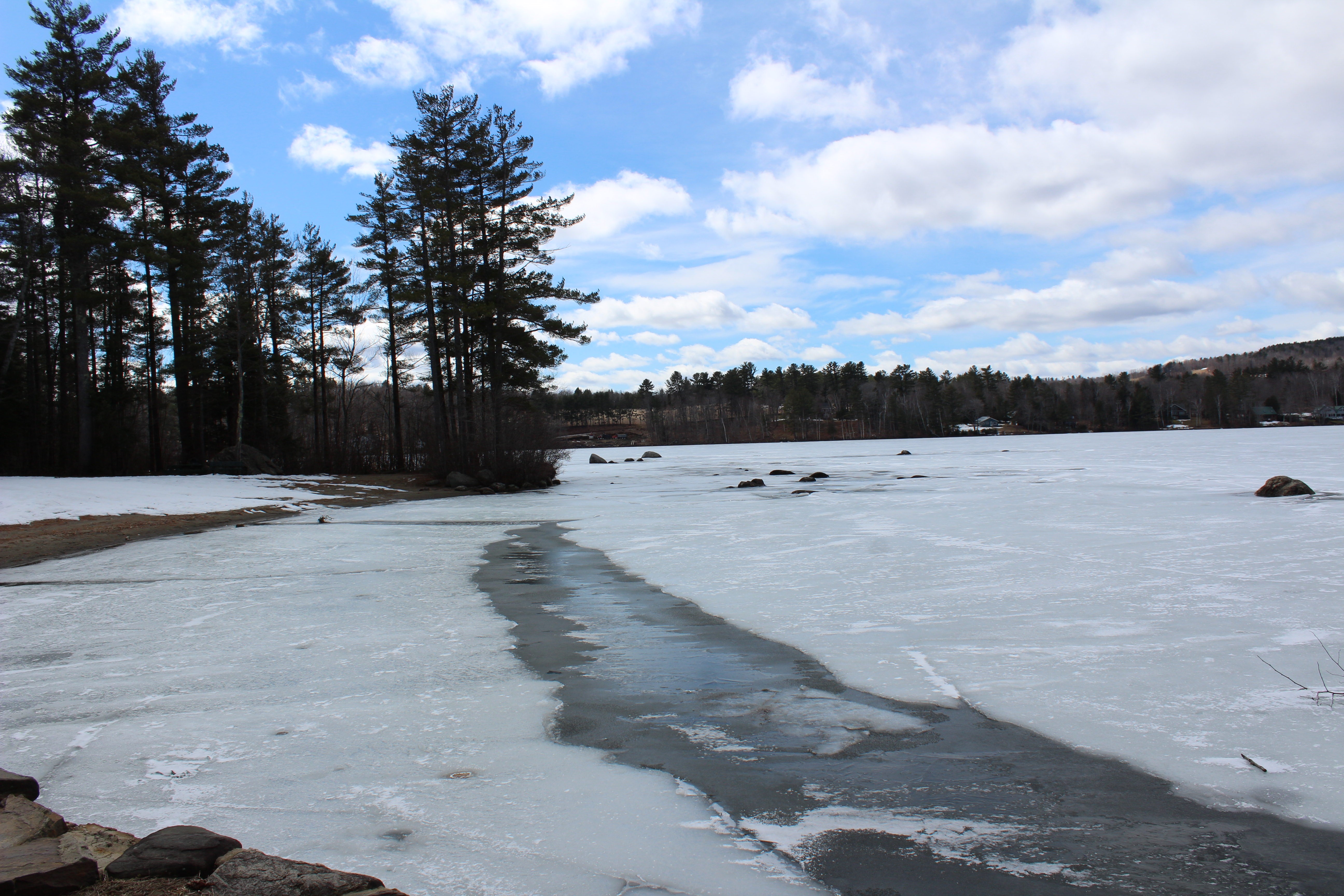
Thickness remains the most important factor. Guidance commonly referenced by the Maine Department of Inland Fisheries & Wildlife indicates that about 4 inches of clear ice may support a person on foot, while 5 to 6 inches are often considered necessary for ice fishing. Snowmobiles and ATVs require additional thickness, and vehicles are generally discouraged on local ponds. The department recommends checking ice thickness in multiple locations before moving farther from shore.
Throughout Franklin County, winter use varies by water body and conditions. In Kingfield, local trail groups regularly post winter trail conditions for snowshoeing, cross-country skiing and walking, reflecting a broader community effort to share real-time outdoor information as winter progresses. Public trails such as the Shiloh Pond Trail and the Stratton Brook Pond Trail offer snowshoeing and winter hikes, though access may require walking unplowed roads to reach trailheads.
For many winter hikers, ice is not just something to navigate but part of the appeal. Frozen pond edges, wind-polished trails and lightly glazed boardwalks slow the pace and sharpen awareness of footing and surroundings. In Franklin County, where trail networks frequently pass near water, hikers often incorporate short ice sections into longer outings, treating frozen surfaces as a seasonal extension of the trail rather than a barrier.
Hiking on ice also changes the sensory experience of winter travel. Sound carries farther across frozen ponds, late-day light reflects off ice in ways summer hikers never see, and familiar landscapes take on a quieter, more open feel. On cold, clear days, walkers often linger along pond margins or pause mid-crossing to take in views normally hidden by open water, making frozen ponds and icy trails a destination in their own right during the winter months.
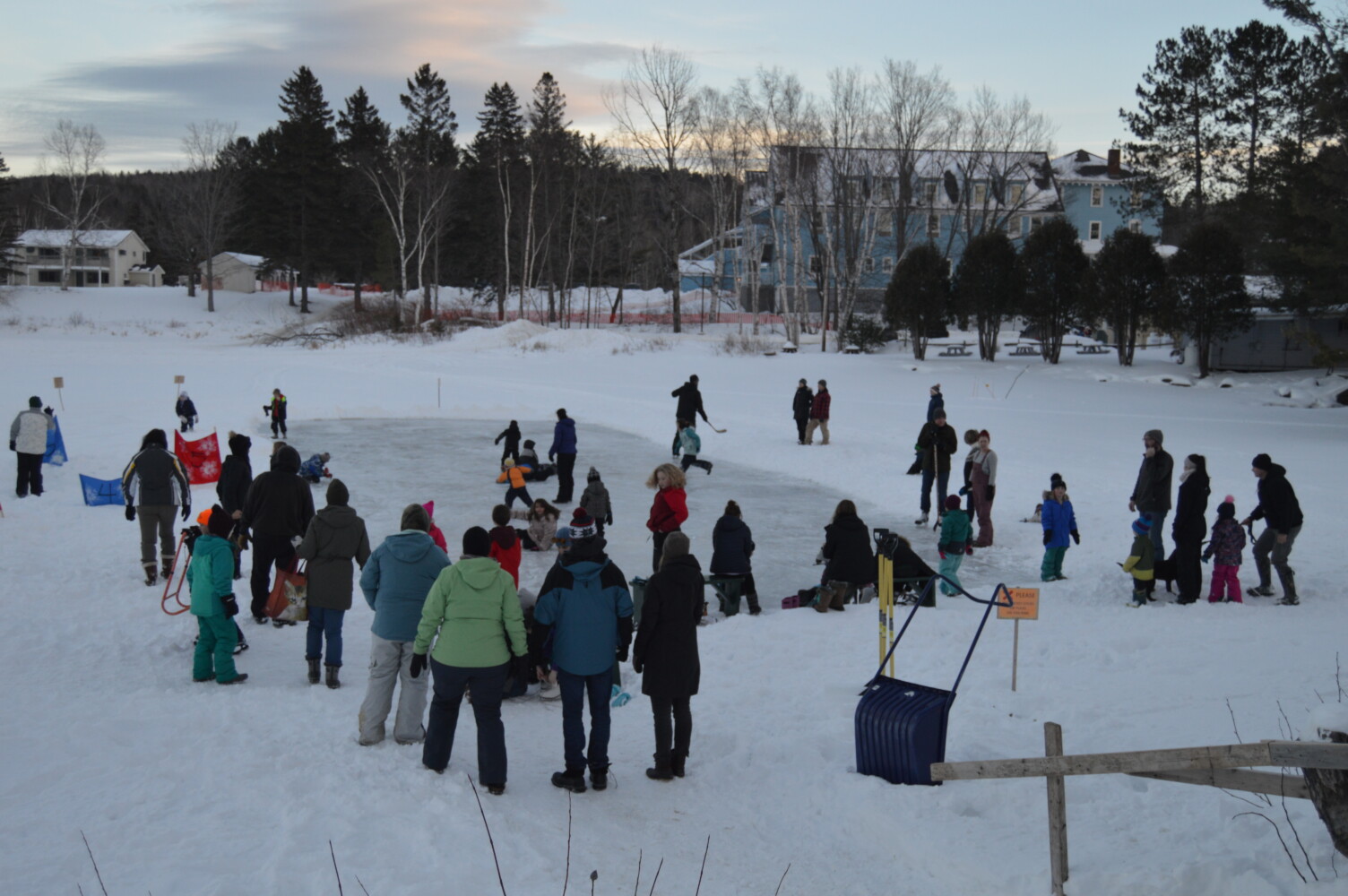
In the Rangeley area, Rangeley Lake and Rangeley Pond often see walking, skating and ice fishing during sustained cold periods, with extra caution advised near inlets and outlets. Haley Pond is a well-known location for maintained winter ice activities, including skating and pond hockey, when conditions allow. The pond also hosted a WinterKids event in February 2025, bringing students and families onto the ice for organized outdoor activities during the winter season.
Local skating and curling groups regularly manage sections of Haley Pond for organized use, making it one of the region’s most actively maintained winter ice surfaces. Even so, conditions can change quickly, and organized winter recreation sites may temporarily close or limit access during mixed weather, including freezing rain or near-freezing temperatures, underscoring the importance of checking current conditions before stepping onto the ice.
In Wilton, Wilson Lake draws winter activity ranging from walking and skating to ice fishing, though locals note that conditions can differ significantly across the lake, particularly near the outlet and along shoreline edges. Kineowatha Park next to Wilson Lake includes a community ice skating rink and walking trails used for winter activity when conditions permit, and the lake also hosts an annual ice fishing derby during the winter.
In Livermore, Round Pond and Brettuns Pond are commonly used for walking and ice fishing when conditions allow. Long Pond has also hosted a yearly ice fishing event, reflecting how frozen ponds across the area become seasonal gathering places, even as ice thickness can vary sharply within the same water body.
Rivers, including the Androscoggin through Livermore Falls, are widely viewed as higher risk due to current and uneven freezing, with most people sticking to shoreline viewing.
Moving water consistently presents one of the greatest hazards. Inlets, outlets, culverts, pressure ridges and narrow thoroughfares freeze more slowly and remain thinner longer, even when nearby ice appears solid. Maine Department of Inland Fisheries & Wildlife officials advise avoiding areas with moving water, noting that they freeze less reliably than still water.
WHEN WINTER WEATHER SHIFTS
Mixed winter weather, including freezing rain, snow and temperatures near freezing, can rapidly change surface conditions, prompting outdoor organizations to restrict access or pause activities during unstable periods. State guidance notes that thawing conditions, rain or repeated freeze-thaw cycles can weaken ice quickly, even if it still appears intact from shore.
Appalachian Mountain Club, which leads winter outings in the Northeast, notes that changing temperatures can quickly alter ice conditions along trails and water crossings. Midwinter thaws, including warm spells in January and February that were once less common, can transform previously stable conditions in a short period of time.
Hikers should note that traction alone does not eliminate risk. Even with traction devices, hikers can slip around easily on melting ice. Another common mistake, according to Appalachian Mountain Club, is underestimating the descent as some people sometimes manage to get up a slippery hill but forget they have to come back down.
Because of this, both state officials and outdoor organizations emphasize checking recent weather patterns, not just the day’s forecast, before heading out.
GEAR FOR ICE SAFETY
People who regularly spend time on frozen water say a few basic tools can reduce risk:
- Ice testing tools: A spud bar, ice chisel or trekking pole can test ice near shore.
- Traction devices: Microspikes or similar traction aids improve grip on icy surfaces. Snowshoes, while useful on snow, do not provide adequate traction on ice.
- Ice picks or awls: Carried for self-rescue if ice breaks.
- Basic precautions: Going out with a partner when possible and letting someone know your plans and expected return time.
With daylight hours shorter in winter, guidance also says to plan outings to end well before dark and carrying a headlamp in case timing or conditions change. It is also recommended to avoid hydration bladders that can freeze in cold temperatures, carrying hot liquids in insulated containers, and bringing simple emergency shelter or fire-starting gear for breaks or unexpected delays.
The American Hiking Society encourages winter hikers to use added caution and good judgment when ice is present. The organization advises hikers to turn back if conditions feel uncertain rather than risk a fall or cold-water exposure.
WINTER ICE SAFETY: QUICK REFERENCE
• Before stepping onto frozen ponds or lakes, safety officials recommend keeping the following basics in mind:
• Check ice thickness in multiple spots. Ice strength can change within just a few feet.
• Look for clear, dark ice. Clear ice is generally stronger than white or refrozen ice.
• Avoid inlets, outlets and culverts. Moving water weakens ice and slows freezing.
• Use extra caution after warm days or rain. Thawing conditions can weaken ice quickly.
• Be wary of snow-covered ice. Snow can hide thin or unstable areas.
• Test ice near shore before going farther out. Weak ice close to shore is an early warning sign.
• Carry ice picks and traction devices. These can help prevent falls and assist with self-rescue.
• Tell someone your plan before heading out. If something goes wrong you’ll want someone to know where you were going.

We invite you to add your comments. We encourage a thoughtful exchange of ideas and information on this website. By joining the conversation, you are agreeing to our commenting policy and terms of use. More information is found on our FAQs. You can update your screen name on the member's center.
Comments are managed by our staff during regular business hours Monday through Friday as well as limited hours on Saturday and Sunday. Comments held for moderation outside of those hours may take longer to approve.
Join the Conversation
Please sign into your Sun Journal account to participate in conversations below. If you do not have an account, you can register or subscribe. Questions? Please see our FAQs.