
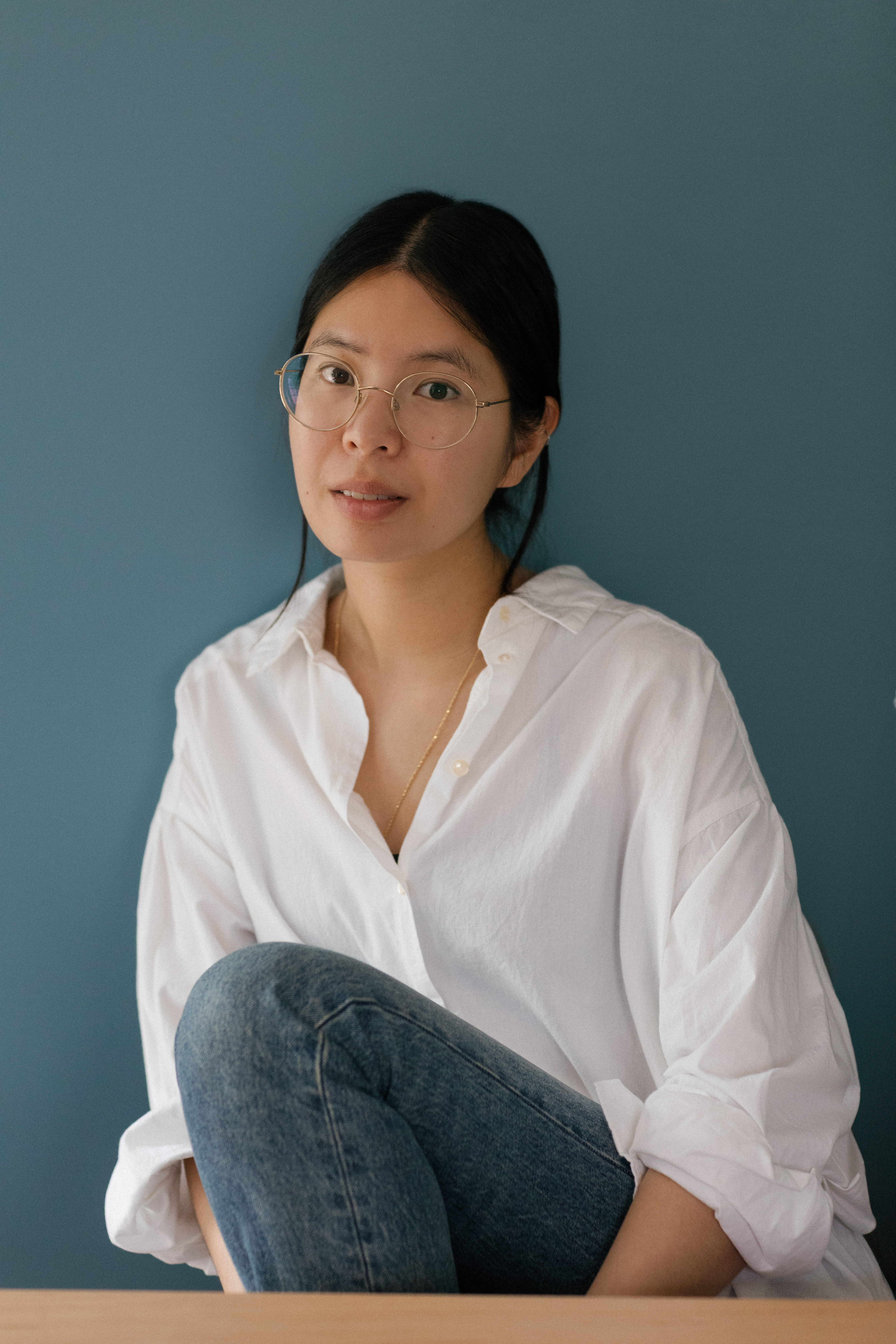
Larissa Pham’s slim debut novel, “Discipline,” is a sharp and cerebral story about truth, the past and the role art plays in interpreting both. An artist named Christine goes on tour to promote her debut novel, which fictionalizes her affair with a professor that caused her to stop painting. Unmoored, Christine travels through different art exhibits and American cities until, seemingly inevitably, she confronts her past on the coast of Maine.
The author of “Pop Song,” a book of nonfiction, Pham is an artist and writer in New York. She spoke with the Portland Press Herald about her debut novel, using Maine as a setting and writing like a 3D printer.
“Discipline” almost reads as a thriller. Tension is leveraged quickly, and it doesn’t let up. What books or writers inspired you?
Katie Kitamura was a huge influence. Another was Yiyun Li’s “The Book of Goose.” People probably think of it as a book about female friendship, but it’s also about writers becoming writers. It’s very well-plotted and well-paced. One more book that I thought about when I was thinking about tension was “The Roundhouse” by Louise Erdrich.
The novel makes bold stylistic decisions. There’s a shift from past to present, a character who’s not named until the end of the book and no quotation marks. When you’re writing, do you consciously make style decisions, or do they come as you’re editing?
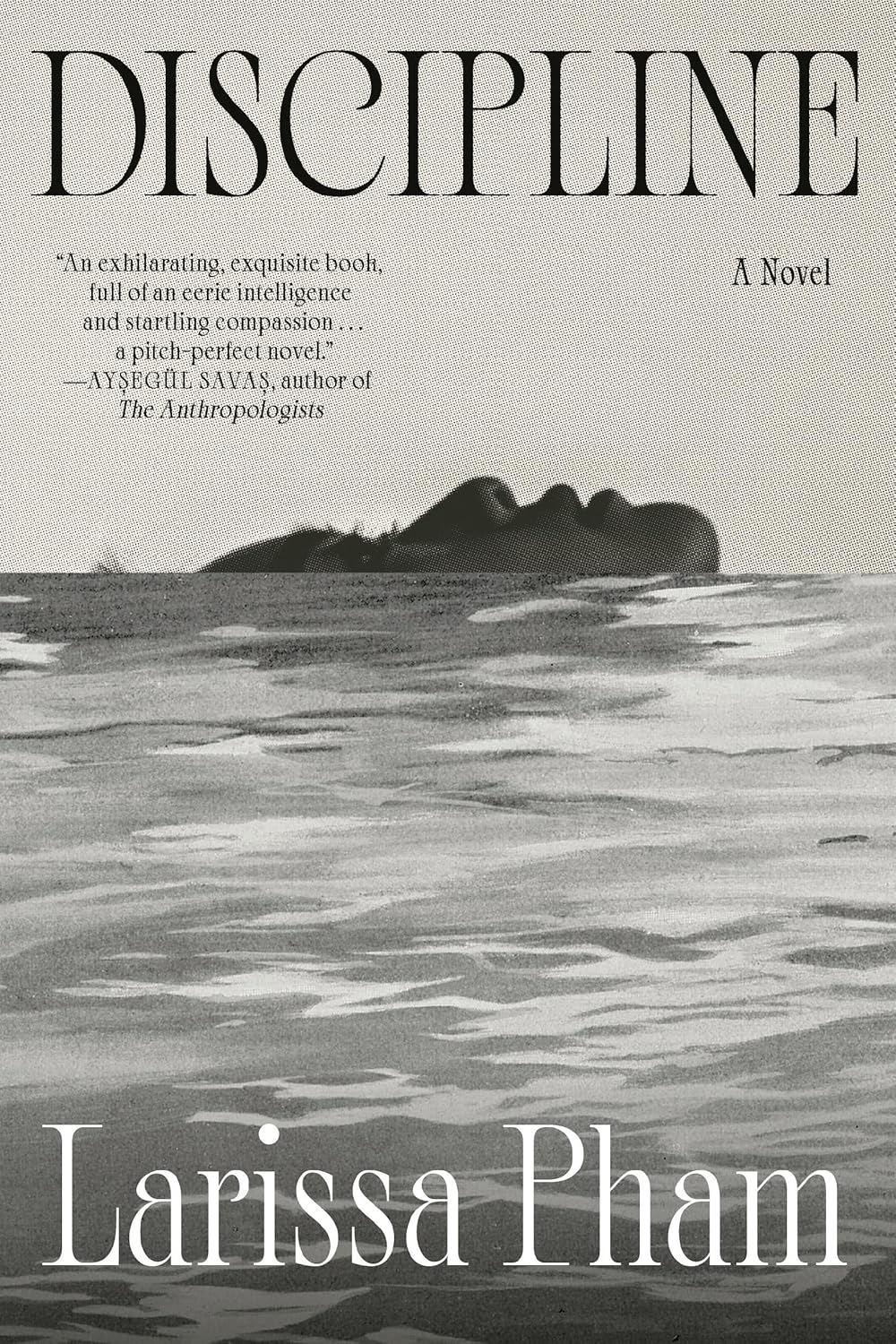
I write a little bit like a 3D printer. It comes out one line at a time. Sometimes the lines will become misaligned and I have to scrap a section, which is to say that I edit as I write. I can be very slow at times if I’m blocked. Most of the formal choices arrived at the appropriate time in the drafting process.
The lack of quotation marks is consistent across most of the fiction that I’ve written in the last couple of years. It forces you to slow down, and you can confuse the reader in a productive way.
This is also an American road trip novel. She’s on a book tour. Her views of the world are challenged, but she does not follow the traditional arc of that genre. Did you think about that genre when you were writing this?
Totally. I think there is a productive tension in the novel around certain structures of whiteness, Americanness or maleness. I was interested in places where I could break the form. When I started drafting, my plan was for her to go on tour like normal and maybe meet the old painter at the very end. By chapter four, I thought, “Well, let’s try breaking the form here a bit.” I was really interested in lulling the reader into expectation, and then breaking that expectation in an interesting way.
This book doesn’t take place entirely in Maine, but there is a sense of Maine being the primary setting, because it is this final destination. Christine literally and metaphorically cannot run any farther. How did you find the settings—all of them, really, but especially Maine?
I was thinking about places I had been for events for my previous book, and also places where a novelist like Christine would conceivably end up.
I went to Maine in the late summer or fall of 2022. A dear friend of mine — whose family has had, for generations, a small house on one of the islands — invited me to stay for a week. I loved how beautiful it was and how cold the water was. I was moved by the bioluminescence, and I loved the landscape. I grew up in the Pacific Northwest, so I know dramatic landscapes, but there was something special about Maine and being on an island, taking the ferry and realizing that everything you need is on that island.
What you’re saying about Maine being the edge of the world for her feels true, and the island reinforces that. She’s separate from the contiguous United States she’s been driving through. It is an extreme in every way.
The ocean creates “the call of the void.” That feels like a strong theme. I wouldn’t say this fits into something like “weird girl lit,” which is a big genre right now, but it is about this woman upending her life in some ways, seeking out the void, the past and this trauma.
It’s funny you say that, because I just wrote an essay for Lit Hub that’s all about writing toward the call of the void. I think that’s a quality writers can have — a willingness to do something just to see where it goes, to see what the next act of the story might be. It’s a useful trait for a narrator because it allows the story to kind of write itself. I was interested in writing a woman who was a little bit unknown to herself.
You’re an artist writing about an artist who’s writing about an artist. In some ways, “Discipline” taps into autofiction and the ethics of autofiction as perceived. This book is doing a lot in terms of mirroring truth and art — I’d love to hear more about that.
I wasn’t trying to make fun of or be satirical about autofiction, but I was interested in playing with its conventions — writing something where, at first glance, you might wonder if it’s based on someone’s life. Especially as a woman writer, there’s a lot of projection. People assume that if you write about certain things, your work is autobiographical or rooted in trauma. Sometimes it is, but I wanted to play with those assumptions and ideas around what it means to be a writer, especially a woman writer, and a woman writer of color. I also enjoy a meta aspect in writing, so I liked writing a voice that feels true while making things up.
When we try to make something realistic or replicate life, what are we trying to say? There’s a universe in which Christine might have written a restrained novel that touches on what happened to her in an oblique way without stretching the truth, but it seemed more interesting and useful to have Christine write something a bit more sensational, more violent and intense. That way, as the author, I can look at the gap she’s drawing and consider: what are the consequences of this?
Kaylie Saidin is a writer based in Wilmington, N.C.
We invite you to add your comments. We encourage a thoughtful exchange of ideas and information on this website. By joining the conversation, you are agreeing to our commenting policy and terms of use. More information is found on our FAQs. You can update your screen name on the member's center.
Comments are managed by our staff during regular business hours Monday through Friday as well as limited hours on Saturday and Sunday. Comments held for moderation outside of those hours may take longer to approve.
Join the Conversation
Please sign into your Sun Journal account to participate in conversations below. If you do not have an account, you can register or subscribe. Questions? Please see our FAQs.