


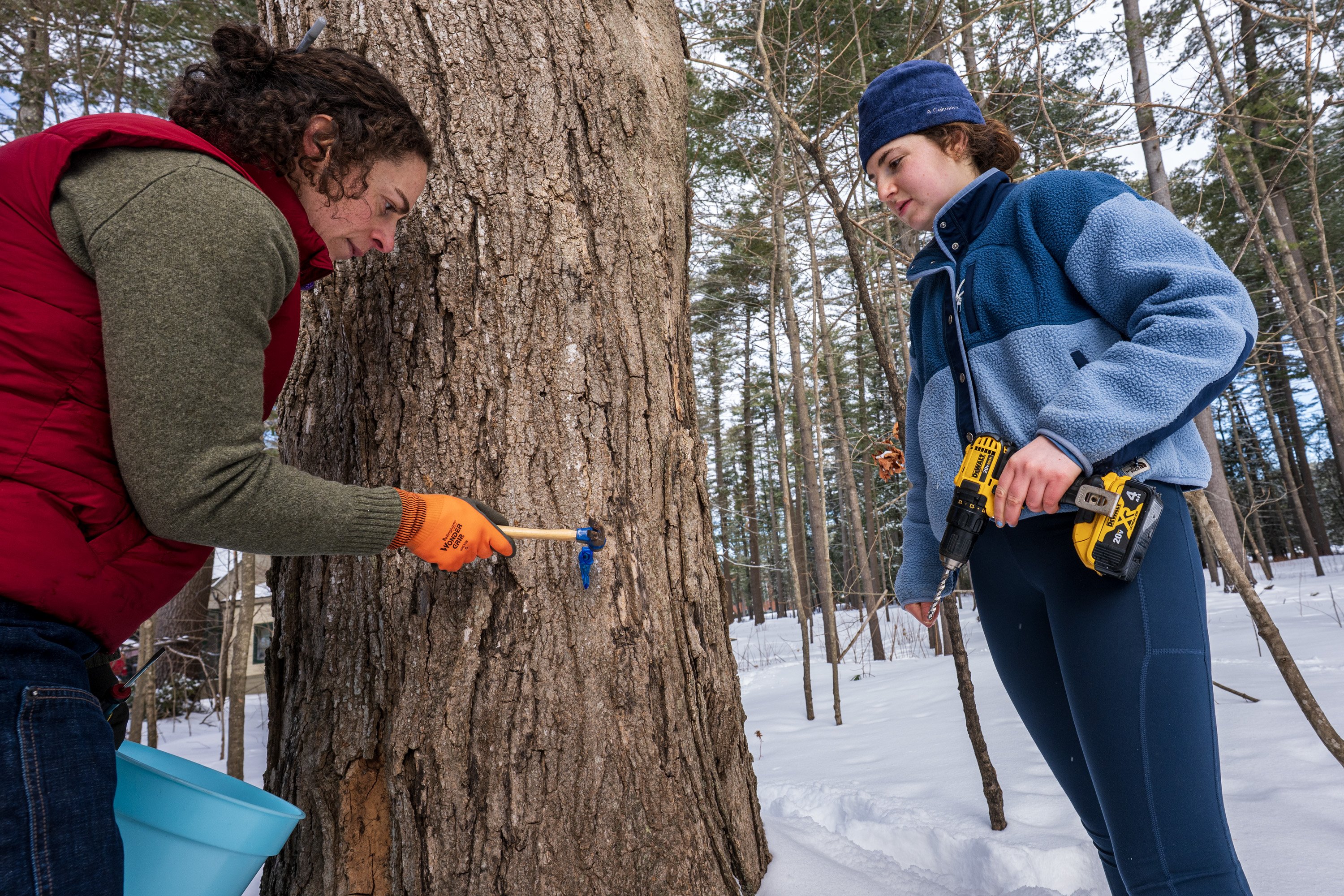
Learning is sweet. It’s an old idea. And at some schools and colleges in Maine, it’s literally true. Each year in early spring, these schools teach their students a centuries-old tradition: how to make maple syrup, from tree-tapping to table.
At one end of the spectrum, the University of Maine at Orono taps some 400 trees in its Dwight B. Demeritt Forest (it’s still a small operation, according to University Forest Manager Keith Kanoti). At the other end, Bowdoin College taps just 10 to 20 maples on the periphery of campus.
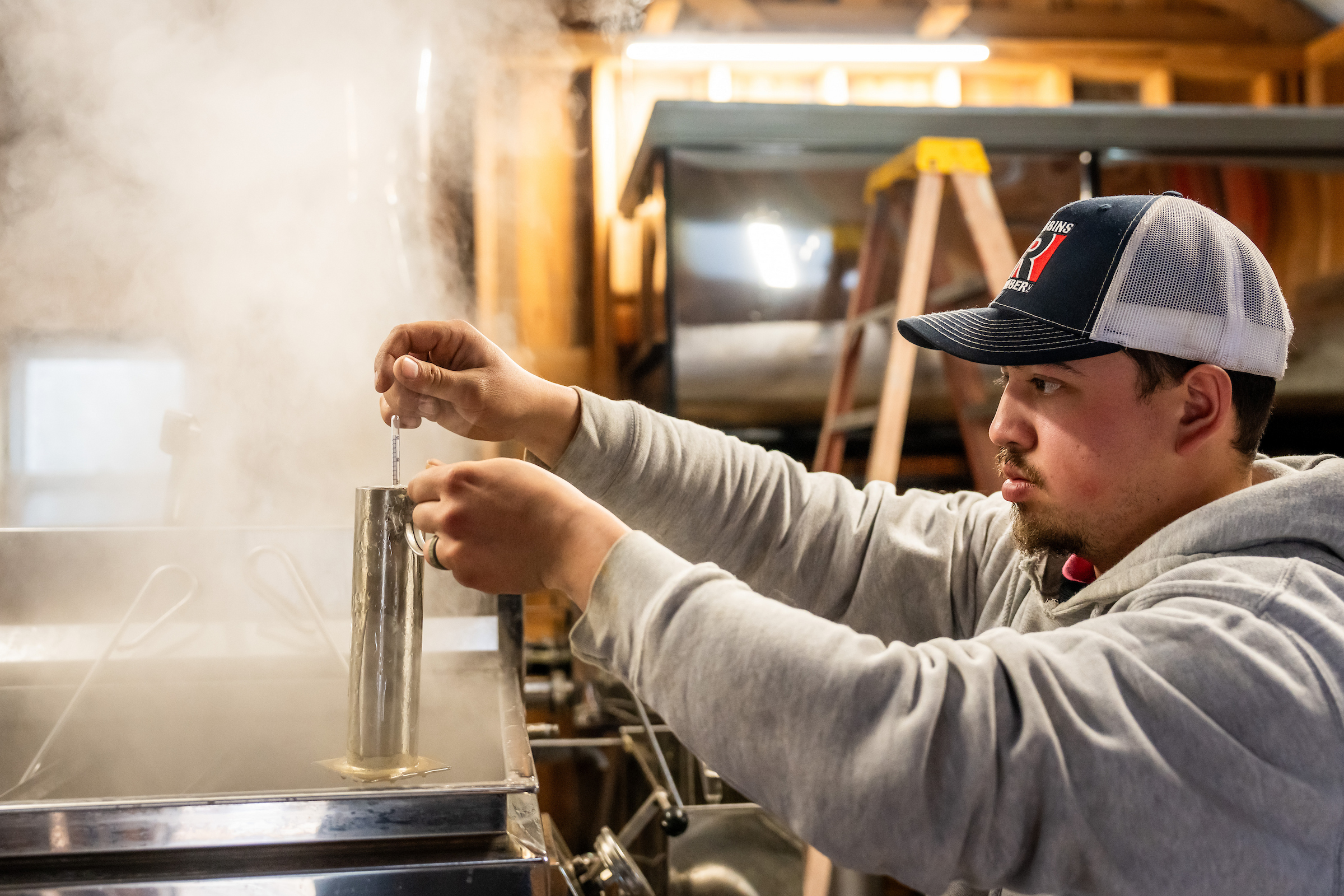
Students at the Portland Arts and Technology High School (PATHS) built their sugarhouse themselves, raising the money to pay for it from plant sales. Students at Sweetser School in Saco design the syrup labels, holding periodic contests to pick their favorite. Students at some schools use traditional buckets and boil the sap over the traditional wood fire set-up, with wood they’ve split themselves. Others collect the sap through tubing and, for safety or convenience, opt for more prosaic heat sources.
Maine’s annual sugaring season teaches students lessons in tree biology, social studies, agriculture, Wabanaki culture, climate change, local food systems, seasonality, timber management and hands-on production mechanics. Whether they are fourth-graders in Saco or college seniors in Brunswick, they get a sweet, syrupy reward and something less tangible: a small measure of joy.
“The first time I collected sap and you see it dripping and you taste it and it’s just barely a hint of the essence of maple, and then how that becomes maple syrup through the long process?” Bowdoin senior Cedar Greve said. “It’s really cool! It’s kind of delightful!”
LESSONS LEARNED
Reading, writing and arithmetic may be the traditional disciplines in American education, but many things in life can offer transferable lessons, whether classes in Harry Potter, improv or, in this case, sugaring.
Bowdoin organic garden supervisor Lisa Beneman hopes that her students “get a little bit more in touch with seasonality. Maple season is fleeting and inextricably tied to the shift in seasons,” she wrote in an email. “With most foods being so accessible to us year-round, it can be easy to lose sight of seasons being more meaningful than the difference between a jacket and a T-shirt.”
Bowdoin junior Noah Goldwasser said he’s absorbed lessons in local food and food systems, too. “With syrup, and the garden in general, anytime I see a piece of food, I’m more conscious about whose hands are picking it or who was carrying the buckets,” he said. “Here is this food that I’m eating, and I can tell you exactly where it’s been for its entire life cycle.”
Kanoti’s teaching goals are, in part, pragmatic. Forestry students at the University of Maine mostly learn how to grow and sell trees, he said. Understanding the process of making syrup is important because “this is another timber product that they may encounter during their career.”
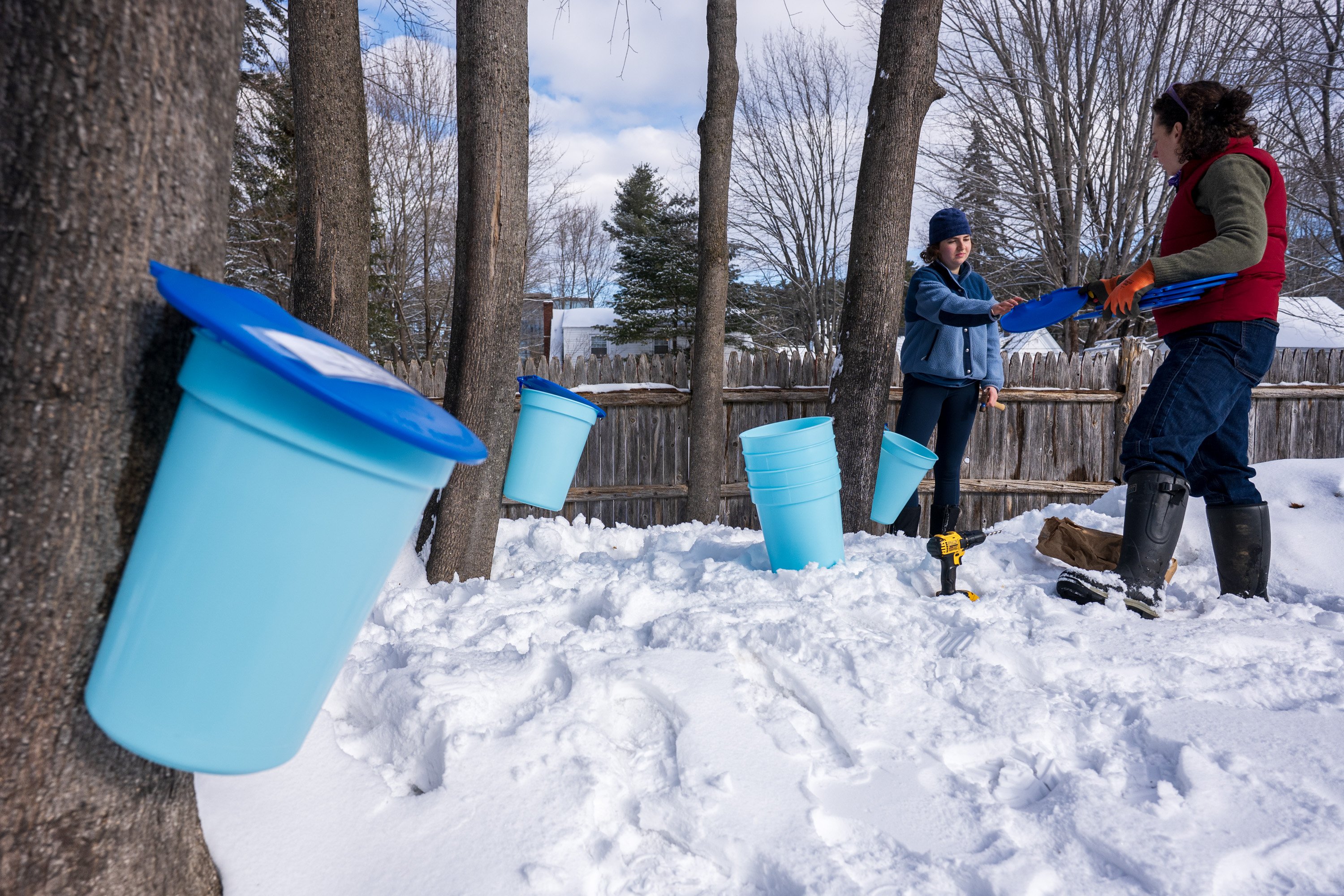
There’s more to it than that, though. “As much as anything, it’s a community-building exercise for the students within their cohort of classmates,” Kanoti said. “You’ll be there on a Saturday ’til 2 in the morning, boiling sap, and hanging out and talking.” (Or as forestry senior Reg Clarke put it, “Eventually, at some point, it turns into, ‘All right the fire is going, we’ve collected all the sap, and it’s time to play cribbage.’ “)
At both PATHS and Sweetser, which work with nontraditional students, the hands-on maple-making lessons have special benefits.
“It’s an excellent combination of the academic and the physical — learning about the trees and and when to tap and how the syrup is processed, learning about all that stuff in the classroom and then going out and doing it hands-on,” PATHS landscaping instructor Justin Nichols said. “It’s an immediate application.”
Sweetser’s K-12 students struggle with social and emotional challenges. For many, sitting at a desk all day is far from ideal. “For whatever reason, that hasn’t been a success for them,” said Sweetser educator and farm manager Julia Birtolo. “Maybe they feel like, ‘I can’t do this. It’s too hard.’ They get upset, they walk out. But having the hands-on program gives kids a chance to feel really successful and smart — which they should.”
THE PAYOFF
Do the work, get the reward. It seems only fair that Maine students get to eat much of the syrup they produce themselves, as do their classmates, parents, teachers and university trustees.
The sugar shack at PATHS hosts kindergarten students from across the district for maple lessons and tastes, and some bottles get raffled off to raise money for the school.
“We serve probably about a thousand ice creams with maple syrup on it during that maple period to kindergartners and parents and teachers and then to our own school,” Nichols said. “We serve a lot of maple syrup on ice cream. That’s for sure.”
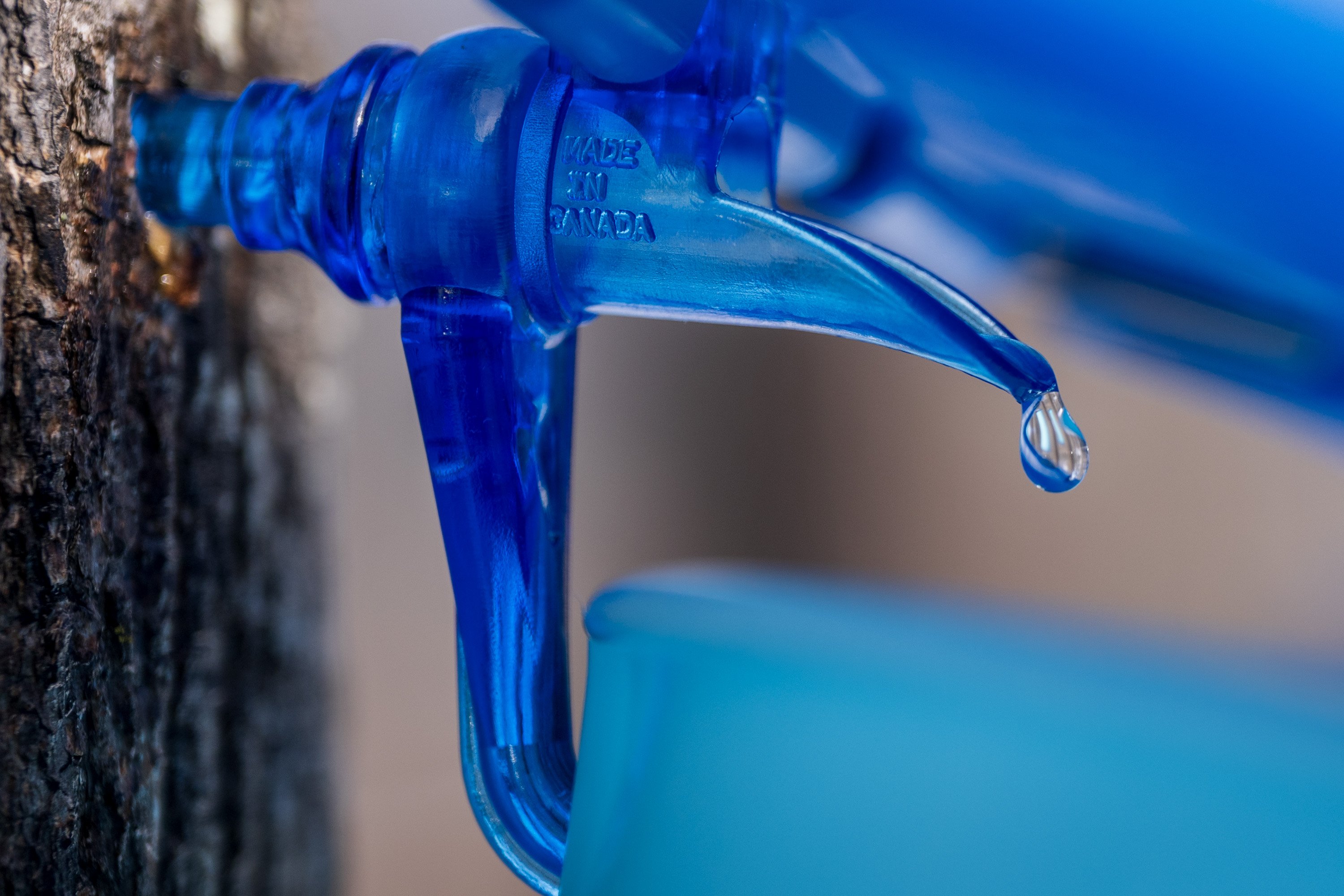
At Bowdoin, a place well-known for the quality of its dining halls, most of the limited supply of campus-made maple syrup (5 to 10 gallons annually) is used in maple lattes at a school cafe and maple vinaigrette on the school’s salad bar. “Those are two things that really allow the flavor of the maple syrup to shine through,” said Bowdoin senior associate of dining Adeena Fisher.
A small supply is set aside for trustee events, and some goes to an annual event at the student union, where students can taste-test imitation versus real syrup, and enjoy scoops of vanilla ice cream with a pour of Bowdoin syrup. “Everyone loves that event,” Goldwasser said.
Sweetser students celebrate the sugaring season in a big way: They, too, enjoy the syrup over ice cream, and they cook with it— maple fudge, maple caramel, an especially awesome maple cookie sandwiched with maple cream. Every student who helped produce the syrup gets a small bottle of their own, which they can refill as much as they like, while supplies last. There’s a farmers breakfast and Maine Maple Monday, Sweetser’s twist on the state’s annual Maine Maple Sunday tradition (the latter celebrated with events around the state on March 21-22). Moreover, bottles of the school-made syrup raffled off at a school fundraiser can fetch hundreds of dollars, said Birtolo, who started the maple-sugaring program around 1996 when she was hired as an ed tech.
A couple of years ago, Nichols decided to try making birch syrup with his students at PATHS. All trees have sap. Several cultures make syrup. He wanted them to see the bigger picture. In the end, though, it wasn’t a success. While the campus has plenty of old maple trees, including what may be the city’s largest sugar maple, it lacks enough birch trees for an adequate sap supply.
“We ended up with a few tablespoons,” he said. A few not very tasty tablespoons; the birch syrup overheated and scorched. This year, Nichols and his students are sticking to classic Maine maple.
MAPLE TEA
This is barely a recipe, and you’ll need to be boiling sap yourself in order to make it, but it sounded irresistible when University of Maine forestry senior Reg Clarke described it:
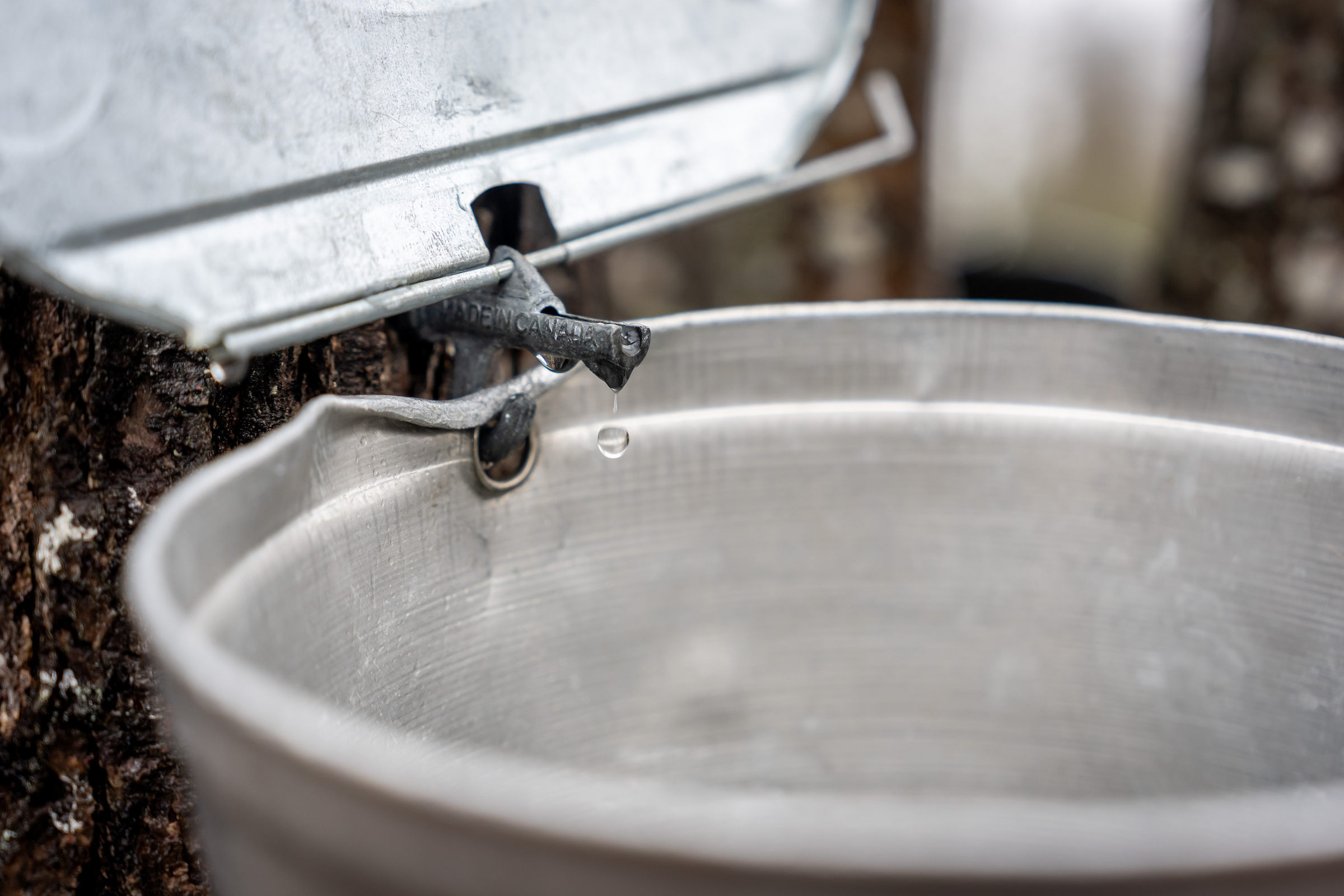
“To taste it through the process, we’ll have sap tea, which is my favorite part. It’s the boiling sap before it’s actually turned into syrup. We’ll just scoop some out into a cup and put an Earl Grey tea bag in. It’s super sweet. It’s really good. You don’t taste (the maple) a whole lot, but you can tell the tea doesn’t taste like you just put sugar in it, and you also can’t replicate it by putting maple syrup into tea. It’s nice. This is a once a year kind of treat.”
BOWDOIN COLLEGE MAPLE LATTE
Recipe courtesy of Bowdoin senior associate of dining Adeena Fisher. The college uses much of its own small supply of Bowdoin-made maple syrup to make the lattes for sale at a campus cafe. The rest of the year, it uses McLure’s maple syrup.
Serves 1 (12-ounce) hot latte
9 ounces steamed milk (a little more than 1 cup)
1 ounce pure maple syrup
1 ounce espresso
Mix the espresso with the maple syrup. Top with steamed milk.
BOWDOIN MAINE MAPLE VINAIGRETTE
Recipe courtesy of Bowdoin senior associate of dining Adeena Fisher. Bowdoin’s dining halls use maple and many other items supplied by its organic garden, among them pea shoots and basil, which answers to the college’s pesto needs. “I always say that food is love and so it’s nurturing,” Fisher said. “We want our students to be well nurtured and well fed.”
Yield: 12 ounces (1 ½ cups)
1 cup olive oil
1/4 cup balsamic vinegar
1/4 cup pure maple syrup
1 tablespoon lemon juice
1 clove garlic, minced
1 teaspoon dry mustard
1 teaspoon salt
1/2 teaspoon black pepper
Combine all ingredients in a jar and shake or whisk together in a small bowl. Mix the dressing well before tossing with salad.

We invite you to add your comments. We encourage a thoughtful exchange of ideas and information on this website. By joining the conversation, you are agreeing to our commenting policy and terms of use. More information is found on our FAQs. You can update your screen name on the member's center.
Comments are managed by our staff during regular business hours Monday through Friday as well as limited hours on Saturday and Sunday. Comments held for moderation outside of those hours may take longer to approve.
Join the Conversation
Please sign into your Sun Journal account to participate in conversations below. If you do not have an account, you can register or subscribe. Questions? Please see our FAQs.