


Satellite internet is helping connect rural Maine homes that remain beyond the reach of expanding broadband networks.
To reach locations that still lack any internet option, the state has launched the Working Internet ASAP program through the Maine Connectivity Authority. The initiative distributes satellite internet equipment to homes and businesses that have no available technology such as cable, digital subscriber line or fixed wireless service.
The Maine Connectivity Authority estimates roughly 9,000 locations in the state fall into that category, many in rural and mountainous areas of western and northern Maine where long distances between homes make traditional broadband construction difficult.
Several communities, including parts of Jay, Livermore, Livermore Falls and nearby Franklin County towns, still contain pockets where reliable wired broadband is limited or unavailable, particularly along remote roads and in seasonal camp areas.
According to the Maine Connectivity Authority, there are program participants in Franklin County, but not in Jay, Livermore or Livermore Falls, where only seven households were eligible due to relatively high fiber coverage through Charter and Fidium.
During the COVID-19 pandemic, many people relocated to rural areas of Maine while continuing to work remotely, increasing demand for reliable internet connections in communities that historically had limited broadband options.
“While we build the infrastructure for our future, we can’t afford for people to be living in the digital dark,” said Andrew Butcher, president of the Maine Connectivity Authority.
Residents who live in eligible locations can apply through an online enrollment portal operated by the Maine Connectivity Authority. Information about the program is available at
www.maineconnectivity.org/wia-enroll.
Once an address is verified, the state coordinates delivery of satellite hardware while customers pay the monthly internet subscription. The program may also provide assistance to some residents who already purchased equipment.
According to the Maine Connectivity Authority, “for those who have purchased a Starlink after Aug. 1, 2024, we are able to offer a credit for the value of the hardware to the users’ Starlink accounts that can be used toward monthly service payments.”
Most of the systems distributed through the program rely on the Starlink network. Unlike older satellite systems, Starlink uses thousands of satellites orbiting a few hundred miles above Earth in low Earth orbit, significantly reducing signal delay compared to traditional systems.
Typical residential Starlink service installed at a fixed address often delivers download speeds between about 100 and 250 megabits per second, with latency usually between 20 and 40 milliseconds. Upload speeds commonly range from about 10 to 30 megabits per second.
A reporter for the Franklin Journal tested the system March 22 in Jay near the former Androscoggin Mill and was able to connect and stream a video during snowfall.
“We have received only positive feedback at this point about the performance of the internet service being provided through the WIA Program,” said Jenna Ingram, senior manager of communications for the Maine Connectivity Authority.
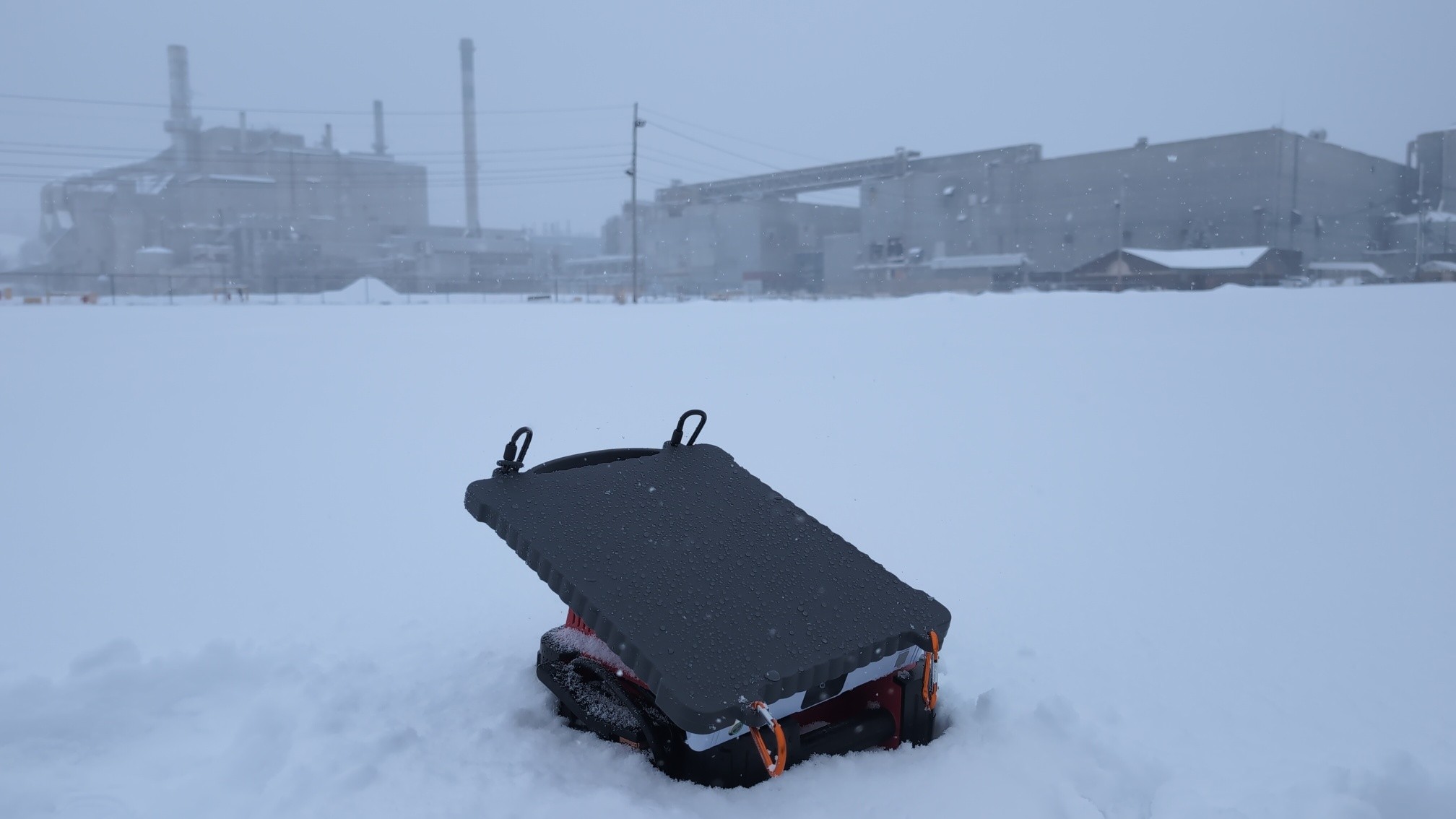
Portable Starlink “Roam” plans, designed for travel or temporary setups, typically deliver somewhat lower speeds, often around 50 to 150 megabits per second for downloads.
Some rural residents and remote workers also use satellite internet as a backup connection because it operates independently of local cable or fiber networks, allowing service to continue during outages caused by storms or infrastructure failures.
Older satellite providers are still used in some rural locations. Companies such as HughesNet rely on satellites positioned roughly 22,000 miles above Earth in geostationary orbit, resulting in higher latency, often around 600 milliseconds or more, which can limit activities such as video conferencing.
Unlike low-Earth-orbit systems such as Starlink, which customers can typically install themselves, traditional satellite providers usually require a technician to mount and align the dish.
Portable satellite systems are also being used for fieldwork and travel in remote areas.
Because low-Earth-orbit satellite systems can be installed without major infrastructure construction, they provide a relatively quick way to reach remote locations.
Maine Connectivity Authority data also shows that some eligible locations are seasonal or recreational properties, where residents intentionally choose to remain disconnected.
Cost remains another barrier for some households, and the agency said it is exploring ways to make service more affordable, including access to residential Starlink plans starting at about $50 per month.
The Maine Connectivity Authority states that the Working Internet ASAP program is intended as a short-term solution while longer-term broadband infrastructure projects continue expanding across the state.
All remaining eligible households that did not enroll are expected to be served through a mix of technologies under the federal Broadband Equity, Access, and Deployment program, a nationwide initiative to expand high-speed internet infrastructure, with construction beginning this year.

Supporting Sponsor for Franklin Journal, Livermore Falls Advertiser, Rangeley Highlander and Rumford Falls Times.
Keeping communities informed by supporting local news. franklinsavings.bank

We invite you to add your comments. We encourage a thoughtful exchange of ideas and information on this website. By joining the conversation, you are agreeing to our commenting policy and terms of use. More information is found on our FAQs. You can update your screen name on the member's center.
Comments are managed by our staff during regular business hours Monday through Friday as well as limited hours on Saturday and Sunday. Comments held for moderation outside of those hours may take longer to approve.
Join the Conversation
Please sign into your Sun Journal account to participate in conversations below. If you do not have an account, you can register or subscribe. Questions? Please see our FAQs.