

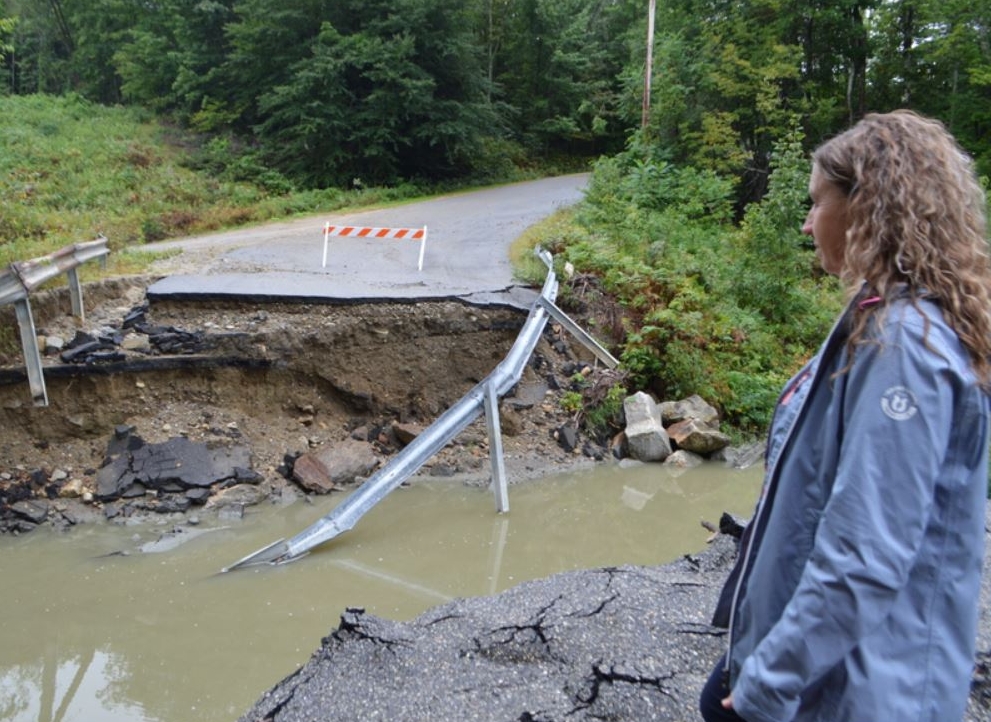
JAY — When torrential rainstorms washed out sections of roads and trails and sent debris cascading through stream crossings and across roads in the summer of 2023, town officials saw more than a damaged roadway. They saw a warning.
On Macomber Hill Road, for example, access to several homes was cut off and, for some residents, travel disruptions lingered for months. Another road remained closed for nearly a year and a half.
“The immediate impacts were to safety,” Jay Town Manager Shiloh LaFreniere said. “Getting people in and out of their homes.”
In the long term, there was the inconvenience of destroyed roads and the “challenges this brought for travel, commuting, bus schedules, everything,” LaFreniere said.
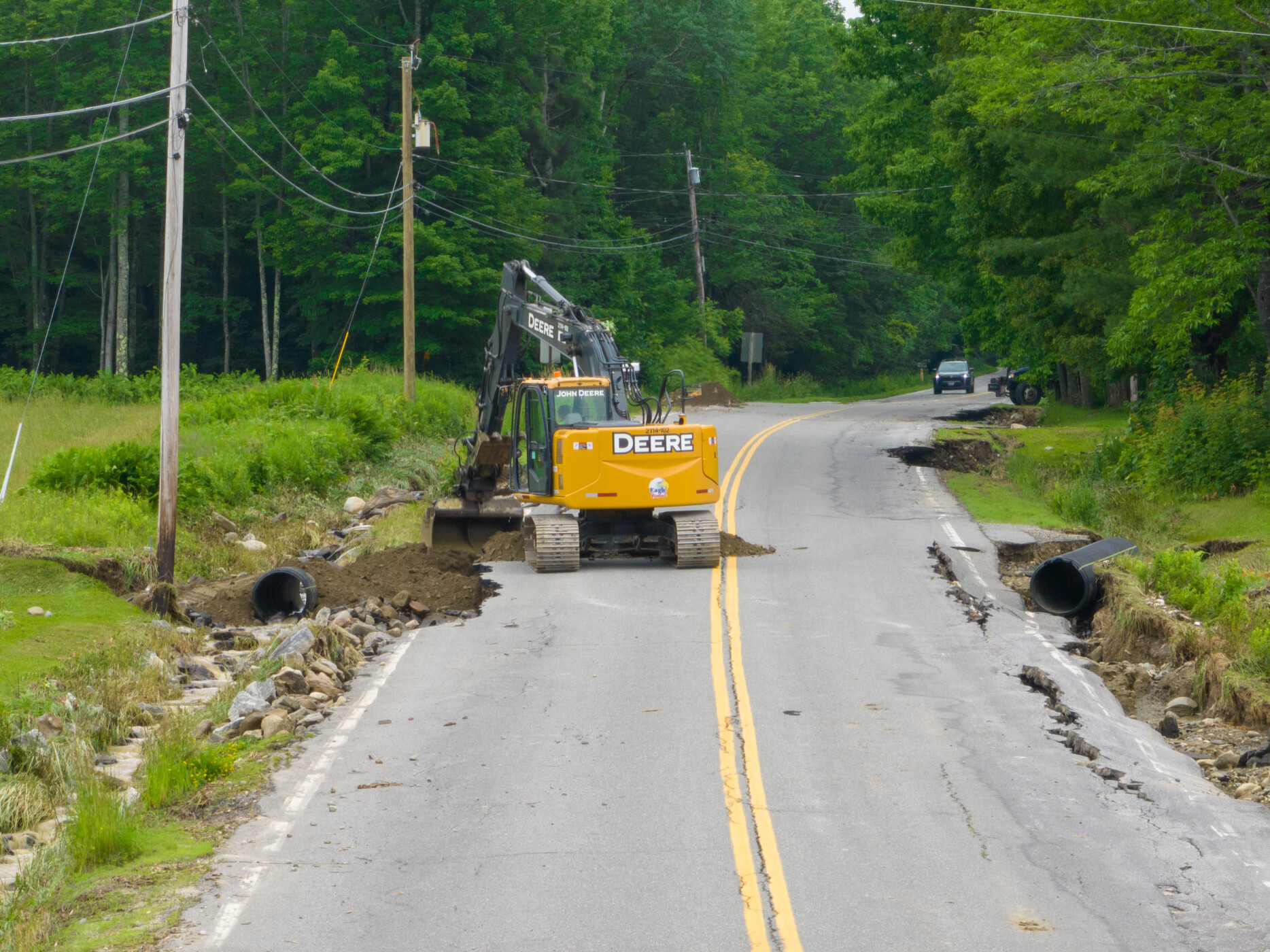
Images of collapsed culverts, torn up pavement, and washed out roadsides and trails were in their minds when Jay officials enrolled in Maine’s Community Resilience Partnership, which helps communities identify where they are vulnerable, and provides grants to help build resiliency and lower carbon emissions.
The partnership is a core part of Maine’s climate-preparedness strategy as climate change brings the likelihood of more powerful and more frequent storms, with hundreds of communities now participating.
Jay’s experience with the 2023 floods, and how the town has responded, provides an example for other small communities that want to soften the impact of climate change.
HUNDREDS OF MAINE TOWNS SIGN UP
Maine’s climate action plan, called Maine Won’t Wait, recommended the creation of the partnership, which Gov. Janet Mills launched in 2021. The initial goal was to assist 100 communities in the first year — which was a success, according to Maine Climate Council’s 2023 report. Now, according to the 2025 Maine Infrastructure Resilience Plan, the new goal is for 80% of Maine’s communities to be enrolled in the Partnership by 2030.
Supporting the expansion, the Legislature committed $5 million last year in supplemental budgeting and Maine secured a $69 million climate resilience grant from the federal National Oceanic and Atmospheric Administration, which will fund projects over the next five years.
About $9 million of the NOAA funding will support community grants and the $5 million supplement will go into expanding the regional coordinator network.
This year, Jay received a $75,000 grant to begin replacing two of its most flood-prone culverts, early steps toward preparations for future storms.
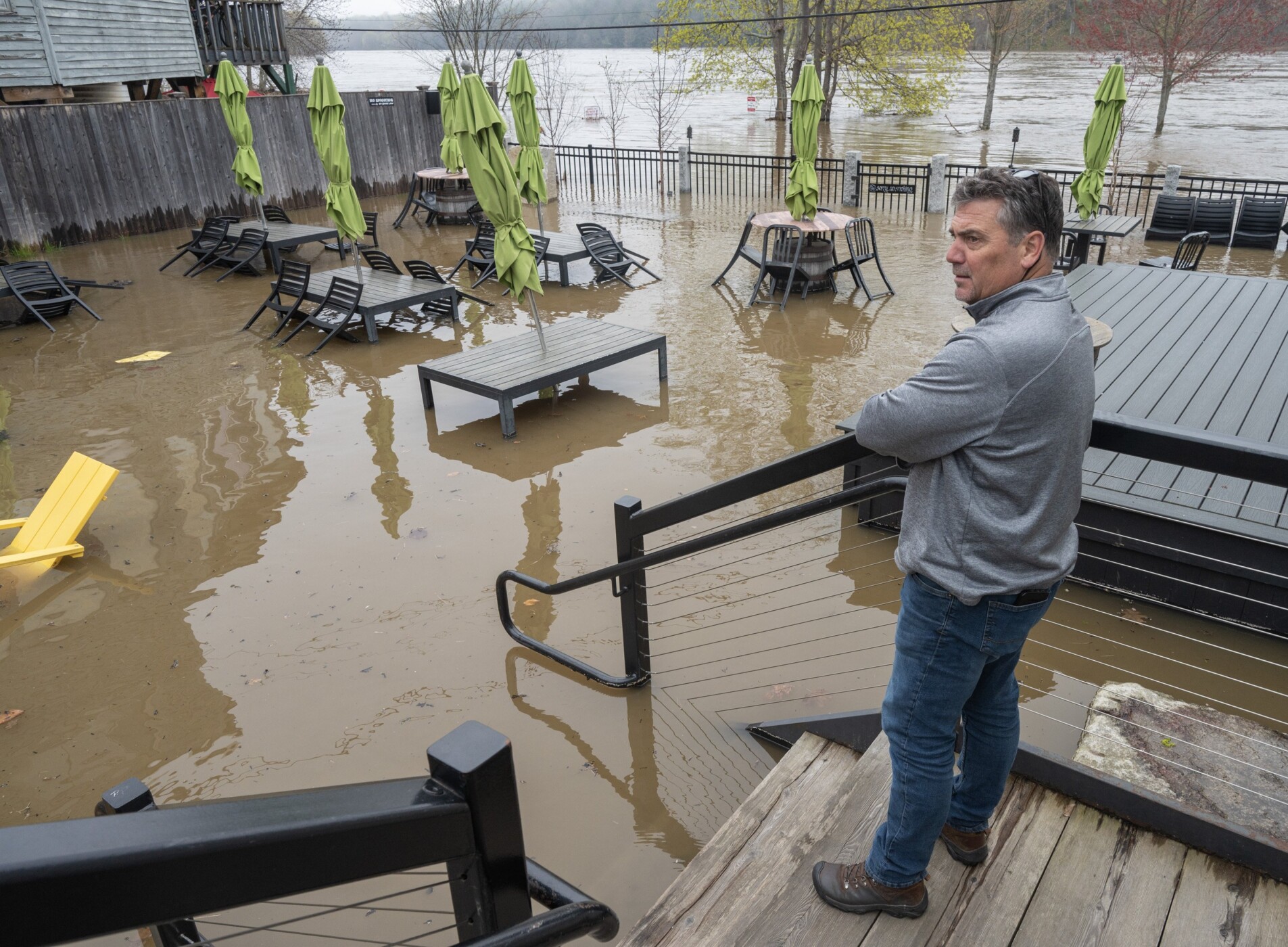
“Through the Community Resilience Partnership, communities across the state are becoming more prepared for flooding, storm surge, rising sea levels and other impacts of climate change,” said Jackie Farwell, spokesperson for the Maine Office of Community Affairs.
Since launching in 2021, the partnership has grown to 300 participating communities, 256 fully enrolled and 44 working with service providers to enroll, Farwell said, representing over 75% of Maine’s population. Over $19 million in grants have been awarded in support of local climate resilience, clean energy and energy efficiency projects.
Over 114 communities have received partnership funding for vulnerability assessments or climate resilience plans, and participation was most concentrated among small and rural communities, the report said. About 73% have populations under 4,000 and 36% are considered highly vulnerable under the Maine Social Vulnerability Index.
Projects have included stormwater-system mapping to culvert redesigns to public building heat pump installations, emergency cooling centers, solar arrays and flood mitigation studies.
The demand has surged.
In the last two grant cycles alone, communities requested nearly $11 million for climate resilience work. Nearly $10 million in grants was awarded to 161 towns.
LEADING BY EXAMPLE
Regional coordinators, such as the Androscoggin Valley Council of Governments, are helping many understaffed small towns with applying for grants from the partnership.
Catherine Mardosa, community access coordinator for AVCOG, said priorities emerging from the work with Jay, Livermore and Livermore Falls very much reflect impacts from the 2023 storm and even broader regional needs.
“Feedback from the community points to several priority areas,” she said. “Flood water management focused on mitigating damage to roads, bridges and culverts, supporting the economy and public services, supporting public health through efforts like emergency planning and drinking water protection, protecting and strengthening critical infrastructure, supporting the natural environment and supporting recreation.”
Mardosa said Jay’s experience with the 2023 storm continues to play a role in shaping the regional conversation.
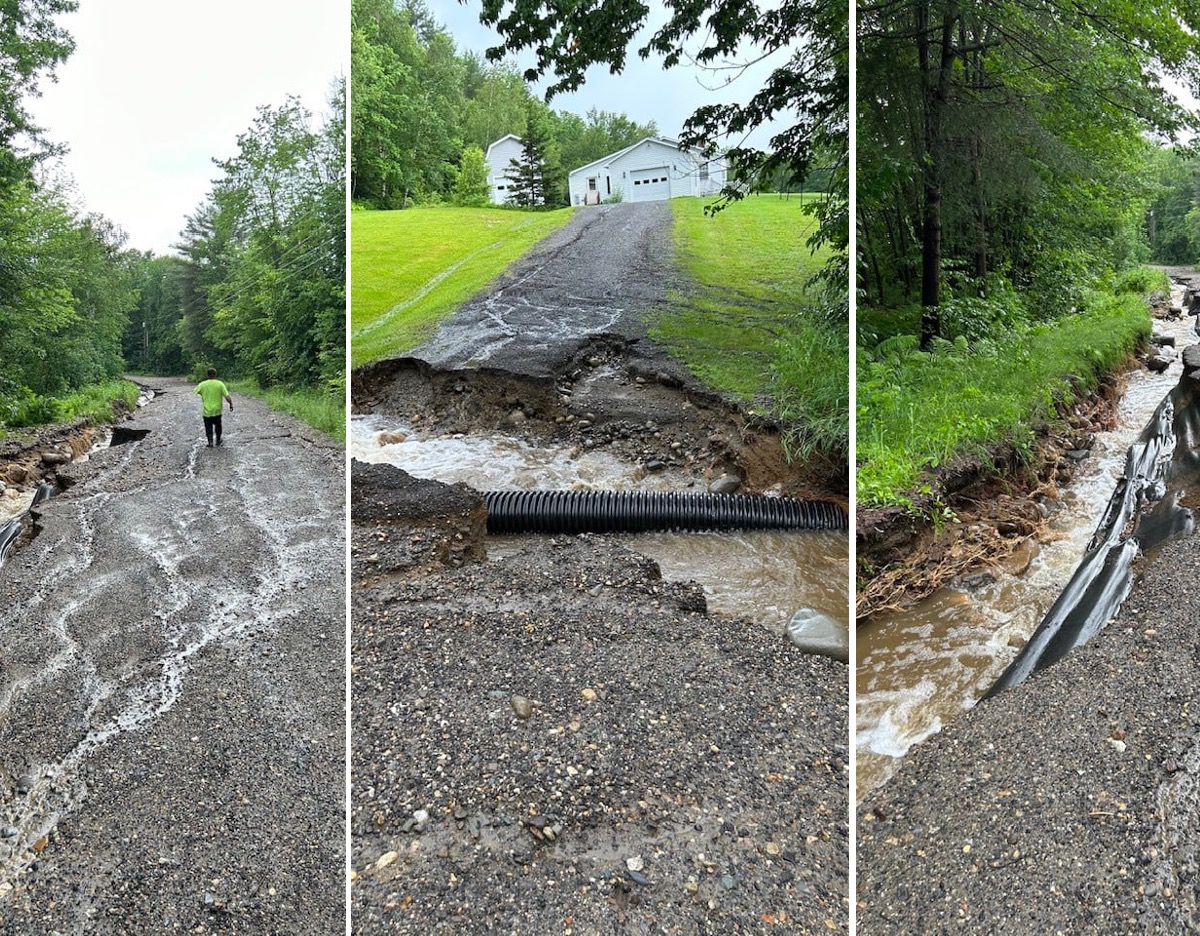
“Photos of the 2023 storm impacts in Jay have been used in statewide presentations and publications as an outstanding depiction of how severe the impacts from storms and flooding can be,” she said. “Jay has also been outstanding in their responsiveness and resourcefulness in repairing from that storm and preparing for future storms.”
Neighboring towns saw similar flooding and used Jay’s experience as a case study for why systematic assessment is needed, Mardosa said, adding that the impacts point to the “need for vulnerability assessments to prepare and invest more energy and careful thought into resilience planning.”
PROJECTS SPAN WESTERN, CENTRAL MAINE
Dozens of communities in western and central Maine are participating in the partnership and have received grants. Several are focusing on strengthening flood-prone infrastructure while others are concentrating on energy upgrades and independence that reduce fossil fuel use.
In Oxford and Franklin counties, the town of Harrison received $75,000 for upgrades designed to prevent washouts, while Waterford received the same for a solar array project and upgrades targeting an at-risk stream crossing.
Wilton was awarded over $60,000 for a heat pump installation for its public safety building; Strong, nearly $37,000 for fire station energy efficiency strategies; Hartford, $70,000 for town hall weatherization; and Stoneham, $58,000 for energy efficiency improvements.
Fryeburg, Canton and Otisfield were each awarded $75,000 for walkability improvements, replacing fossil fuel heating sources with heat pumps, and fire station energy efficiency upgrades, respectively.
In Androscoggin County, Auburn and Livermore Falls were each awarded $75,000 and Durham, $80,000. Auburn’s project is for electric vehicle charging expansion at its municipal facilities and Livermore Falls’ for town office upgrades for energy efficiency. Durham is pursuing open space planning and conservation strategies.
In Kennebec County, Gardiner and Mount Vernon each received $75,000 for municipal building upgrades: Gardiner for heat pumps and Mount Vernon for a solar array to generate all energy used in its municipal building.
Hallowell, Wayne and Winthrop were awarded the same, pursuing projects in planning for nature-based stabilization of the Kennebec River shoreline, climate impact infrastructure and population vulnerability assessment, and energy efficient LED lighting upgrades, respectively.
Waterville was awarded $70,000 for municipal building efficiency, and Rome over $38,000 for emergency water source resiliency.
In neighboring Somerset County, Caratunk was the only town in 2025 to receive a grant, getting $33,500 for a hydrologic survey and modeling effort for Pleasant Pond Stream and nearby watersheds.
BACK IN JAY
The two culverts the town of Jay has selected for upgrades — on Alden Hill and Davenport roads — washed out several times in 2023, LaFreniere said, a serious problem particularly for Alden Hill Road, which is important to the potential redevelopment of the Androscoggin paper mill.
The fix? Simple on paper, but too costly without outside help like the partnership’s grants.
“Our primary focus so far has been on the infrastructure in the roadways,” LaFreniere said. “Current budgets cannot address these upgrades, so our focus is also on grant opportunities that will support these efforts.”
The memory of the 2023 storm shapes how new projects are approached, she said.
In the case of the critical culverts the town relies on, LaFreniere said the resilience grant goes a long way toward helping upgrade those culverts to handle larger volumes of water, preventing undermining of the culverts and the roadway.
“Honestly, there are so many moments from the storm that are still with me,” she said. “The day after, the police chief and I were driving around town trying to get to the areas that were hit. Every time I came around a corner, I’d think, ‘This is incredible. This is the worst I’ve seen. It can’t get any worse than this.’ And then we’d reach another road and I’d be overwhelmed by an even greater level of destruction.
“I am still amazed at the power of these storms and the incredible damage that water can cause. When we look at projects now, or talk about why resilience is important, it’s easy to reflect back on those initial impressions — the devastation, the uncertainty — and how we’d recover. That’s really what drives the work now.”

We invite you to add your comments. We encourage a thoughtful exchange of ideas and information on this website. By joining the conversation, you are agreeing to our commenting policy and terms of use. More information is found on our FAQs. You can modify your screen name here.
Comments are managed by our staff during regular business hours Monday through Friday as well as limited hours on Saturday and Sunday. Comments held for moderation outside of those hours may take longer to approve.
Join the Conversation
Please sign into your Sun Journal account to participate in conversations below. If you do not have an account, you can register or subscribe. Questions? Please see our FAQs.